
Most saltwater fish illnesses can be beaten if you spot them early and treat them the right way. Use the diagram to see where each problem tends to show up, then tap any disease below for the cause, the signs to watch for, proven saltwater treatments and how to stop it coming back. A separate quarantine tank is the single best tool you can own: it lets you treat fish safely without harming corals, invertebrates or your display tank’s biological filter.
Keep your water stable with our Water Chemistry guide and Reef Calculators.
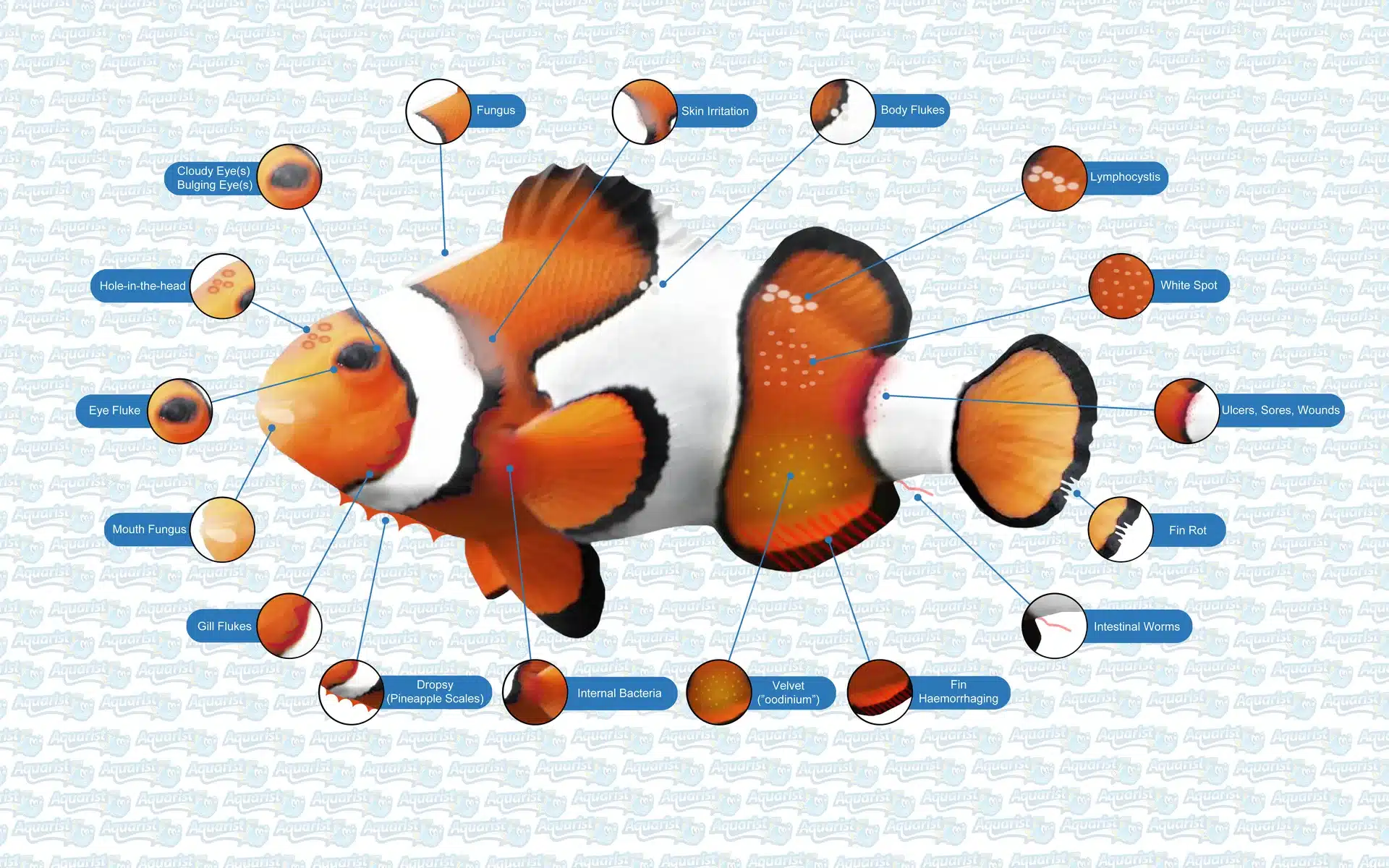
Tap any small picture on the diagram, or choose a disease below, for signs, treatment and prevention.
Body Flukes
What it is
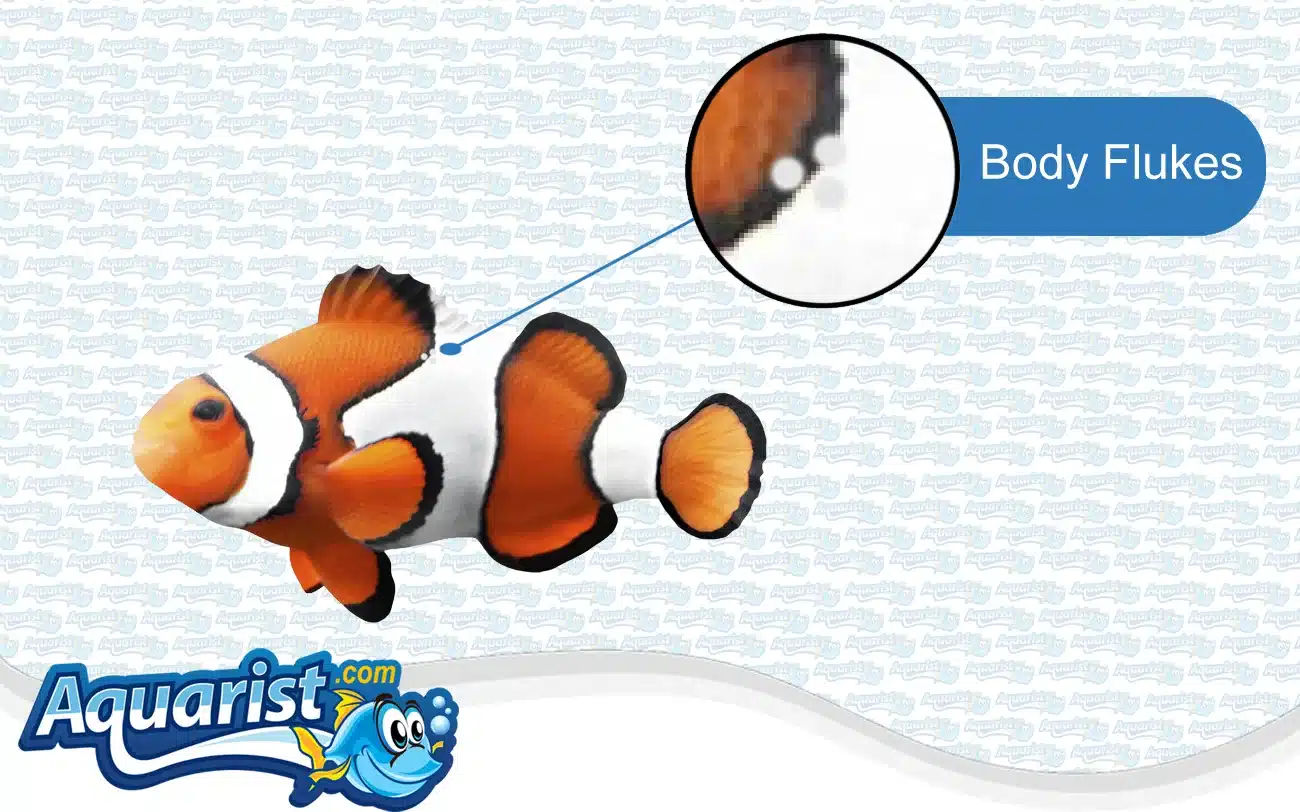
Body flukes are tiny flatworms (monogeneans such as Benedenia and Neobenedenia) that cling to skin and feed on it. They breed directly in the tank and can multiply quickly, especially on tangs and angelfish.
Signs to look for
- Constant scratching and flashing
- Cloudy or blotchy skin patches
- Rapid breathing
- Clear, oval flukes that turn white and fall off during a freshwater dip
Treatment
- Treat in quarantine with praziquantel at the label dose, then repeat after about 5 to 7 days to kill newly hatched flukes.
- A pH- and temperature-matched freshwater dip of 3 to 5 minutes gives quick relief and confirms the diagnosis.
- Formalin baths are another option, used carefully with good aeration and exactly as the label directs.
Prevention
- Dip and quarantine new fish.
- Praziquantel during quarantine is a common preventive step for tangs and angels.
Please note: This guide is general information, not a diagnosis. Always follow the medication's label for dose and duration, treat in a separate quarantine tank (many medications, including copper, harm corals, invertebrates and the tank's beneficial bacteria), and ask a qualified aquatic vet when you're unsure.
Cloudy or Bulging Eyes
What it is
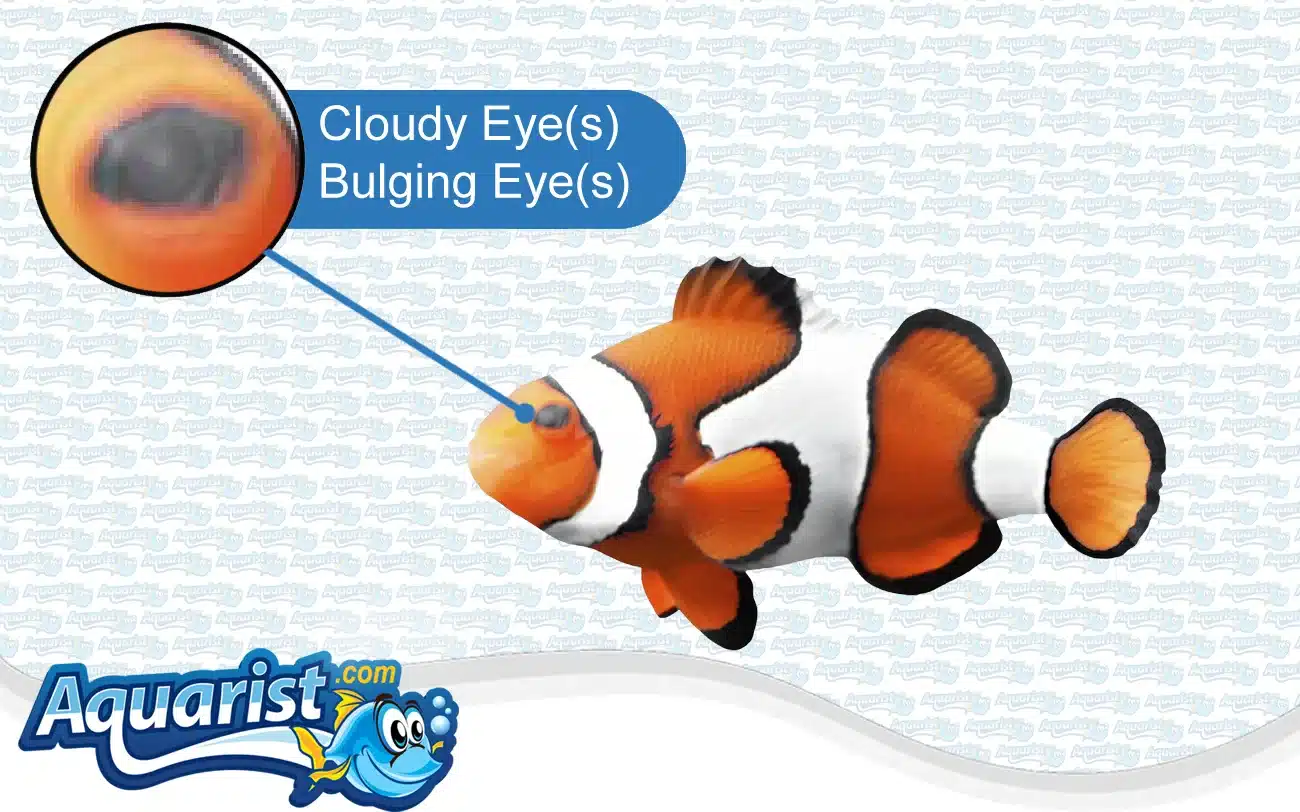
A cloudy eye usually points to poor water quality, a bacterial infection or an injury. A bulging eye (popeye) is caused by fluid building up behind it. If only one eye is affected it is usually an injury; if both are affected it suggests infection or water problems.
Signs to look for
- White or hazy film over one or both eyes
- Eye pushed outward from the head
- Fish bumping into things or struggling to find food
Treatment
- Test the water and do water changes if anything is off.
- For popeye, Epsom salt (magnesium sulfate) at about 1 tablespoon per 5 gallons in a quarantine tank can help draw fluid out.
- If both eyes are affected or it gets worse, use a marine antibiotic such as kanamycin in quarantine.
- Injured eyes usually heal within a few weeks with clean water.
Prevention
- Stable water quality.
- Avoid sharp rockwork and aggressive tank mates.
Please note: This guide is general information, not a diagnosis. Always follow the medication's label for dose and duration, treat in a separate quarantine tank (many medications, including copper, harm corals, invertebrates and the tank's beneficial bacteria), and ask a qualified aquatic vet when you're unsure.
Dropsy (Pineapple Scales)
What it is
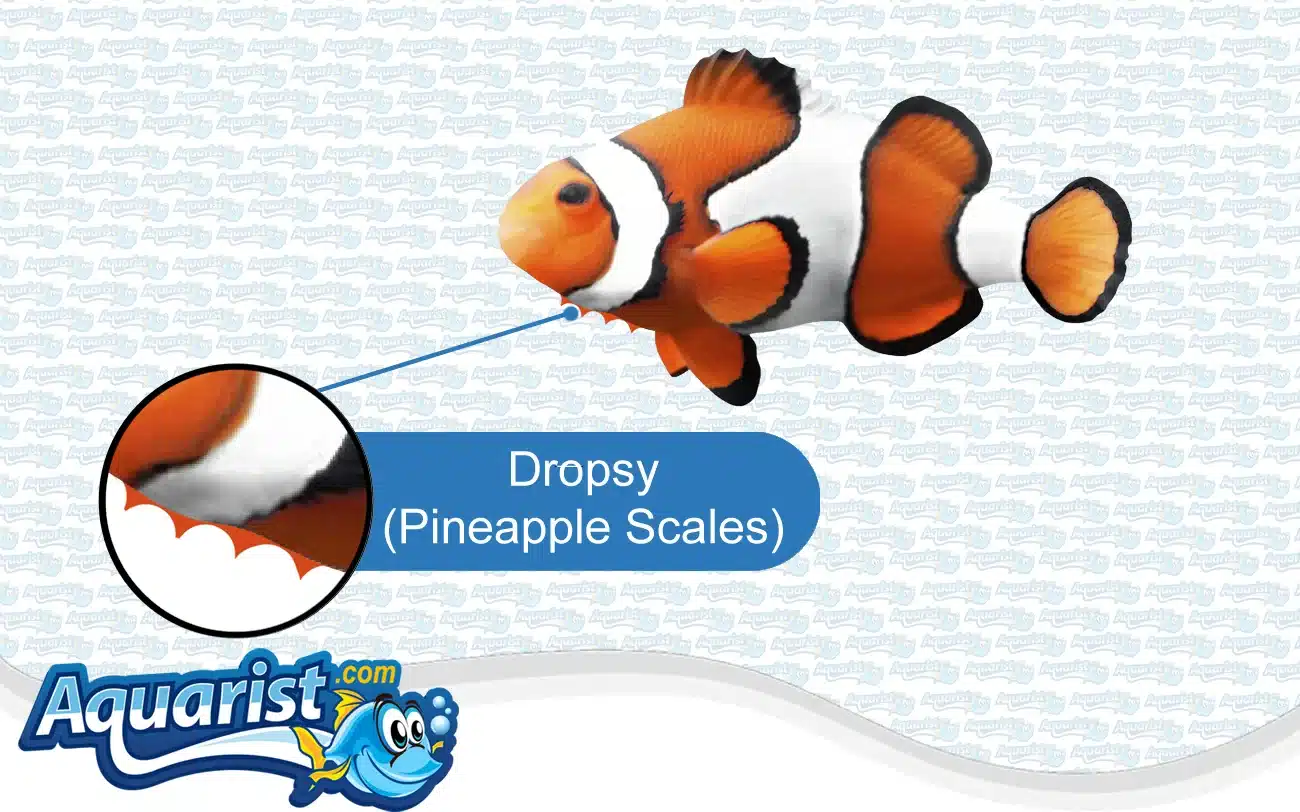
Dropsy is not a disease on its own but a sign of fluid building up inside the body, usually from kidney failure caused by a serious internal infection. The swelling pushes scales outward like a pinecone. Even with treatment, the outlook is often poor.
Signs to look for
- Swollen belly
- Scales sticking out (pinecone look) when viewed from above
- Popeye, pale gills, lethargy
Treatment
- Isolate the fish in quarantine with excellent water quality.
- Epsom salt at about 1 tablespoon per 5 gallons can ease fluid buildup.
- Medicated food with a broad-spectrum antibiotic such as kanamycin gives the best chance if the fish is still eating.
- If the fish is clearly suffering and not improving, humane euthanasia is the kind choice.
Prevention
- Good water quality and diet.
- Treat infections early before they reach the organs.
Please note: This guide is general information, not a diagnosis. Always follow the medication's label for dose and duration, treat in a separate quarantine tank (many medications, including copper, harm corals, invertebrates and the tank's beneficial bacteria), and ask a qualified aquatic vet when you're unsure.
Eye Fluke
What it is
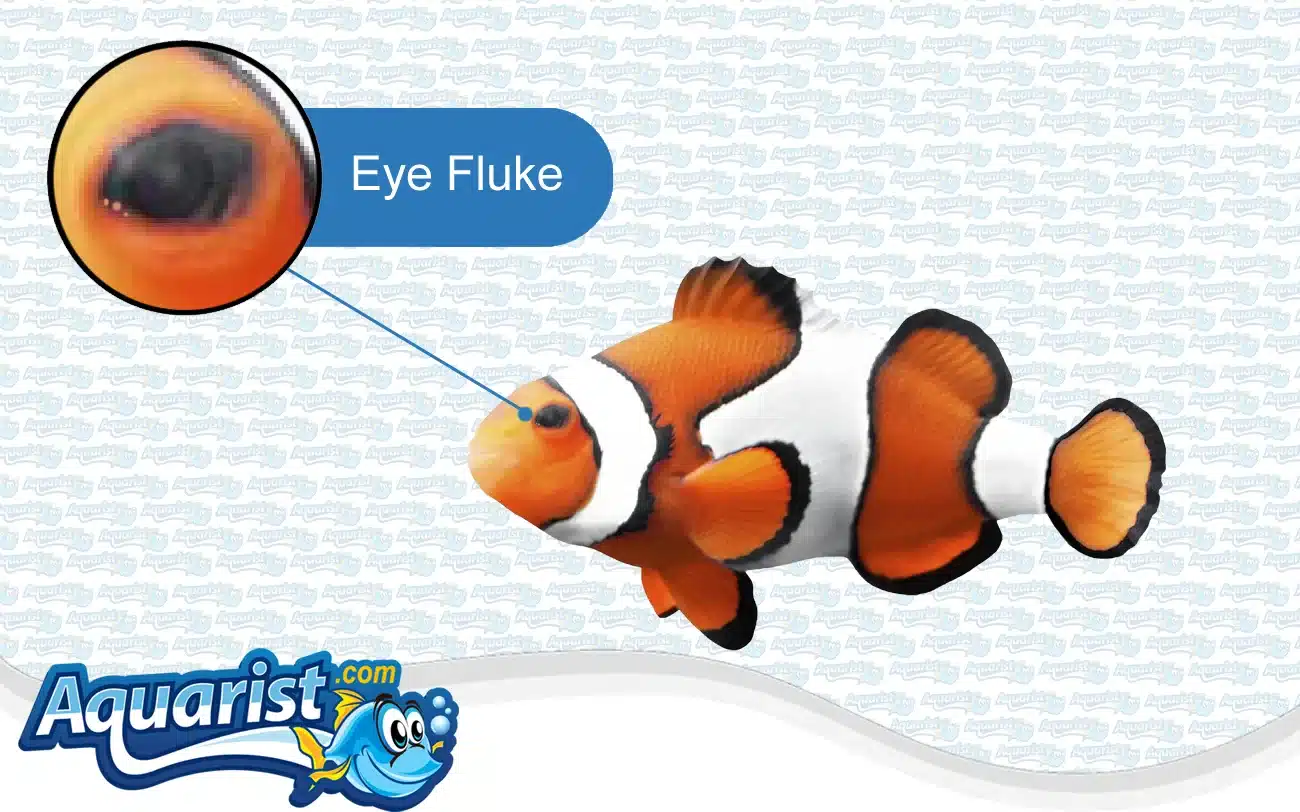
Some flukes target the eye surface, including monogeneans such as Neobenedenia, and larval flukes can lodge inside the eye. They irritate and cloud the eye and can damage vision.
Signs to look for
- Hazy or cloudy eye, often only one
- Tiny clear specks on the eye under a flashlight
- Scratching the head and eye against rock
Treatment
- Treat in quarantine with praziquantel, repeating the course after about a week.
- A freshwater dip can remove flukes from the eye surface.
- Larval flukes inside the eye are harder to reach; keep water clean and support the fish while it heals.
Prevention
- Quarantine and preventive praziquantel for new fish, especially tangs and angels.
Please note: This guide is general information, not a diagnosis. Always follow the medication's label for dose and duration, treat in a separate quarantine tank (many medications, including copper, harm corals, invertebrates and the tank's beneficial bacteria), and ask a qualified aquatic vet when you're unsure.
Fin Hemorrhaging
What it is
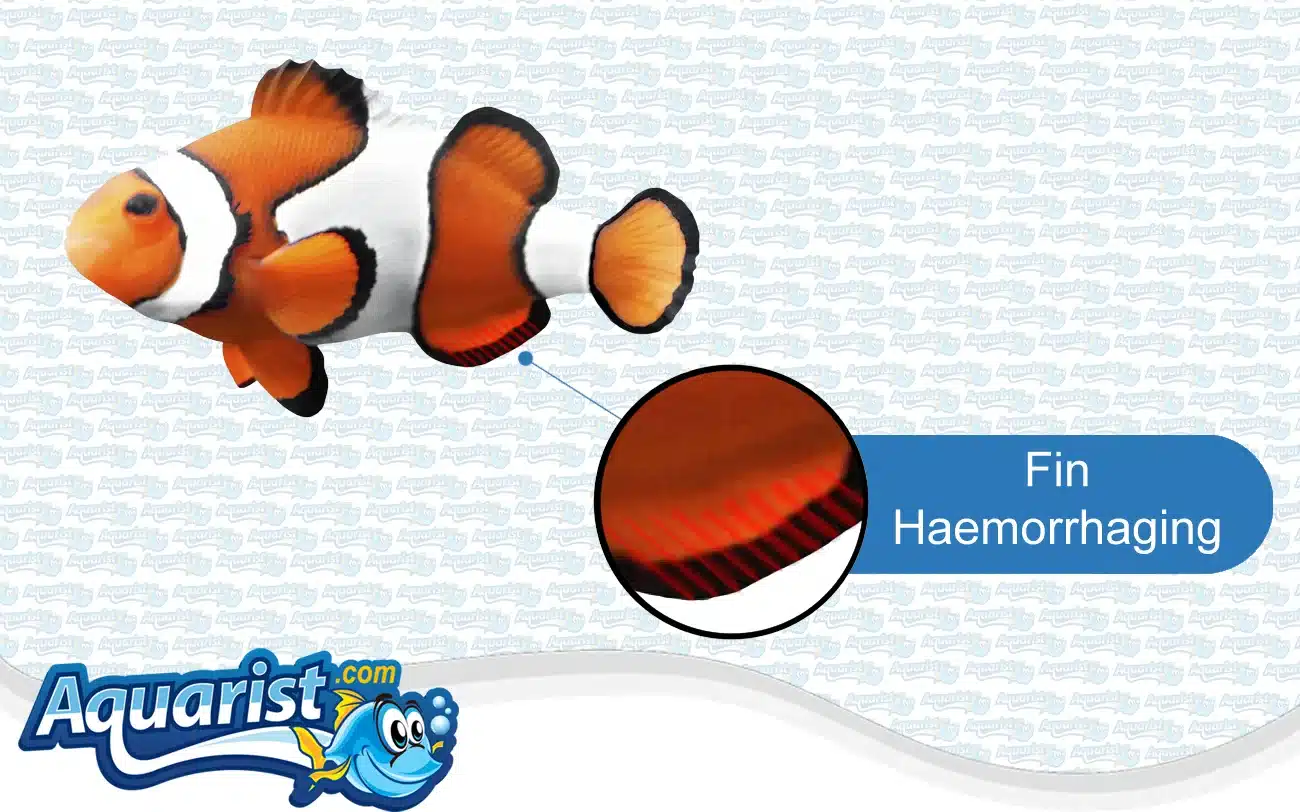
Red streaks or blotches in the fins are bleeding in small blood vessels. Common causes are ammonia or nitrite poisoning, poor water quality, or a bacterial infection in the blood (often Vibrio).
Signs to look for
- Red streaks or spots in the fins or tail
- Redness at the fin bases
- Lethargy, clamped fins, poor appetite
Treatment
- Test water immediately; if ammonia or nitrite is present, do large water changes and fix filtration.
- If water is fine and redness spreads, treat in quarantine with a broad-spectrum marine antibiotic or medicated food.
- Keep the fish warm and stable, without temperature swings.
Prevention
- Keep ammonia and nitrite at zero.
- Don't overstock or overfeed; add new fish slowly.
Please note: This guide is general information, not a diagnosis. Always follow the medication's label for dose and duration, treat in a separate quarantine tank (many medications, including copper, harm corals, invertebrates and the tank's beneficial bacteria), and ask a qualified aquatic vet when you're unsure.
Fin Rot
What it is
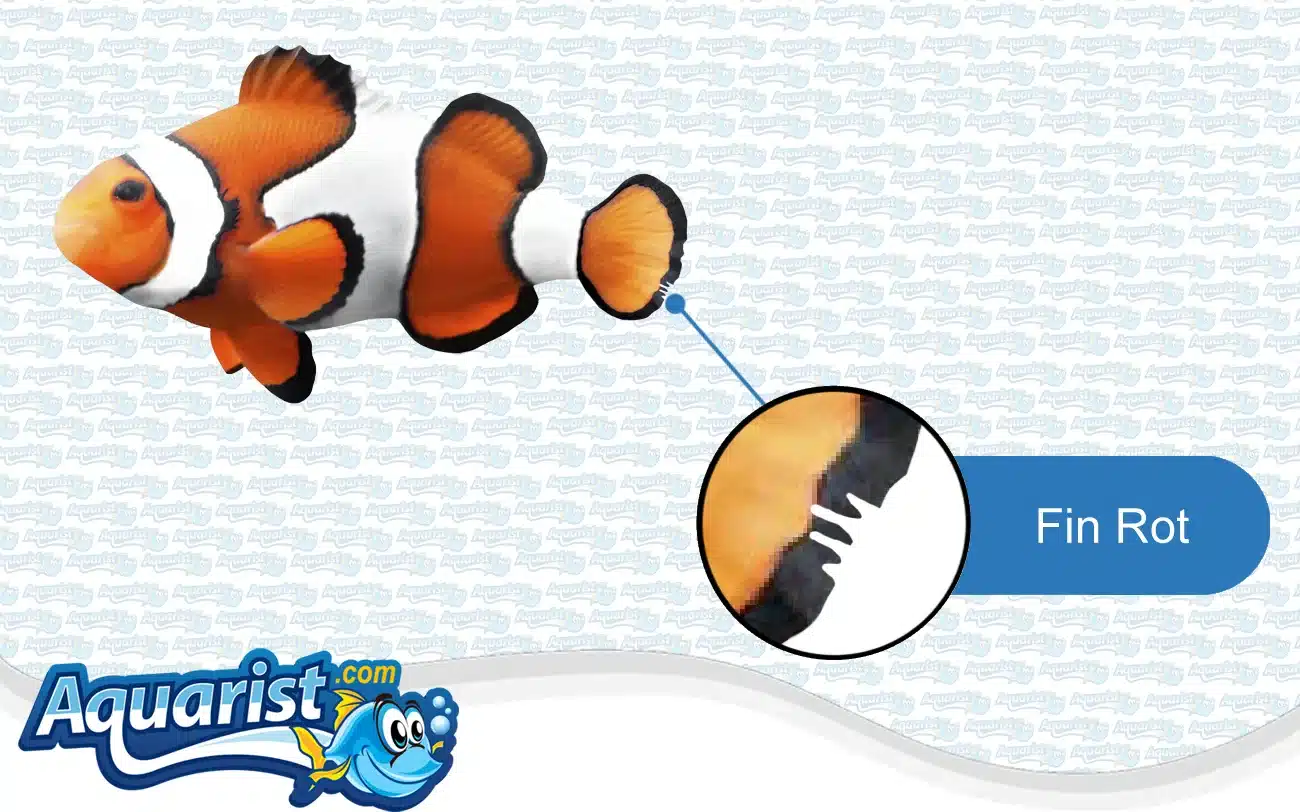
Fin rot is a bacterial infection (often Vibrio or Pseudomonas) that eats away at fin tissue. It usually starts after fin nipping, injury or poor water quality.
Signs to look for
- Ragged, shredded or shortening fins
- White or red edges on damaged fins
- Rot moving toward the body in severe cases
Treatment
- Fix water quality first with water changes and testing.
- Separate the fish from fin-nipping tank mates.
- Mild cases often heal with clean water alone, and fins regrow.
- Spreading rot needs a marine antibiotic such as nitrofurazone or kanamycin in quarantine.
Prevention
- Compatible tank mates.
- Clean water and no overcrowding.
Please note: This guide is general information, not a diagnosis. Always follow the medication's label for dose and duration, treat in a separate quarantine tank (many medications, including copper, harm corals, invertebrates and the tank's beneficial bacteria), and ask a qualified aquatic vet when you're unsure.
Fungus
What it is
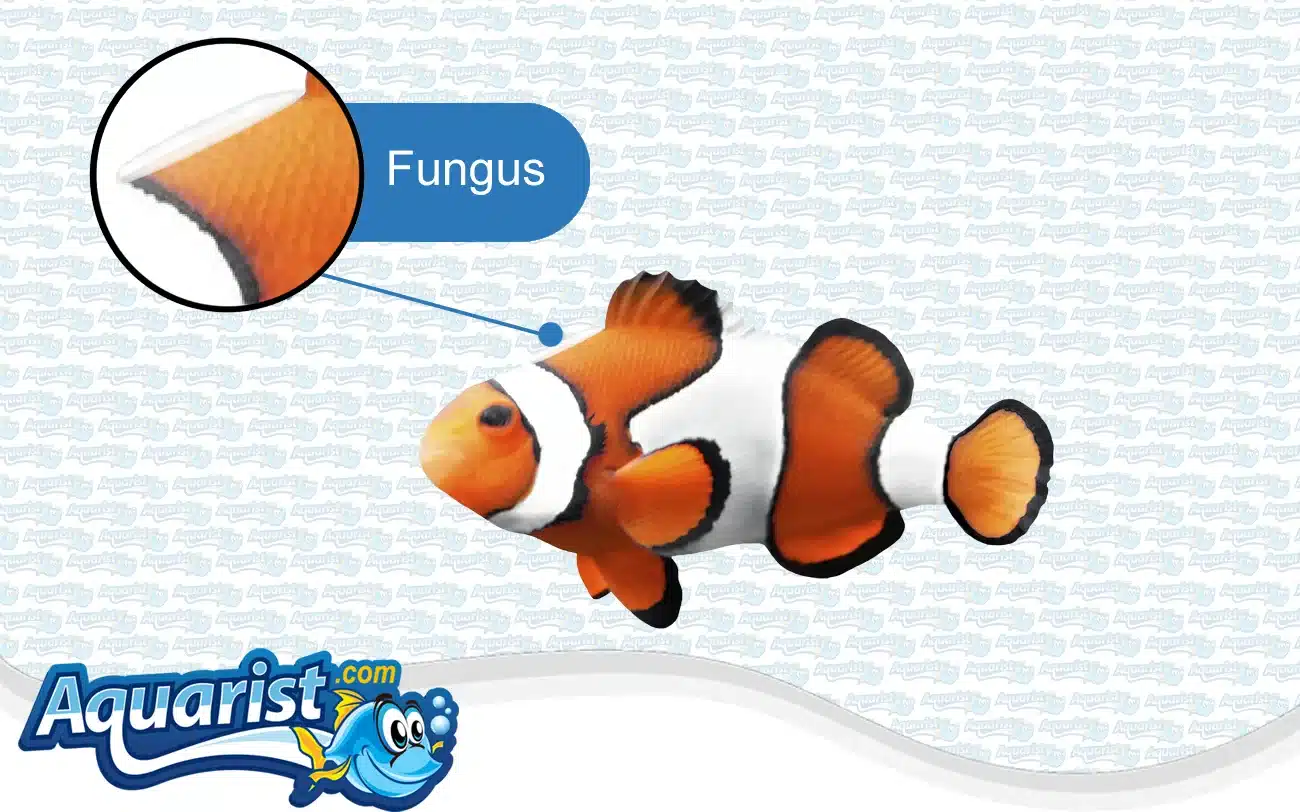
True fungal infections are less common in saltwater fish than in freshwater fish. Cotton-like growths usually show up on top of an existing wound, and the fish often has a bacterial problem as well. Internal fungal disease (such as Ichthyophonus) also exists but is hard to diagnose.
Signs to look for
- White or gray cottony tufts on the skin, fins or wounds
- Growth usually on a spot that was already injured
- Fish hiding or eating less
Treatment
- Move the fish to quarantine and keep the water very clean.
- Treat the wound underneath; marine-labeled antifungal and antibacterial products used together work best.
- Remove any decaying food or dead tissue from the tank promptly.
Prevention
- Prevent injuries and treat wounds early.
- Keep organic waste low.
Please note: This guide is general information, not a diagnosis. Always follow the medication's label for dose and duration, treat in a separate quarantine tank (many medications, including copper, harm corals, invertebrates and the tank's beneficial bacteria), and ask a qualified aquatic vet when you're unsure.
Gill Flukes
What it is
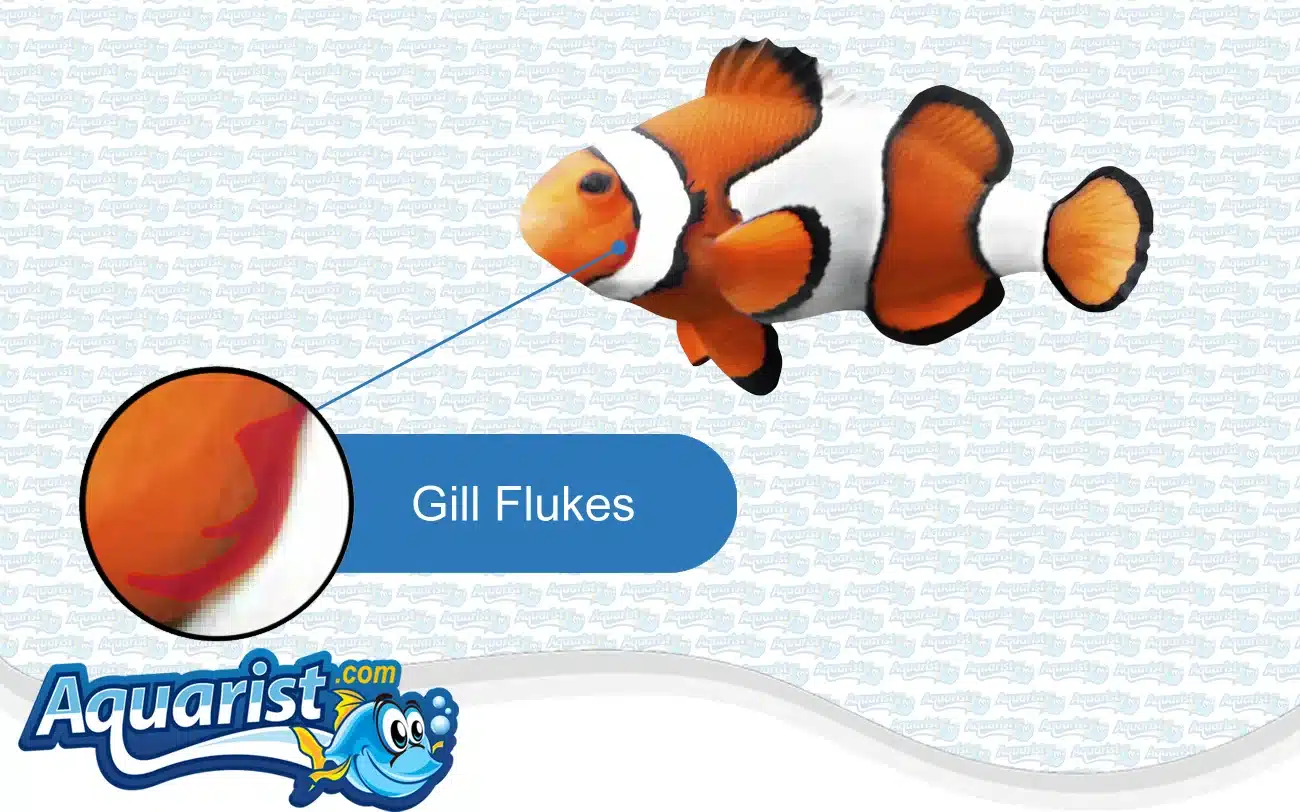
Gill flukes are tiny flatworms that live on the gill filaments and feed on them. Because the gills are hidden, a heavy infection is often missed until the fish struggles to breathe.
Signs to look for
- Fast or labored breathing
- Gills held open, or breathing with only one gill
- Pale or swollen gills
- Scratching the head or gill covers
Treatment
- Treat in quarantine with praziquantel, repeating after about 5 to 7 days.
- Formalin baths are an alternative; use with strong aeration and follow the label exactly.
- A freshwater dip removes some flukes from the gills and confirms the problem.
Prevention
- Quarantine with preventive praziquantel for new fish.
Please note: This guide is general information, not a diagnosis. Always follow the medication's label for dose and duration, treat in a separate quarantine tank (many medications, including copper, harm corals, invertebrates and the tank's beneficial bacteria), and ask a qualified aquatic vet when you're unsure.
Hole-in-the-Head (HLLE)
What it is
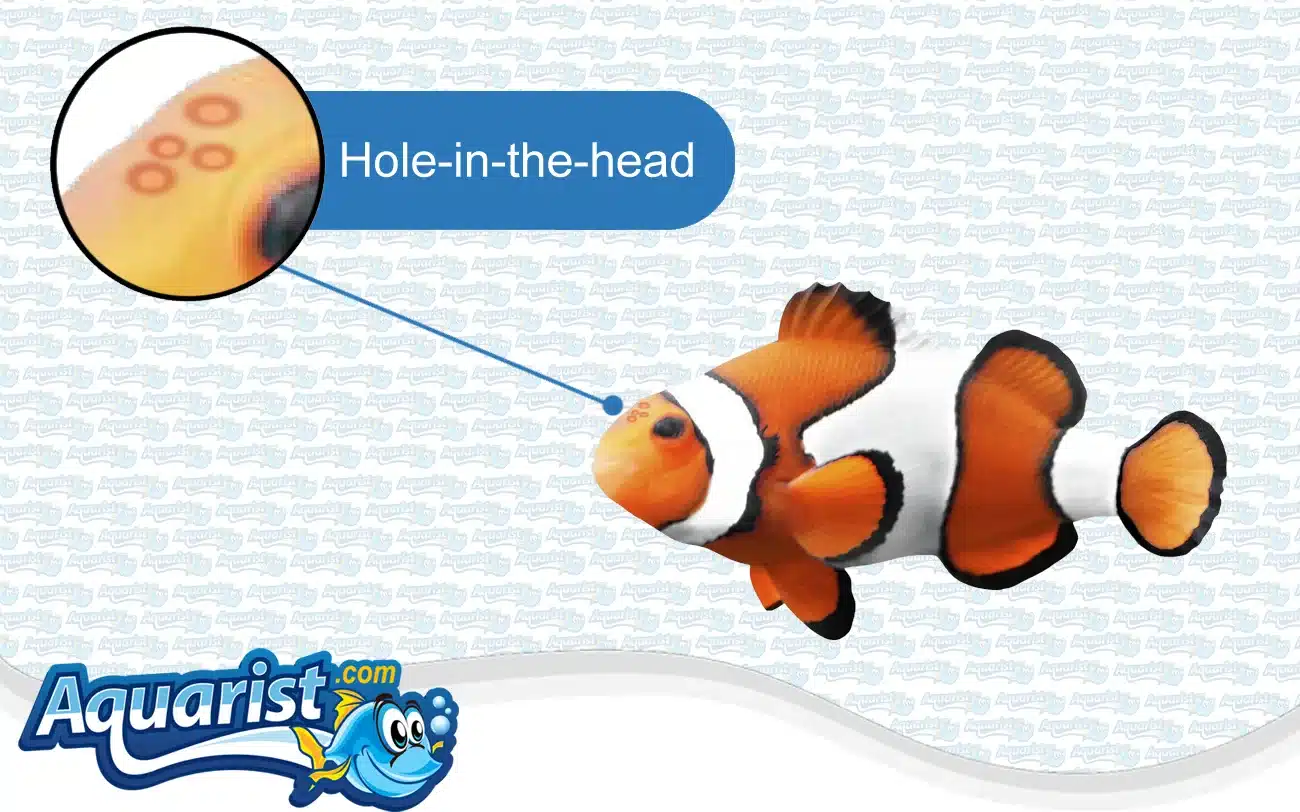
Head and lateral line erosion (HLLE) causes pits and pale trails around the face and along the side of the body. It is linked to poor nutrition, some types of activated carbon (especially dusty lignite carbon), stray voltage and chronic stress. Tangs and angelfish are most often affected.
Signs to look for
- Small pits or pale patches around the eyes and face
- Erosion spreading along the lateral line
- Fish usually still active and eating
Treatment
- Improve the diet: varied marine foods, nori and other seaweed, and a vitamin supplement.
- Switch to a rinsed, high-quality carbon or stop using carbon for a while.
- Check for stray voltage and fix water quality issues.
- Most mild cases slowly fill back in once the cause is removed.
Prevention
- A varied, vitamin-rich diet with plenty of seaweed for grazing fish.
- Rinse carbon well and avoid dusty products.
Please note: This guide is general information, not a diagnosis. Always follow the medication's label for dose and duration, treat in a separate quarantine tank (many medications, including copper, harm corals, invertebrates and the tank's beneficial bacteria), and ask a qualified aquatic vet when you're unsure.
Internal Bacteria
What it is
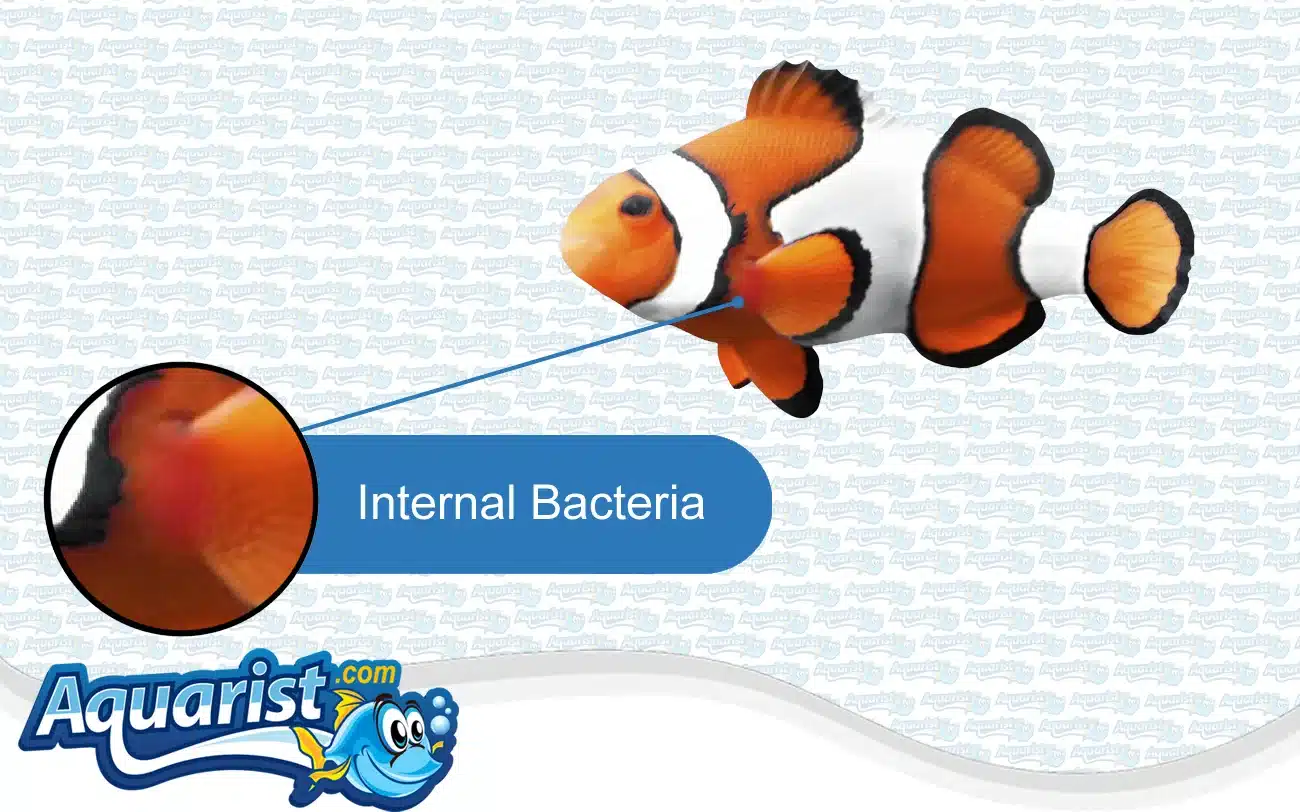
Bacterial infections inside the body, often from Vibrio or, in chronic cases, Mycobacterium, can affect the organs. They are hard to see early, and fish often go downhill slowly.
Signs to look for
- Lethargy and loss of appetite
- Swollen or sunken belly
- Red patches, popeye or long-term thinning
- White, stringy feces
Treatment
- Isolate the fish in quarantine.
- Medicated food with a marine-labeled antibiotic, such as kanamycin, works best when the fish is still eating.
- Metronidazole in food is sometimes added when internal protozoa are suspected.
- Mycobacterium can infect people: wear gloves if you have cuts on your hands, and talk to a vet or fish health specialist.
Prevention
- Quarantine, clean water and a good diet.
- Remove dead or sick fish quickly.
Please note: This guide is general information, not a diagnosis. Always follow the medication's label for dose and duration, treat in a separate quarantine tank (many medications, including copper, harm corals, invertebrates and the tank's beneficial bacteria), and ask a qualified aquatic vet when you're unsure.
Intestinal Worms
What it is
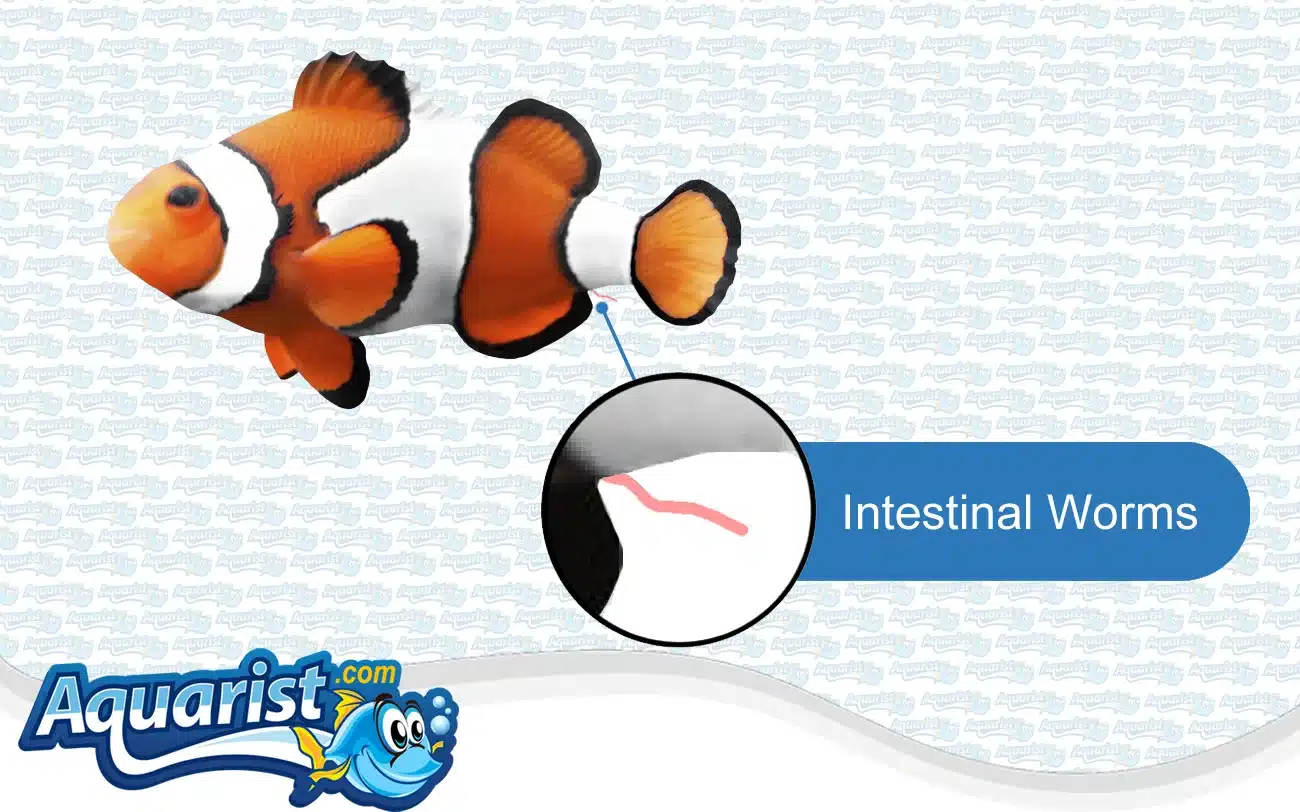
Several kinds of worms can live in a marine fish's gut, including roundworms (nematodes), tapeworms and flukes. Wild-caught fish often carry some, and a heavy load steals nutrition and weakens the fish.
Signs to look for
- Fish eats well but keeps getting thinner, sometimes with a pinched belly
- Long, white, stringy feces
- Worms sometimes visible at the vent
- Swollen belly in some cases
Treatment
- Praziquantel in food or as a bath in quarantine treats tapeworms and flukes; repeat the course as the label directs.
- Fenbendazole or levamisole soaked into food treats roundworms.
- Medicated food works best; soak frozen food in the drug and a garlic or vitamin attractant if the fish is picky.
- Retreat after 2 to 3 weeks to catch worms that hatch later.
Prevention
- Deworm new wild-caught fish routinely during quarantine.
- Feed a varied, good-quality diet.
Please note: This guide is general information, not a diagnosis. Always follow the medication's label for dose and duration, treat in a separate quarantine tank (many medications, including copper, harm corals, invertebrates and the tank's beneficial bacteria), and ask a qualified aquatic vet when you're unsure.
Lymphocystis
What it is
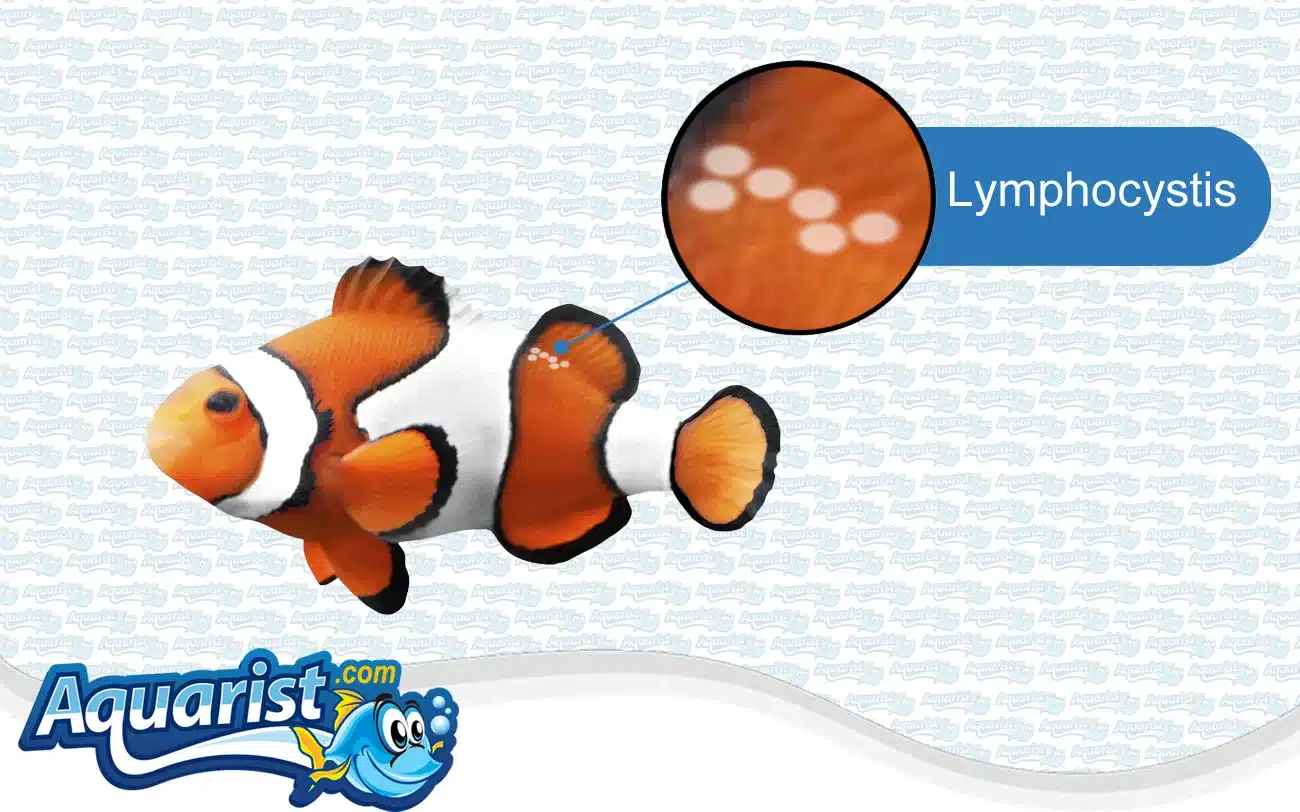
Lymphocystis is a viral infection (an iridovirus) that makes infected skin cells swell to many times their normal size. It is unsightly but rarely fatal, and it usually shows up after stress, such as shipping or poor water quality.
Signs to look for
- White to pinkish lumps that look like cauliflower or sugar grains, usually on fins and lips
- Growths stay in one place instead of coming and going like ich
- Fish usually keeps eating and behaving normally
Treatment
- There is no medication that cures the virus.
- Give the fish clean, stable water, a varied diet and a stress-free tank; most cases clear up on their own over weeks to months.
- Don't cut or scrape growths off, as open wounds can become infected.
- Isolate the fish if growths are large or near the mouth so you can make sure it can still eat.
Prevention
- Quarantine new fish and buy from sources that ship carefully.
- Reduce stress from overcrowding, aggression and water swings.
Please note: This guide is general information, not a diagnosis. Always follow the medication's label for dose and duration, treat in a separate quarantine tank (many medications, including copper, harm corals, invertebrates and the tank's beneficial bacteria), and ask a qualified aquatic vet when you're unsure.
Mouth Fungus
What it is
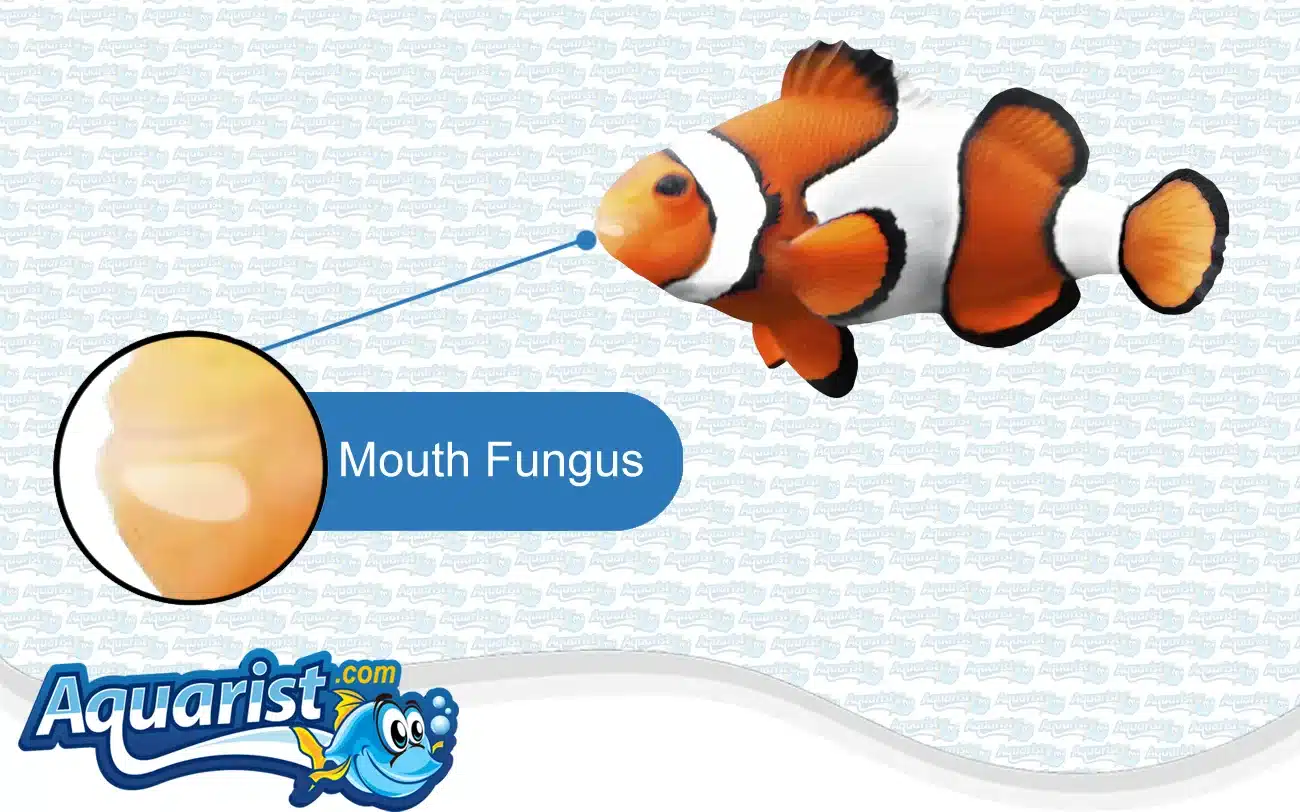
Despite the name, "mouth fungus" is usually a bacterial infection. In saltwater fish it is often linked to Tenacibaculum and related bacteria that attack the lips and mouth, often after an injury or rough shipping.
Signs to look for
- White, gray or cottony patch on the lips or around the mouth
- Frayed or eroded lips
- Trouble eating or refusing food
- Can spread quickly across the head in a stressed fish
Treatment
- Move the fish to quarantine and improve water quality right away.
- Use a broad-spectrum antibiotic labeled for marine use, such as kanamycin or nitrofurazone, in quarantine; a combination is often more effective.
- Keep the water very clean during treatment, with frequent water changes between doses as the label allows.
- Offer soft, easy food so the fish can keep eating.
Prevention
- Avoid injuries from rough rockwork, nets and fighting.
- Keep ammonia and nitrite at zero, and keep stress low after shipping.
Please note: This guide is general information, not a diagnosis. Always follow the medication's label for dose and duration, treat in a separate quarantine tank (many medications, including copper, harm corals, invertebrates and the tank's beneficial bacteria), and ask a qualified aquatic vet when you're unsure.
Skin Irritation
What it is
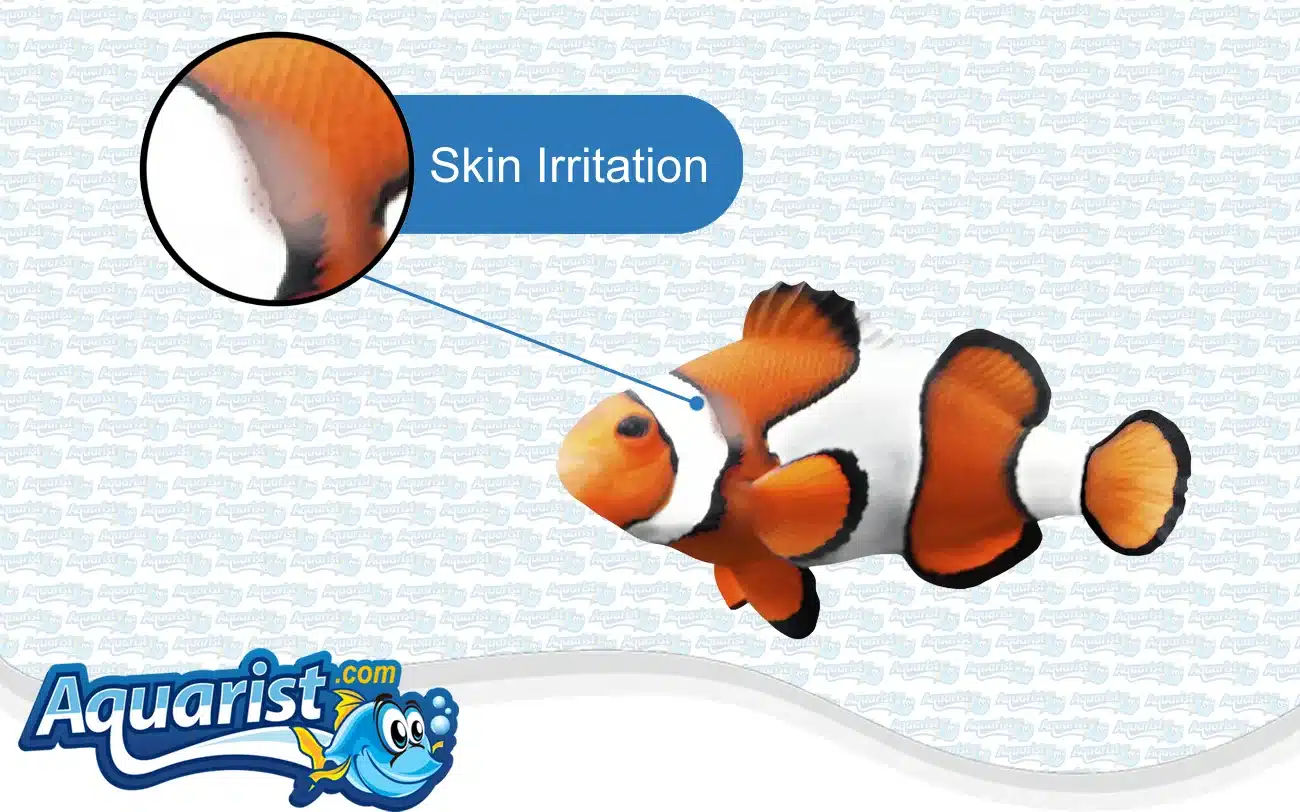
Skin irritation is a symptom, not one disease. Scratching and excess slime can come from poor water quality, early parasites such as flukes, Brooklynella or Uronema, stray electrical voltage, or chemical contamination.
Signs to look for
- Flashing or rubbing against rock and sand
- Cloudy or patchy slime coat
- Faded color, clamped fins
- Fish keeping to one area or swimming oddly
Treatment
- Test ammonia, nitrite, nitrate, pH, salinity and temperature first, and correct any problem gradually.
- Check for stray voltage with a probe or by unplugging equipment one at a time.
- A freshwater dip of 3 to 5 minutes is both a treatment and a test: look in the dip water for flukes falling off.
- Treat the real cause once found, such as praziquantel for flukes or formalin for Brooklynella in quarantine.
Prevention
- Stable water, regular water changes, and quarantine of new fish.
- Grounding probe and drip loops on all equipment.
Please note: This guide is general information, not a diagnosis. Always follow the medication's label for dose and duration, treat in a separate quarantine tank (many medications, including copper, harm corals, invertebrates and the tank's beneficial bacteria), and ask a qualified aquatic vet when you're unsure.
Ulcers, Sores and Wounds
What it is
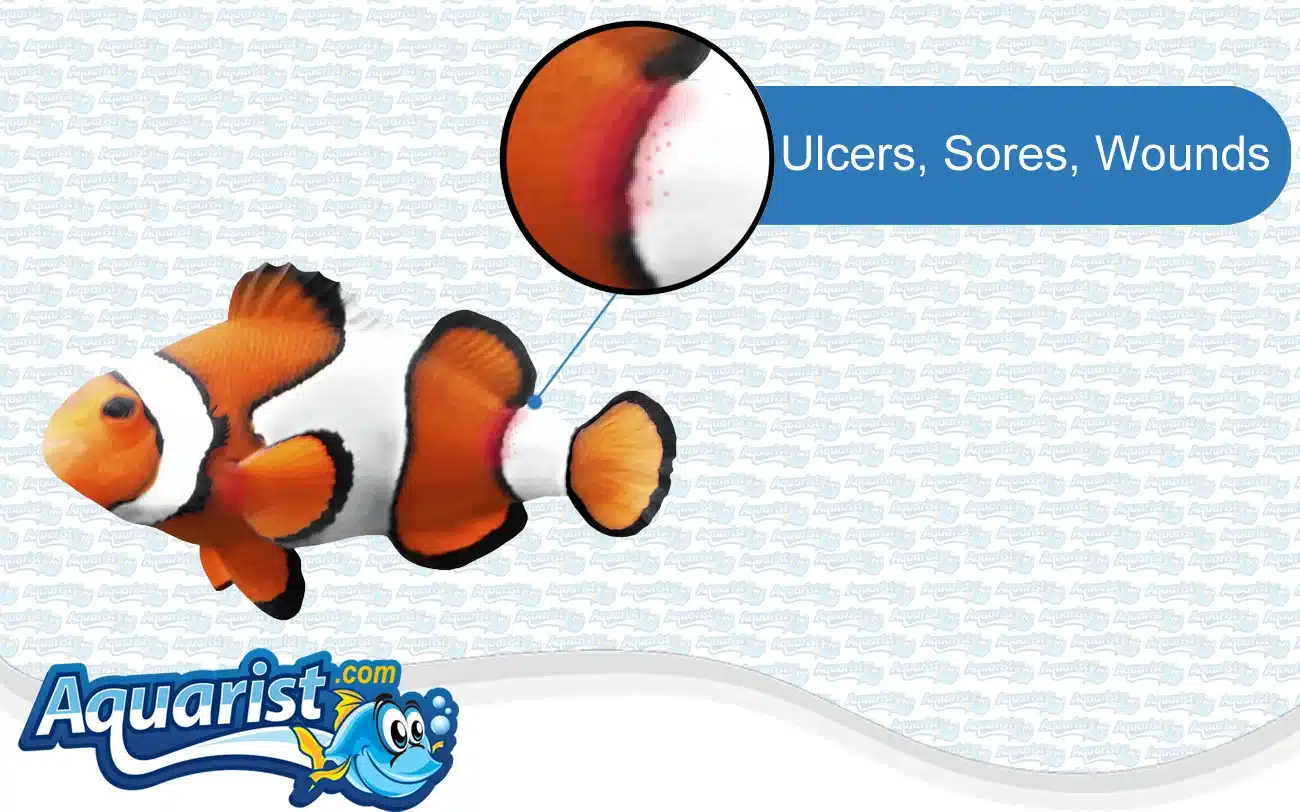
Open sores usually start with an injury or a parasite and are then infected by bacteria, often Vibrio. Untreated, ulcers can become deep and lead to infection throughout the body.
Signs to look for
- Red, raw or open patches on the body
- Missing scales around the area
- White or gray edges on a wound
- Fish hiding, eating less
Treatment
- Move the fish to a quiet quarantine tank with excellent water quality.
- Minor wounds often heal on their own with clean water and a good diet.
- Infected or spreading ulcers need antibiotics labeled for marine use, such as kanamycin, nitrofurazone, or medicated food.
- Remove the cause of the injury, such as an aggressive tank mate or sharp rockwork.
Prevention
- Choose compatible tank mates and give enough space.
- Handle fish with a container instead of a net when possible.
Please note: This guide is general information, not a diagnosis. Always follow the medication's label for dose and duration, treat in a separate quarantine tank (many medications, including copper, harm corals, invertebrates and the tank's beneficial bacteria), and ask a qualified aquatic vet when you're unsure.
Velvet (Oodinium)
What it is
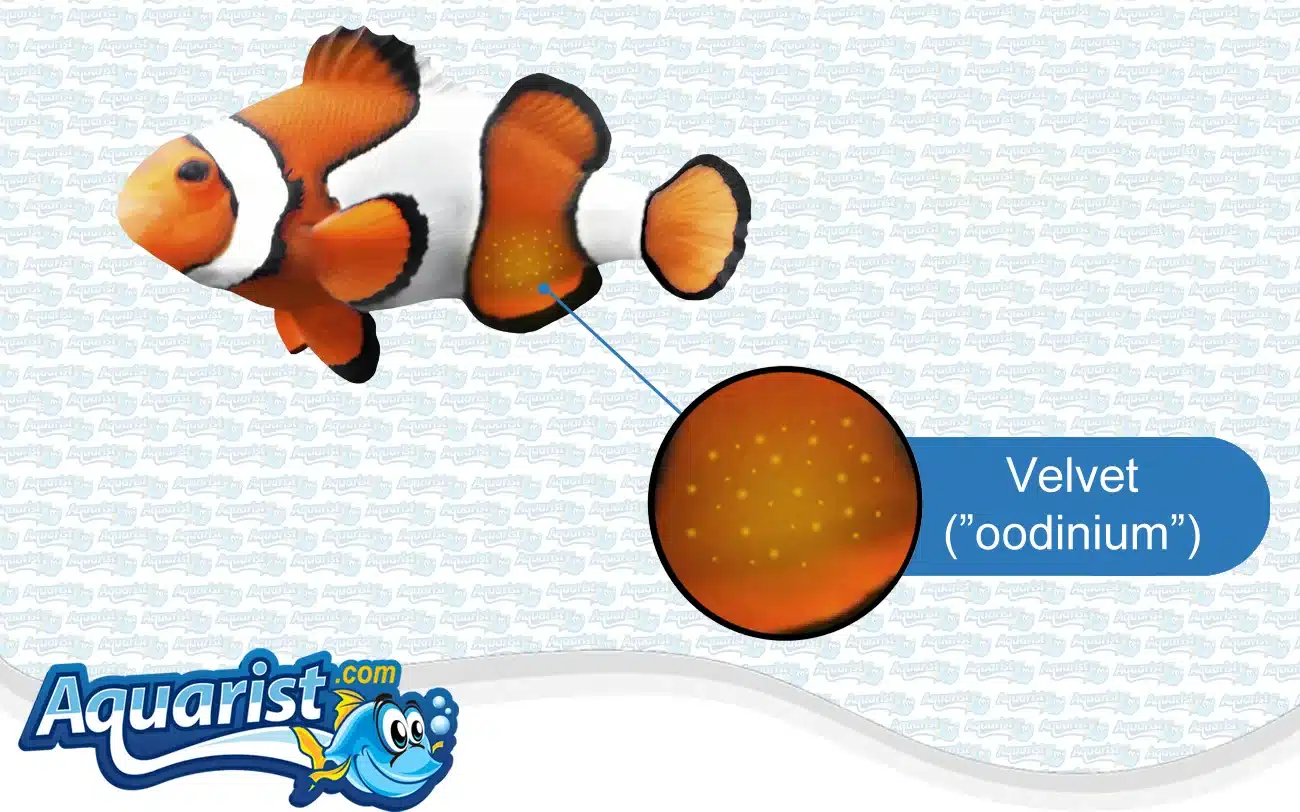
Marine velvet is caused by Amyloodinium ocellatum, a tiny parasitic dinoflagellate. It attacks the gills first and can kill a tank of fish within a day or two of the first signs. It is one of the most urgent problems a saltwater keeper can face.
Signs to look for
- Fine gold or gray dust on the skin, easiest to see with a flashlight from the side
- Very fast breathing, gasping near the surface or at the powerhead outflow
- Clamped fins, hiding, sudden loss of appetite
- Fish dying quickly with few visible spots
Treatment
- Act the same day. Move fish to a quarantine tank.
- A pH- and temperature-matched freshwater dip of 3 to 5 minutes can knock parasites off the skin and gills and buy time.
- Treat in quarantine with copper at the label's therapeutic level, or with chloroquine phosphate.
- Hyposalinity does not reliably kill velvet, so don't rely on it.
- Leave the display without fish for at least 6 weeks.
Prevention
- Strict quarantine of all new fish.
- Be very careful with fish from tanks with recent losses.
- Watch breathing rate closely on newly added fish for the first weeks.
Please note: This guide is general information, not a diagnosis. Always follow the medication's label for dose and duration, treat in a separate quarantine tank (many medications, including copper, harm corals, invertebrates and the tank's beneficial bacteria), and ask a qualified aquatic vet when you're unsure.
White Spot (Ich / Cryptocaryon)
What it is
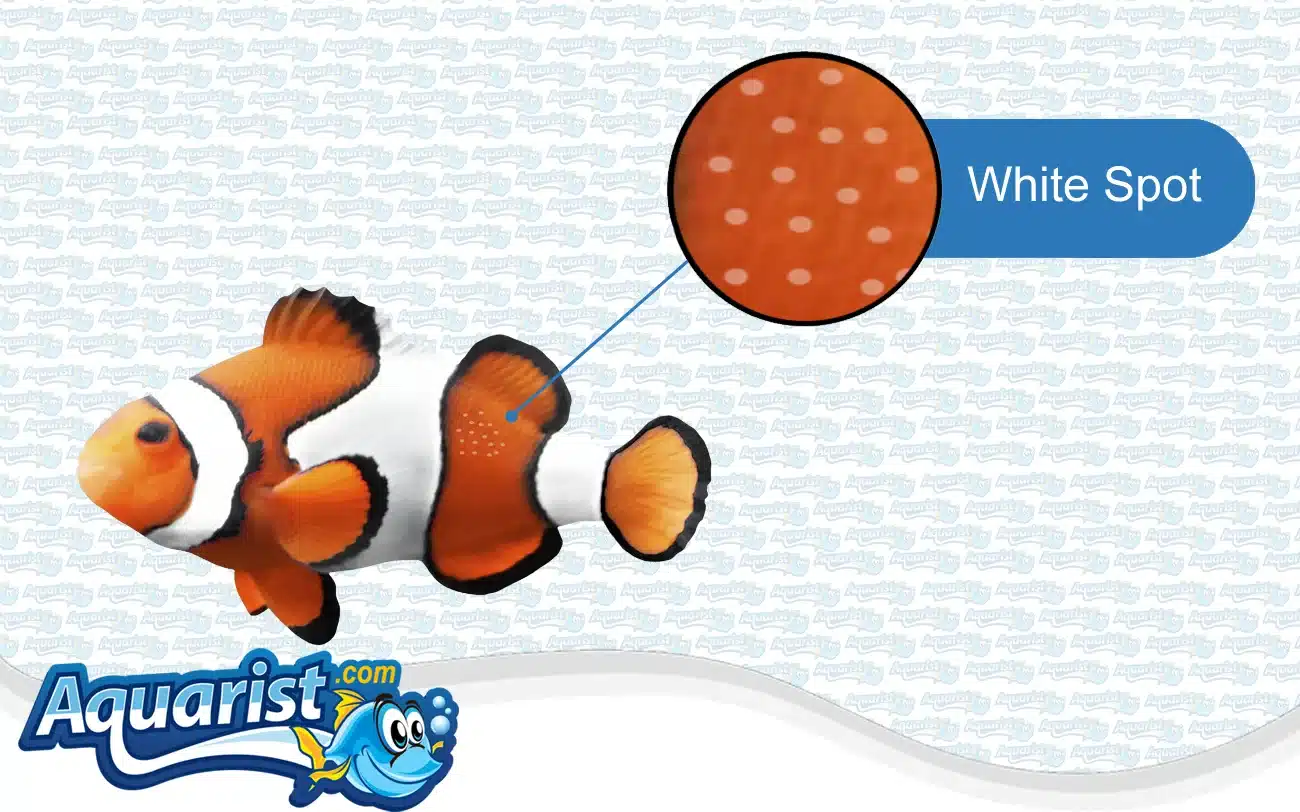
Marine ich is caused by Cryptocaryon irritans, a single-celled parasite that burrows under the skin and gill tissue. The white dots you see are feeding parasites. After a few days they drop off, form cysts on rock and sand, and release hundreds of new swimmers that look for a host. That cycle is why ich keeps coming back if only the fish are treated.
Signs to look for
- Salt-grain white dots on the body and fins, often coming and going over a few days
- Scratching or flashing against rock and sand
- Fast breathing if the gills are involved
- Hiding, cloudy look to the skin, poor appetite
Treatment
- Move every fish to a bare quarantine tank; never treat the display reef with these methods.
- Copper is the standard cure: hold the level the product label states (often about 0.15 to 0.20 ppm for ionic copper) for at least 14 days, checked daily with a copper test kit.
- Chloroquine phosphate is a strong alternative, especially for copper-sensitive fish; it is prescription-only in many places.
- Tank transfer method: move fish to a clean, freshly set-up tank every 3 days, four times in all, so the cysts left behind never reach a fish.
- Hyposalinity (specific gravity held at 1.009 to 1.010, measured with a calibrated refractometer) works for ich, but not for invertebrates, sharks or rays.
- Leave the display tank without fish for about 76 days so the parasites left behind starve.
Prevention
- Quarantine every new fish for at least 4 to 6 weeks before it goes into the display.
- Never move water, nets or rock from an infected tank to a healthy one.
- Keep stress low with stable temperature, salinity and peaceful tank mates.
Please note: This guide is general information, not a diagnosis. Always follow the medication's label for dose and duration, treat in a separate quarantine tank (many medications, including copper, harm corals, invertebrates and the tank's beneficial bacteria), and ask a qualified aquatic vet when you're unsure.