
Overview
- Native to the Pacific Ocean, particularly common in coral reefs around the Marshall Islands and the Central Pacific.
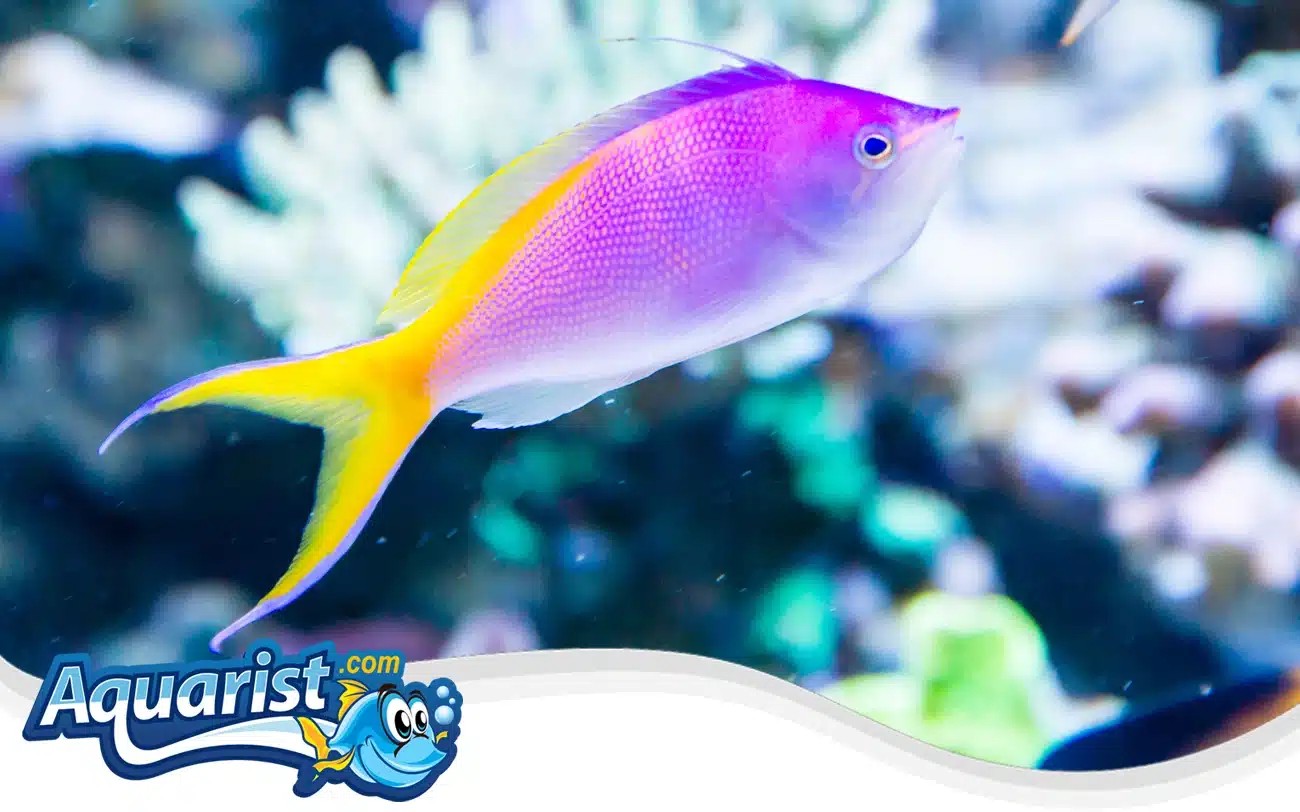
- Features a striking coloration with vibrant yellow body, purplish-red upper half, and striking lavender highlights on fins.
- A schooling species known for their peaceful, active, and social behavior.
- Ideal for community reef aquariums, often kept in small groups for best results.
Feeding
- Primarily planktivorous; naturally consumes zooplankton and small crustaceans.
- Readily accepts frozen and dried aquarium foods such as mysis shrimp, brine shrimp, plankton, and high-quality flake or pellet foods.
- Feed multiple small meals daily to ensure adequate nutrition and coloration.
- Variety in diet essential to maintain optimal health.
Habitat
- Prefers a moderately sized aquarium (minimum 70 gallons) with plenty of open swimming space and live rock formations.
- Stable, mature aquarium conditions with excellent water quality are vital.
- Provide plenty of hiding spots and coral structures to mimic their natural reef environment.
- Moderate water flow and good filtration required to maintain optimal water parameters.
Fish Care
- Optimal water temperature: 72-78°F (22-26°C).
- Recommended pH: 8.1-8.4; specific gravity: 1.020-1.025.
- Sensitive to water fluctuations; regular testing and consistent water maintenance necessary.
- Generally hardy but should be monitored for common marine diseases.
Compatibility
- Peaceful; best housed with other non-aggressive species.
- Ideal for reef aquariums, safe with corals and ornamental invertebrates.
- Recommended tank mates include other anthias species, small reef-safe wrasses, clownfish, gobies, and chromis.
- Should be kept in groups, ideally one male with multiple females to prevent aggression.
Aquarium Behavior
- Active swimmers, often seen swimming in open water above reef structures.
- Highly social, best kept in groups to showcase natural behavior and reduce stress.
- Generally peaceful, though males may exhibit mild territorial behavior in smaller tanks.
- Providing ample swimming space and hiding spots reduces aggression and promotes well-being.