
Overview
- Native to the Indo-Pacific, commonly found in coral reefs, lagoons, and sandy coastal areas.
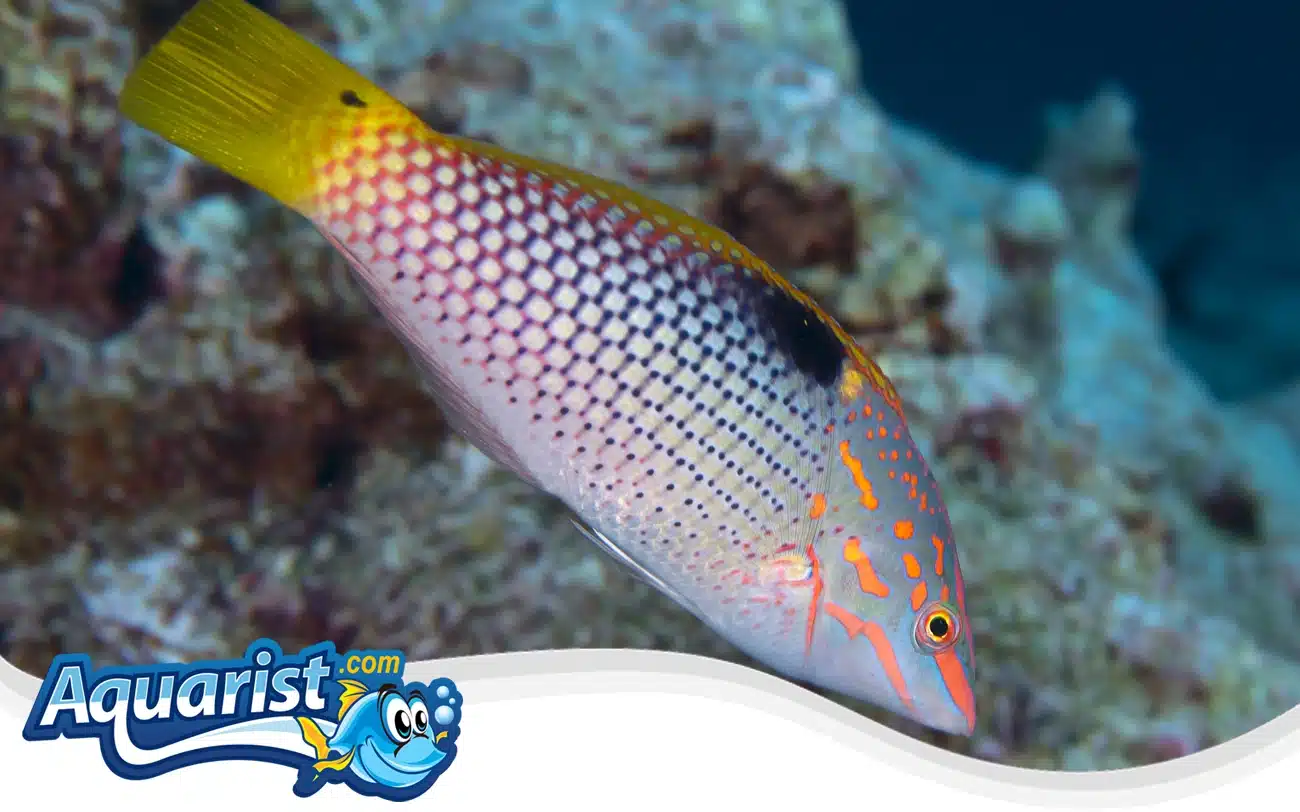
- Recognized for its striking checkered black-and-white pattern on the body with a yellowish hue on the head.
- A highly active and intelligent species, often seen foraging along the reef floor.
- Juveniles exhibit a more vibrant coloration, which may change slightly as they mature.
- Often used in reef tanks to control pest populations, such as bristle worms and small invertebrates.
Feeding
- Carnivorous diet, primarily feeding on small crustaceans, mollusks, and worms.
- Readily consumes frozen and live foods such as mysis shrimp, brine shrimp, and chopped seafood.
- Can be trained to eat high-quality marine pellets and flake foods.
- Requires multiple small meals throughout the day due to its high metabolism.
- Thrives in tanks with a sandbed, where it can naturally hunt for small prey.
Habitat
- Typically found in coral reef slopes, lagoons, and areas with abundant rocky structures.
- Requires an aquarium with open swimming space and a soft sand substrate for burrowing.
- Best kept in tanks with live rock for shelter and exploration.
- Moderate to strong water flow is recommended to replicate natural reef conditions.
- A minimum tank size of 90 gallons is recommended due to its size and activity level.
Fish Care
- Optimal water temperature: 74-80°F (23-27°C).
- Ideal pH range: 8.1-8.4, with a specific gravity of 1.023-1.026.
- Requires stable water conditions and a well-maintained aquarium.
- Can be sensitive to fluctuations in salinity and temperature.
- Regular sandbed maintenance is essential, as it burrows at night for protection.
Compatibility
- Generally peaceful but may become territorial towards smaller or more passive wrasses.
- Compatible with other semi-aggressive reef fish such as tangs, angelfish, and larger gobies.
- Should not be housed with overly aggressive species that may bully it.
- Reef-safe with corals but may consume small ornamental shrimp, crabs, or snails.
- Best suited for larger reef or fish-only systems where it has ample space to roam.
Aquarium Behavior
- Highly active swimmer, constantly moving and exploring its surroundings.
- Often seen picking at rocks and sand to uncover hidden prey.
- Burrows in the sand at night to sleep, emerging in the morning.
- Displays curiosity towards new tank mates and environmental changes.
- Thrives in tanks that provide both open swimming areas and structured reef elements.