
Overview
- Native to the Indo-Pacific, found in sandy reef areas and seagrass beds.
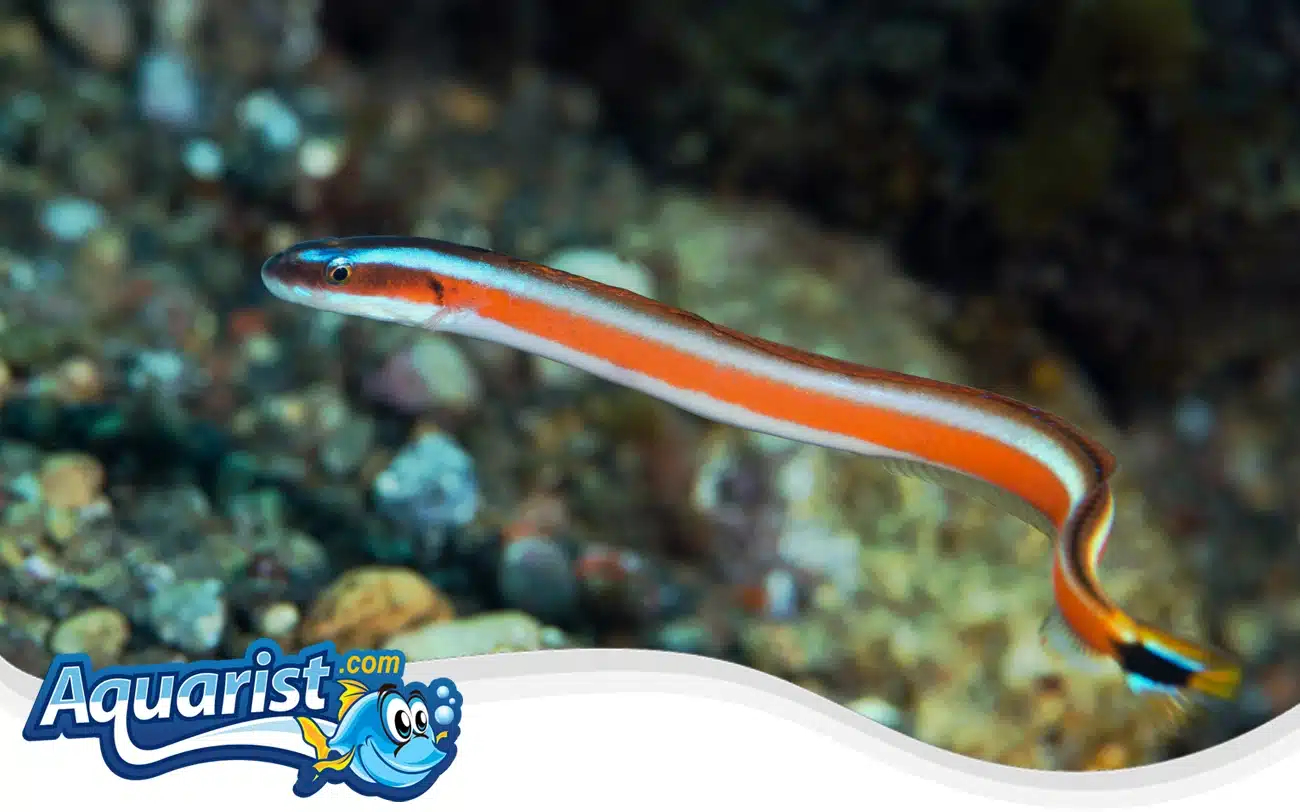
- Recognized for its elongated, eel-like body with a translucent appearance.
- Frequently seen hovering close to the substrate, retreating into burrows when startled.
- A peaceful and timid species best kept in a calm aquarium environment.
- Highly social in nature, often seen in small groups in the wild.
Feeding
- Carnivorous diet, primarily consuming small zooplankton and tiny crustaceans.
- Prefers live foods such as copepods, amphipods, and mysis shrimp.
- Can be trained to accept frozen foods but may require patience when adapting.
- Best fed multiple times per day due to its high metabolism.
- Supplementing with vitamin-enriched foods helps maintain optimal health and coloration.
Habitat
- Typically found in sandy-bottomed areas near coral reef edges.
- Prefers an aquarium with a fine sand substrate to allow for burrowing behavior.
- Requires stable water conditions with moderate water flow.
- Best suited for peaceful reef tanks with ample hiding spots.
- A minimum tank size of 50 gallons is recommended to accommodate its activity level.
Fish Care
- Optimal water temperature: 74-80°F (23-27°C).
- Ideal pH range: 8.1-8.4, with a specific gravity of 1.023-1.026.
- Requires excellent water quality and minimal fluctuations in parameters.
- Can be sensitive to sudden movements or aggressive tank mates.
- Regular water changes and a stress-free environment promote longevity.
Compatibility
- Best suited for peaceful reef tanks with non-aggressive species.
- Compatible with small gobies, dartfish, firefish, and peaceful wrasses.
- Should not be housed with large or aggressive fish that may intimidate it.
- Reef-safe and does not harm corals or invertebrates.
- Thrives in a group setting but can also be kept singly in a well-structured tank.
Aquarium Behavior
- Often seen hovering just above the substrate, moving gracefully in the water column.
- Retreats into burrows when frightened but emerges once it feels safe.
- Curious and social but needs a peaceful environment to thrive.
- Prefers dim lighting or shaded areas within the aquarium.
- Thrives in an environment with plenty of open space and minimal competition for food.