
Overview
- Found in the coral reefs of the Red Sea and Western Indian Ocean.
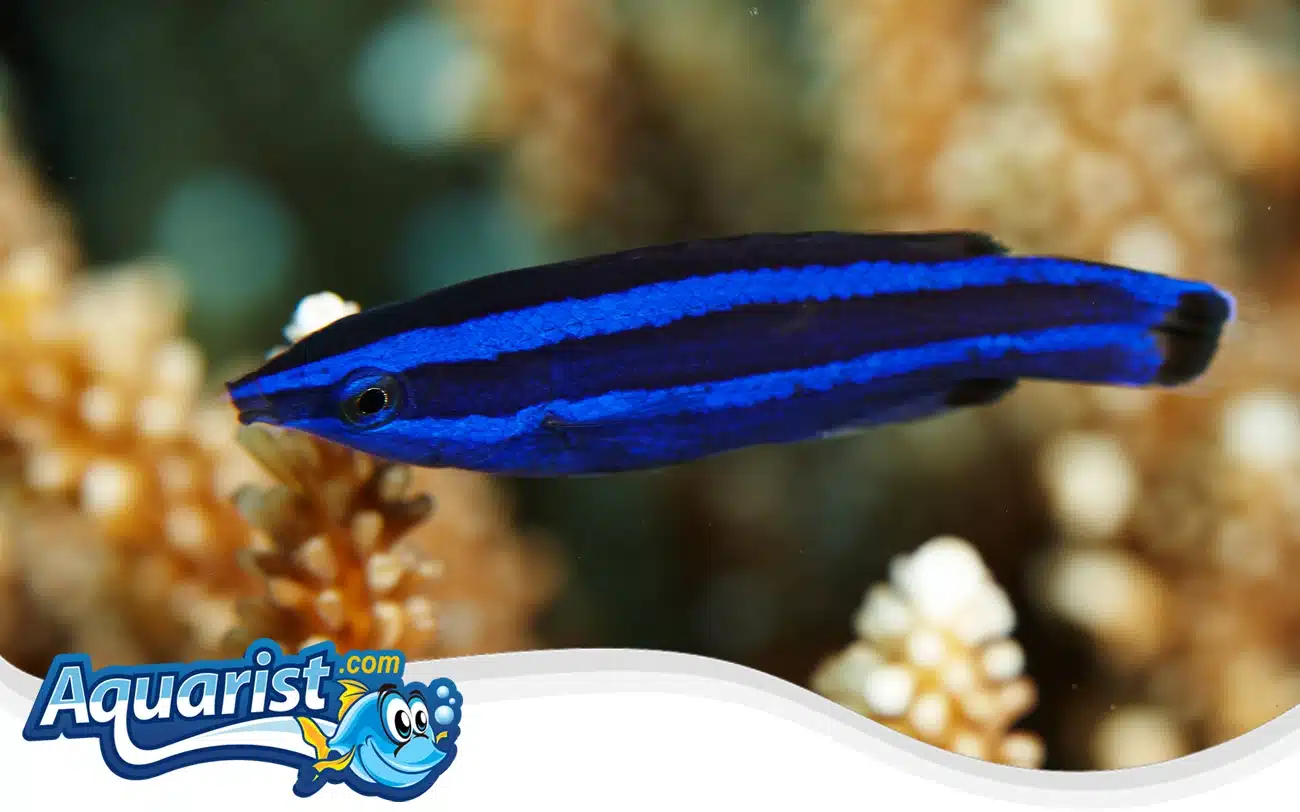
- Recognized by its four distinct horizontal lines running along its body.
- Often seen darting among coral structures, making it a lively addition to reef tanks.
- Exhibits cleaning behavior, occasionally removing parasites from other fish.
Feeding
- Primarily feeds on small invertebrates, plankton, and reef-dwelling organisms.
- Readily accepts frozen mysis shrimp, brine shrimp, and high-quality marine pellets.
- Offering a varied diet enhances its coloration and overall health.
- Multiple small feedings per day keep it active and well-nourished.
Habitat
- Prefers reef environments with abundant coral structures and crevices for hiding.
- Requires an aquarium with live rock to establish a secure territory.
- Moderate water flow and stable conditions mimic its natural habitat.
- Thrives in mature reef aquariums with a diverse ecosystem.
Fish Care
- Optimal water temperature: 75-81°F (24-27°C).
- pH level: 8.1-8.4, with a specific gravity of 1.023-1.026.
- Requires consistent water quality with regular maintenance.
- Adapts well to captivity when provided with a stress-free environment.
Compatibility
- Semi-aggressive; best housed with other active but non-aggressive species.
- Avoid keeping with highly territorial fish that may cause stress.
- Compatible with most reef-safe species, including clownfish and tangs.
- Can be kept singly or in a pair but may display dominance over similar wrasses.
Aquarium Behavior
- Highly active swimmer, frequently exploring the aquarium and interacting with other fish.
- May establish cleaning stations where larger fish allow it to remove parasites.
- Spends time darting between rock formations and open water.
- Becomes more confident over time in a stable, well-structured environment.