
Overview
- Native to the Caribbean Sea, commonly found near coral reefs and rocky outcrops.
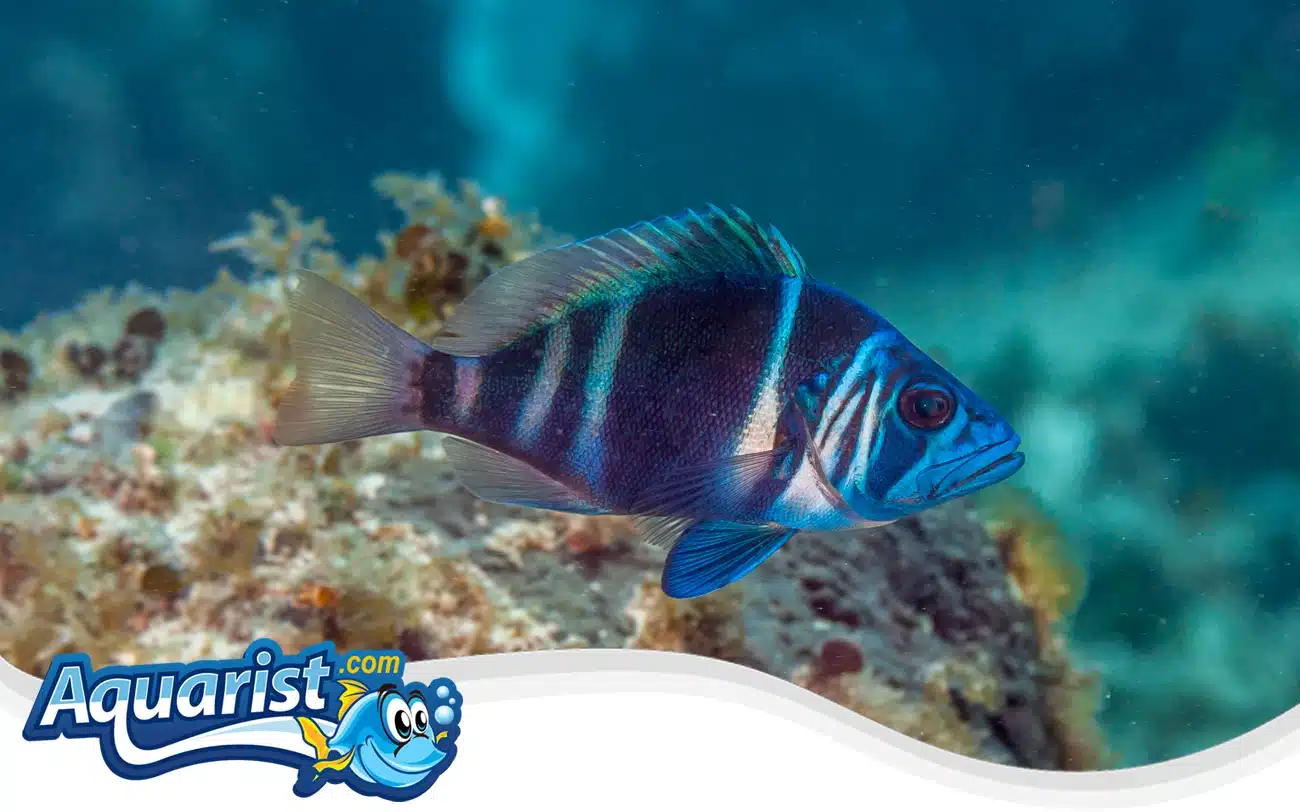
- Distinguished by its mesmerizing deep indigo-blue coloration, often accented with subtle markings.
- Prefers a structured reef environment where it can establish a secure territory.
- Ideal for experienced aquarists looking for a visually striking, yet manageable species.
Feeding
- Primarily carnivorous, preying on small crustaceans, plankton, and tiny fish in the wild.
- Accepts frozen mysis shrimp, krill, finely chopped seafood, and marine pellets in aquariums.
- Encouraging a diverse diet enhances health, coloration, and natural hunting instincts.
- Feeding twice daily ensures steady energy levels and overall vitality.
Habitat
- Typically resides in reef environments with complex rock formations and hiding spots.
- Requires an aquarium setup with live rock caves, crevices, and overhangs for shelter.
- Prefers moderate water currents that simulate natural reef conditions.
- Avoids overly bright lighting; subdued illumination mimics its native habitat.
Fish Care
- Optimal water temperature: 75-81°F (24-27°C).
- pH level: 8.1–8.4, with a specific gravity of 1.025–1.026 (about 33–35 ppt).
- Regular water changes and a stable environment are crucial for long-term health.
- Adapts well to captivity when provided with high water quality and a proper diet.
Compatibility
- Semi-aggressive; territorial tendencies increase in smaller tanks.
- Best housed with other assertive but non-aggressive reef fish.
- Avoid keeping with timid or slow-moving fish, as it may establish dominance.
- Works well in reef tanks but should not be housed with very small ornamental shrimp.
Aquarium Behavior
- Observant and curious, often seen patrolling the aquarium looking for food.
- Defends its favorite hiding spots, occasionally displaying dominance over intruders.
- Becomes more confident over time, especially in a well-structured reef setup.
- Excels in a stable, low-stress environment with minimal disruptions.
Frequently Asked Questions
What does an Indigo Basslet look like?
It is deep blue to indigo with pale blue to white vertical bars spaced along its sides. It is also widely known as the Indigo Hamlet.
How big does an Indigo Basslet get?
It reaches up to about 5.6 in (14 cm).
What size tank does an Indigo Basslet need?
At least 65 gallons (246 L). It is a sturdy, deep-bodied fish, and adults add a fair amount of waste, so extra room helps.
What does an Indigo Basslet eat?
It is a carnivore. Juveniles mostly eat small crustaceans, and adults eat mainly small fish. In the aquarium it takes mysis, chopped fish, shrimp, clam and squid, and frozen carnivore foods once or twice a day.
Is the Indigo Basslet reef safe?
With caution. It ignores corals, but it will eat ornamental shrimp, small crabs and any fish small enough to swallow.
Is the Indigo Basslet aggressive?
It is semi-aggressive. It usually gets along with fish that are too big to eat and won't bully it. Small fish and shrimp are not safe.
Can I keep more than one Indigo Basslet?
Usually just one. It is a solitary fish. Hamlets can sometimes share a tank of 75 gallons (284 L) or more if they are all added at once, but it is not guaranteed.
Does the Indigo Basslet need hiding places?
Yes. Hamlets are somewhat shy and do best with rock caves and crevices to shelter in.
Where does the Indigo Basslet live in the wild?
It is found in the Western Central Atlantic, including Florida, the Bahamas, Jamaica, Haiti, the Cayman Islands and the western Caribbean coast. It lives on coral reefs, usually 10 to 56 ft (3 to 17 m) deep.
Is the Indigo Basslet good for beginners?
It is an intermediate fish. It is hardy and eats readily, but you need to plan tankmates around its predatory habits. Keep it at 72 to 80°F (22 to 27°C).