
Overview
- Native to the Indo-Pacific region, commonly found around coral reefs and lagoon environments.
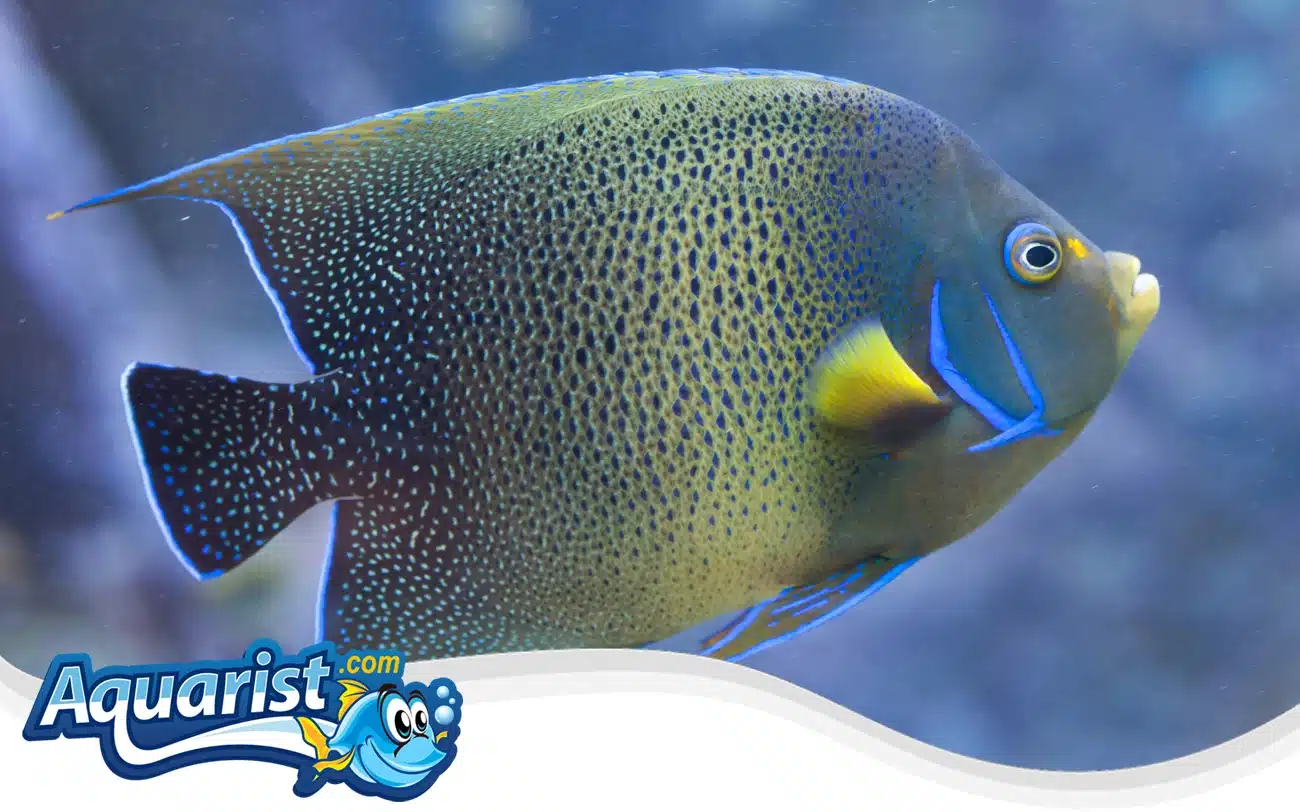
- Known for its vibrant blue-green body with distinctive semicircular patterns and intricate blue markings on the fins.
- Juveniles have bold blue, black, and white semicircular bands which evolve dramatically into adult coloration.
- Displays a confident and somewhat territorial behavior, suitable for experienced marine aquarists.
Feeding
- Omnivorous; naturally consumes sponges, algae, tunicates, and small marine invertebrates.
- Accepts various aquarium foods including marine algae, angelfish-specific preparations, mysis shrimp, brine shrimp, and chopped seafood.
- Feed multiple times daily to sustain optimal health and vibrant coloration.
- Essential dietary supplements include algae-based and sponge-based foods for balanced nutrition.
Habitat
- Requires a large aquarium (minimum 180 gallons [681 L]) with ample swimming room and well-structured live rock.
- Mature, stable aquarium conditions are essential for long-term health.
- Provide numerous hiding spots and caves in rockwork to reduce stress and aggression.
- Efficient filtration and moderate to strong water circulation necessary to maintain water quality.
Fish Care
- Optimal water temperature: 74-80°F (23-27°C).
- Recommended pH: 8.1–8.4; specific gravity: 1.025–1.026 (about 33–35 ppt).
- Sensitive to poor water conditions; consistent water testing and regular water changes required.
- Monitor carefully for signs of marine parasites and diseases; proactive management is crucial.
Compatibility
- Semi-aggressive; suitable tank mates include similarly sized and tempered fish.
- Can become territorial towards other angelfish or similarly colored and shaped species.
- Not reef-safe; known to nip at corals, sponges, and decorative invertebrates.
- Recommended companions include tangs, larger wrasses, groupers, and other semi-aggressive marine species.
Aquarium Behavior
- Bold, active swimmer frequently exploring the aquarium.
- Juveniles often hide initially but become increasingly visible and assertive as they mature.
- Interactive with caretakers, especially during feeding sessions.
- Providing ample hiding spaces and environmental enrichment significantly reduces aggression and stress.
Frequently Asked Questions
What does a Koran Angelfish look like?
Adults are yellow-green, darkening from front to back and speckled with blue and yellow, with sapphire blue edges on the gills, eyes and fins. It is also called the Semicircle or Halfcircled Angelfish.
What does a juvenile Koran Angelfish look like?
Juveniles are black with white and blue stripes, a common pattern among young Pomacanthus angelfish.
How big does a Koran Angelfish get?
It reaches up to about 15.7 in (40 cm) standard length (measured without the tail).
What size tank does a Koran Angelfish need?
At least 180 gallons (681 L) with plenty of live rock. Plan on 250 gallons (946 L) or more for adults, and bigger is better.
Is the Koran Angelfish hardy?
Yes. It is an extremely popular and hardy angelfish, which is why it is rated intermediate. Young fish adapt especially well to aquarium life.
What does a Koran Angelfish eat?
Wild fish eat sponges, tunicates and algae. Offer Spirulina, marine algae, angelfish foods and mysis or frozen shrimp.
How often should I feed a Koran Angelfish?
Feed a varied diet at least three times a day.
Will a Koran Angelfish eat nuisance algae?
It grazes on slime algae and cyanobacteria growing on live rock.
Is the Koran Angelfish reef safe?
With caution. It is prone to nip stony and soft corals and clam mantles.
Where does the Koran Angelfish live in the wild?
It is found across the Indo-West Pacific, from the Red Sea and East Africa to Samoa, north to southern Japan and south to New South Wales. Juveniles live in shallow protected spots, and adults on coral-rich coastal reefs.