
Overview
- Native to the Indo-Pacific region, commonly found on outer reef slopes and drop-offs.
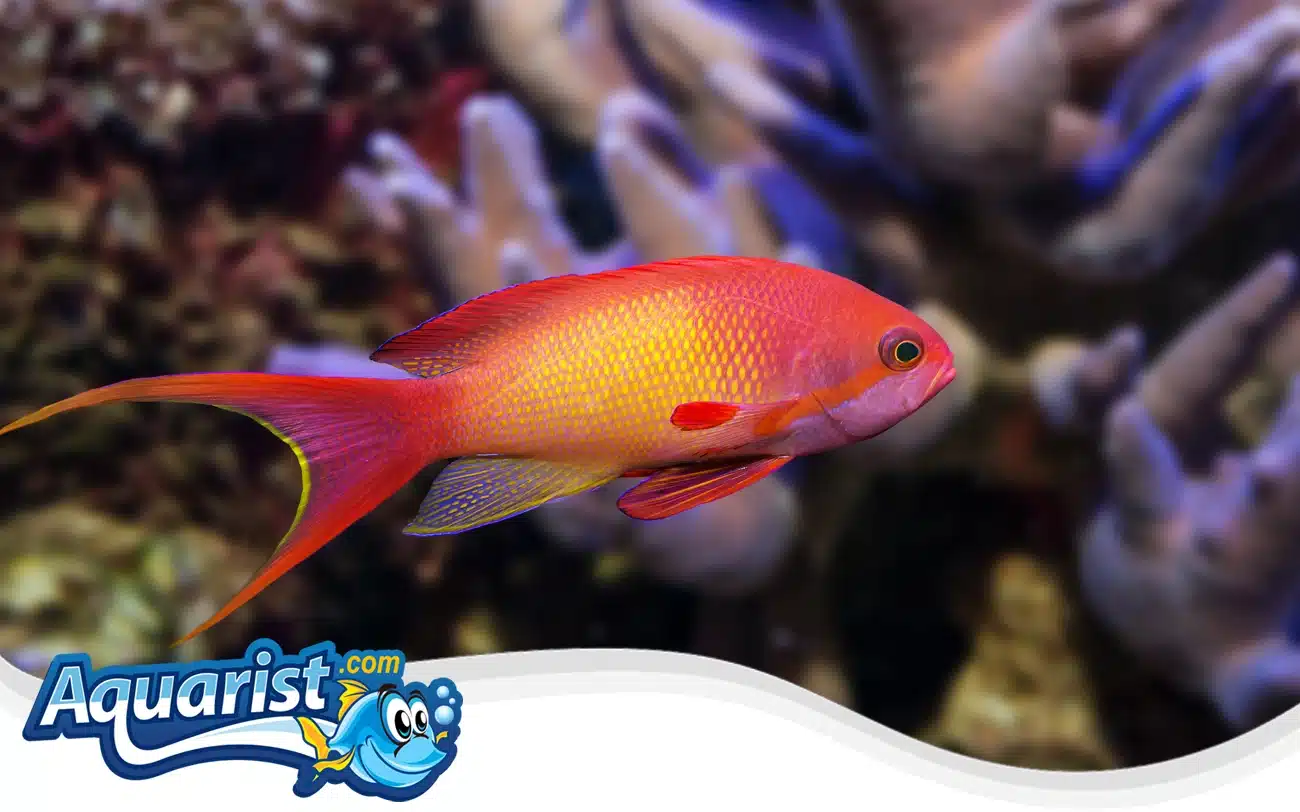
- Males are bright orange to reddish-orange with long trailing fin extensions; females are yellow-orange and more slender.
- Highly active and social schooling fish that prefer to stay in the mid-water column.
- Ideal for intermediate aquarists due to specific dietary and environmental requirements.
Feeding
- Planktivorous; naturally feeds on zooplankton in the water column.
- Provide a diet of mysis shrimp, brine shrimp, finely chopped seafood, and high-quality plankton-based foods.
- Feed small amounts 2–3 times daily to mimic natural feeding behavior.
- A consistent, high-protein diet supports vibrant coloration and energy levels.
Habitat
- Requires a minimum tank size of 75 gallons, with plenty of open swimming space and rock structures for shelter.
- Thrives in well-oxygenated water with stable parameters and mature biological filtration.
- Moderate to strong water movement simulates natural reef environments.
- Low to moderate lighting helps reduce stress and mimics their natural habitat.
Fish Care
- Preferred temperature range: 72–78°F (22–26°C).
- Ideal pH: 8.1–8.4; specific gravity: 1.020–1.025.
- Sensitive to sudden parameter shifts; maintain regular water changes and consistent monitoring.
- Observe for signs of stress or disease; quarantine new additions when possible.
Compatibility
- Peaceful and best kept in harems with one male and several females to maintain social hierarchy.
- Reef-safe and compatible with corals and ornamental invertebrates.
- Compatible with other peaceful reef fish, such as wrasses, gobies, firefish, and tangs.
- Avoid aggressive or highly territorial tank mates that could stress or outcompete them.
Aquarium Behavior
- Highly active mid-water swimmers that display best behavior in groups.
- Males may become territorial with one another in smaller aquariums.
- Social structure and space play a large role in maintaining harmony within groups.
- Coloration intensifies and natural schooling behaviors are more visible in a low-stress, well-maintained reef environment.