
Overview
- Found in the Indo-Pacific, particularly in the Philippines and surrounding regions, often inhabiting coral-rich reefs.
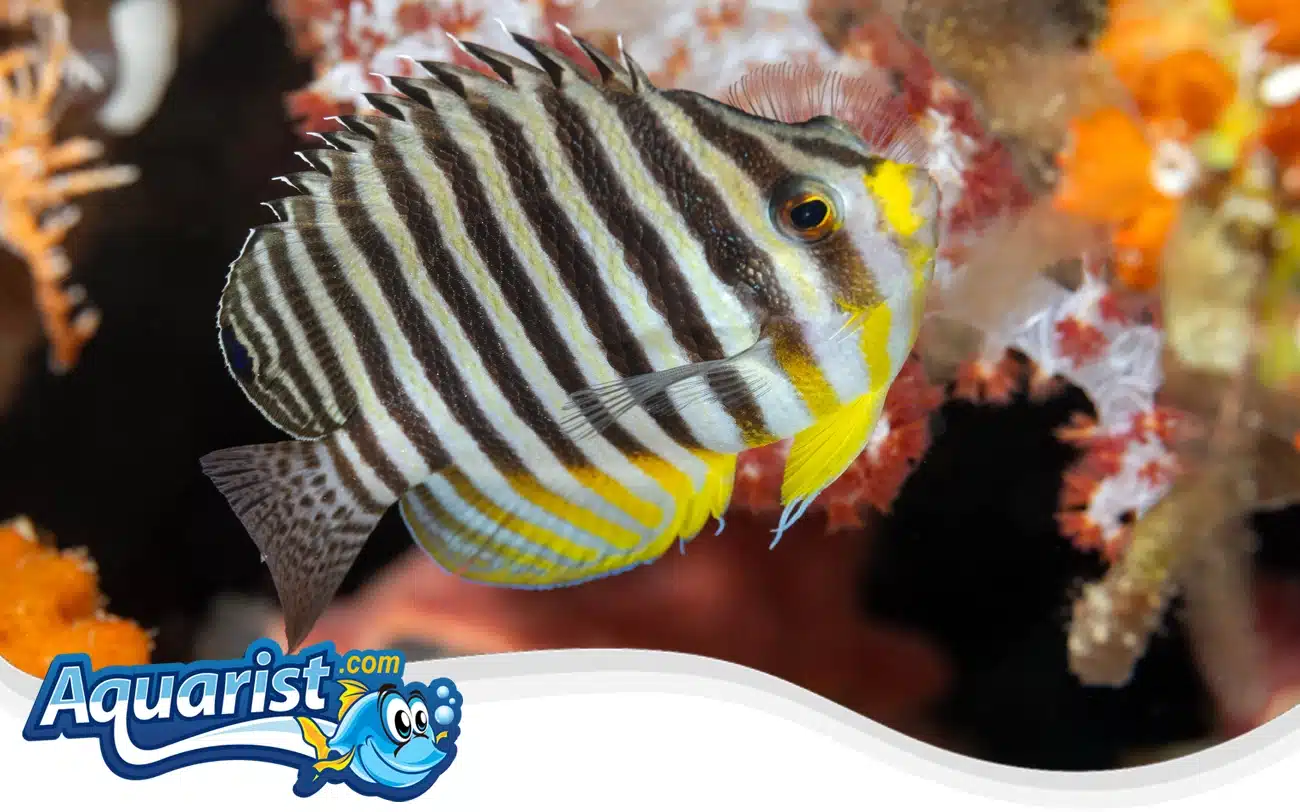
- Notable for its striking coloration, characterized by bright yellow and blue bands that run across its body.
- A peaceful species known for its shy and solitary nature, often hiding among corals or reef structures when disturbed.
- Grows slowly but becomes quite bold and expressive once acclimated to its environment.
Feeding
- Primarily herbivorous, feeding on algae, sponge, and other plant matter found on the reef.
- In captivity, readily accepts a diet of marine algae, spirulina, and high-quality pellets or flakes.
- Occasionally feeds on live or frozen foods such as mysis shrimp, providing additional protein.
- Benefits from multiple small feedings throughout the day, simulating natural grazing behavior.
Habitat
- Prefers shallow, reef areas with plenty of hiding spots, particularly around coral heads and ledges.
- Thrives in aquariums with abundant live rock or coral, providing both shelter and grazing opportunities.
- Requires stable water conditions to maintain vibrant coloration and support its natural behaviors.
- Often seen exploring its environment, using its fins to swim gently through rocky outcrops and algae beds.
Fish Care
- Optimal water temperature: 75-82°F (24-28°C).
- pH level: 8.1-8.4, with a specific gravity of 1.023-1.026.
- Regular maintenance is required, with particular attention to water quality to prevent algae overgrowth.
- Good water filtration and periodic water changes help maintain a stress-free environment for this species.
Compatibility
- Generally peaceful, but may show aggression toward other angelfish or similarly-shaped species.
- Best kept with other non-aggressive reef species that allow it space to swim freely.
- Should be avoided with overly aggressive fish that may bully or stress it.
- Prefers a peaceful, structured environment with appropriate tank mates that share similar habitat needs.
Aquarium Behavior
- Likes to remain near coral structures, darting in and out of its hiding places to explore the tank.
- Displays an elegant swimming style, often hovering around reefs or grazing on algae-covered rocks.
- Becomes more active and confident once acclimated to its environment, especially during feeding times.
- With proper care, it adapts well to captive life and can become a colorful addition to a reef tank.