
Overview
- Native to the Indo-Pacific, commonly found in lagoons, seagrass beds, and sheltered reef areas.
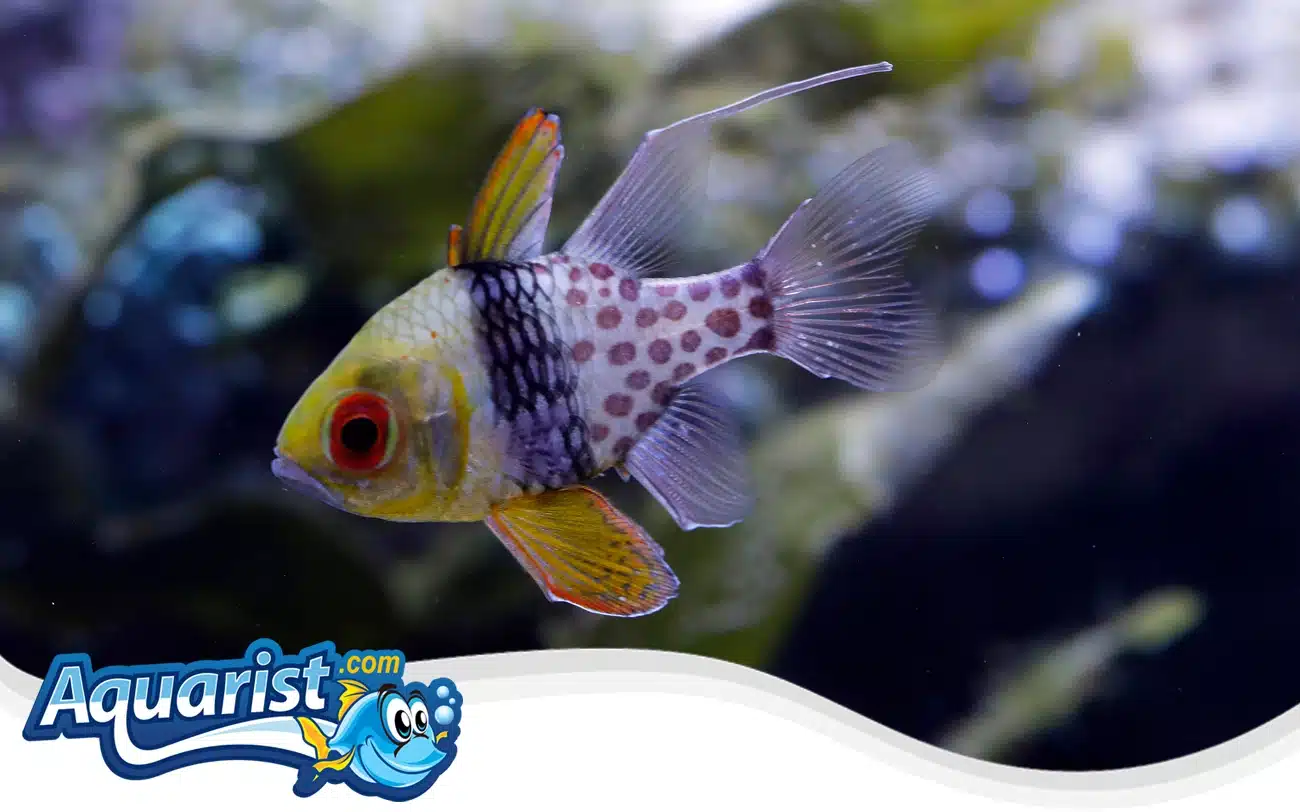
- Recognized for its unique coloration, featuring a silvery body, dark vertical band, and red-spotted tail.
- A peaceful and social species that thrives in groups, making it an excellent addition to community aquariums.
- Primarily nocturnal, becoming more active in the evening while seeking food.
- Best suited for aquariums with stable water conditions, live rock formations, and low to moderate lighting.
Feeding
- Carnivorous, primarily feeding on small crustaceans, plankton, and marine invertebrates in the wild.
- Thrives on a diet of frozen mysis shrimp, brine shrimp, copepods, and high-quality marine pellets.
- Readily accepts prepared foods and benefits from regular small feedings throughout the day.
- Should be fed at least twice daily to maintain energy levels and encourage natural foraging behavior.
- A varied diet enhances coloration and supports a strong immune system.
Habitat
- Prefers calm reef environments with overhangs, coral formations, and sheltered rock structures.
- Frequently found schooling near branching corals or seagrass beds for protection.
- Aquarium setups should include live rock to provide natural hiding spaces and support social interactions.
- Requires stable water parameters and effective filtration to ensure optimal health.
- Providing dim lighting or shaded areas encourages its natural nocturnal behavior.
Fish Care
- Optimal water temperature: 74-80°F (23-27°C) for maintaining health and activity.
- Preferred pH range: 8.1-8.4, with a salinity level of 1.020-1.025.
- Requires regular water changes and consistent maintenance to prevent water quality deterioration.
- Reef-safe and does not pose a threat to corals or invertebrates.
- Providing a peaceful environment with minimal aggression from tankmates supports longevity.
Compatibility
- Highly social and best kept in small groups to exhibit natural schooling behavior.
- Compatible with clownfish, gobies, wrasses, and other peaceful reef-safe species.
- Should not be housed with overly aggressive fish that may stress or outcompete it for food.
- Best suited for a well-balanced reef aquarium with non-aggressive tankmates.
- Providing multiple rock formations and shaded areas ensures a comfortable habitat.
Aquarium Behavior
- A calm and social species that enjoys swimming in groups and resting near coral structures.
- Frequently observed schooling near rock crevices or darting between aquarium decorations.
- More confident in a well-established aquarium with plenty of shelter and tankmates.
- Providing dim lighting or moonlights encourages nighttime activity and foraging.
- Over time, it may become accustomed to its caretaker and actively respond during feeding times.