
Overview
- Native to the Western Atlantic, including the Caribbean and Gulf of Mexico.
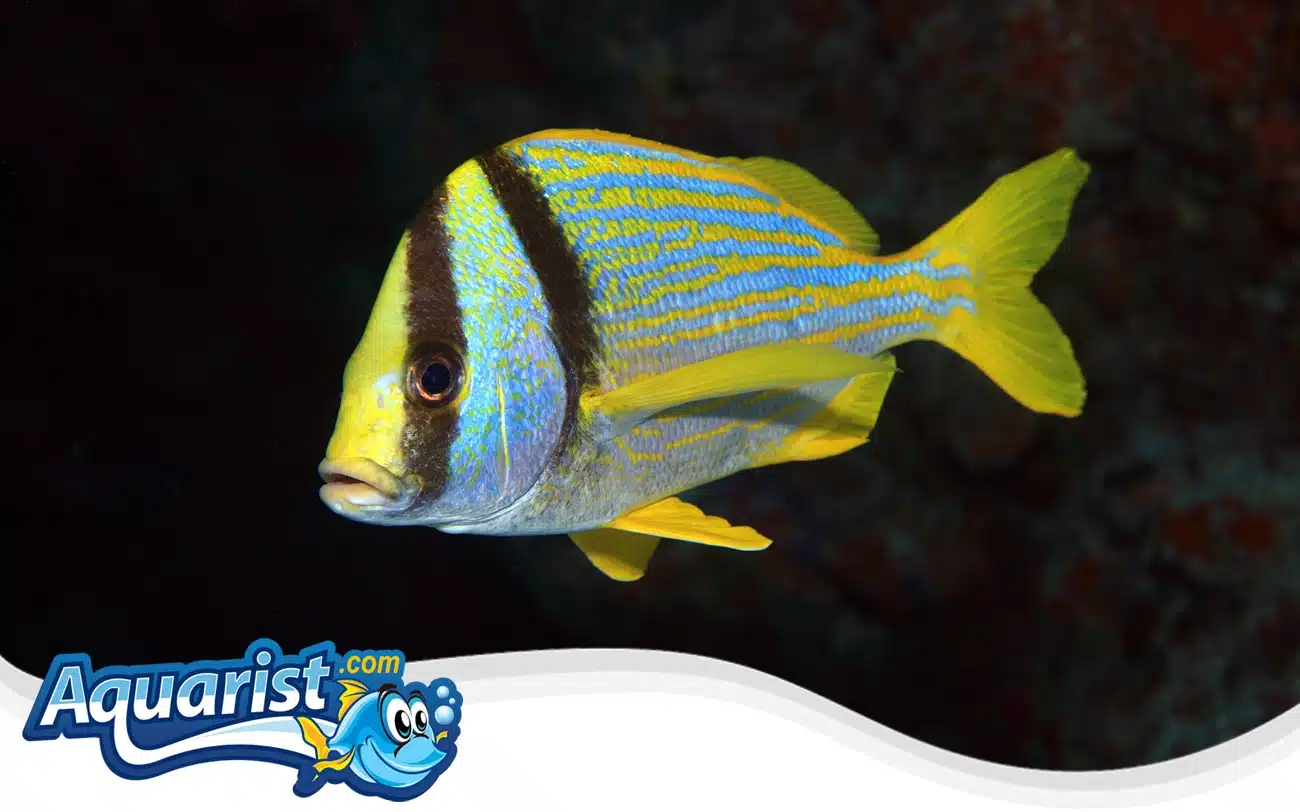
- Recognized by its yellow body with bold black stripes running across the head.
- A nocturnal feeder that is often seen schooling in the wild during daylight hours.
- Popular in public aquariums due to its striking appearance and schooling behavior.
Feeding
- Omnivorous, primarily consuming crustaceans, small fish, and invertebrates.
- Readily eats frozen, live, and high-quality pellet foods.
- A varied diet including shrimp, squid, and marine flakes helps maintain health.
- Feeding multiple times per day supports growth and energy levels.
Habitat
- Typically found in coral reefs, rocky areas, and seagrass beds.
- Prefers stable water conditions with moderate to strong water flow.
- Best suited for large aquariums with plenty of swimming space and hiding areas.
- Thrives in environments that mimic its natural reef habitat.
Fish Care
- Ideal water temperature: 72-78°F (22-26°C).
- Optimal pH range: 8.1-8.4, with a salinity level between 1.020-1.025.
- Requires clean water conditions with effective filtration.
- Regular water changes help maintain a healthy environment.
- Providing ample space reduces stress and encourages natural schooling behavior.
Compatibility
- Peaceful but may become territorial if confined to small spaces.
- Compatible with other large, active fish such as tangs and groupers.
- Not recommended for tanks with very small or delicate fish.
- Best kept in groups to encourage schooling behavior and reduce stress.
Aquarium Behavior
- Active swimmer, often moving in coordinated groups when in a school.
- Displays nocturnal feeding behavior, becoming more active in the evening.
- Requires plenty of open space for swimming as well as hiding spots.
- Providing a well-structured environment supports its natural instincts and reduces stress.