
Overview
- Native to the deeper regions of the Indo-Pacific, particularly in areas with sandy or rubble-covered sea floors.
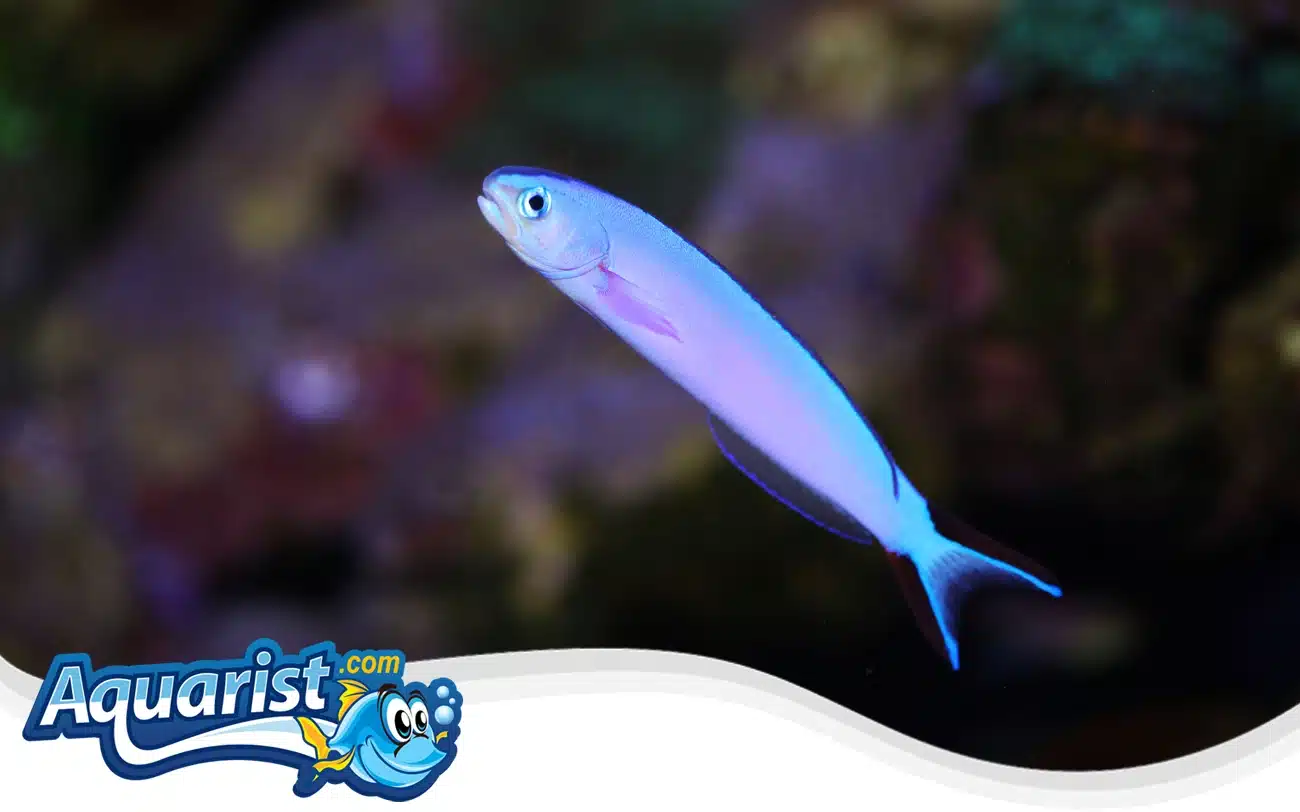
- Distinctive for its shimmering purple and violet hues, making it a striking addition to aquariums.
- A shy, burrow-dwelling species that requires a calm environment to thrive.
- Typically found in pairs or small groups in the wild, relying on teamwork for protection.
Feeding
- Primarily a micro-carnivore, feeding on plankton, tiny crustaceans, and other drifting organisms.
- In captivity, benefits from a diverse diet including frozen cyclops, mysis shrimp, and finely chopped seafood.
- Frequent small meals throughout the day help support its active metabolism.
- Supplementing with vitamin-enriched foods enhances its coloration and overall well-being.
Habitat
- Prefers deep reef slopes and sandy-bottomed environments where it can construct burrows.
- Requires an aquarium with soft substrate and ample space for digging.
- Moderate water flow is ideal, as excessive currents can cause stress.
- Providing rock structures and shaded areas helps to reduce anxiety and promote natural behavior.
Fish Care
- Optimal water temperature: 74-82°F (23-28°C).
- Ideal pH level: 8.1-8.4, with a specific gravity between 1.023-1.026.
- Highly sensitive to sudden water parameter fluctuations; stable conditions are crucial.
- Regular water changes and high-quality filtration contribute to its longevity.
Compatibility
- Non-aggressive and best suited for peaceful reef aquariums.
- Pairs well with other timid, deep-water species that share similar habitat preferences.
- Should not be housed with aggressive tank mates that may intimidate or outcompete it for food.
- Can be kept in small groups, but providing enough territory is essential to prevent competition.
Aquarium Behavior
- Generally shy, often retreating into burrows when startled.
- Becomes more confident once acclimated and accustomed to its environment.
- Known for its swift, darting movements and ability to vanish into its burrow within seconds.
- Requires a tightly secured aquarium lid, as it is prone to jumping when alarmed.