
Overview
- Native to the Western Atlantic, particularly in the Caribbean Sea and Gulf of Mexico.
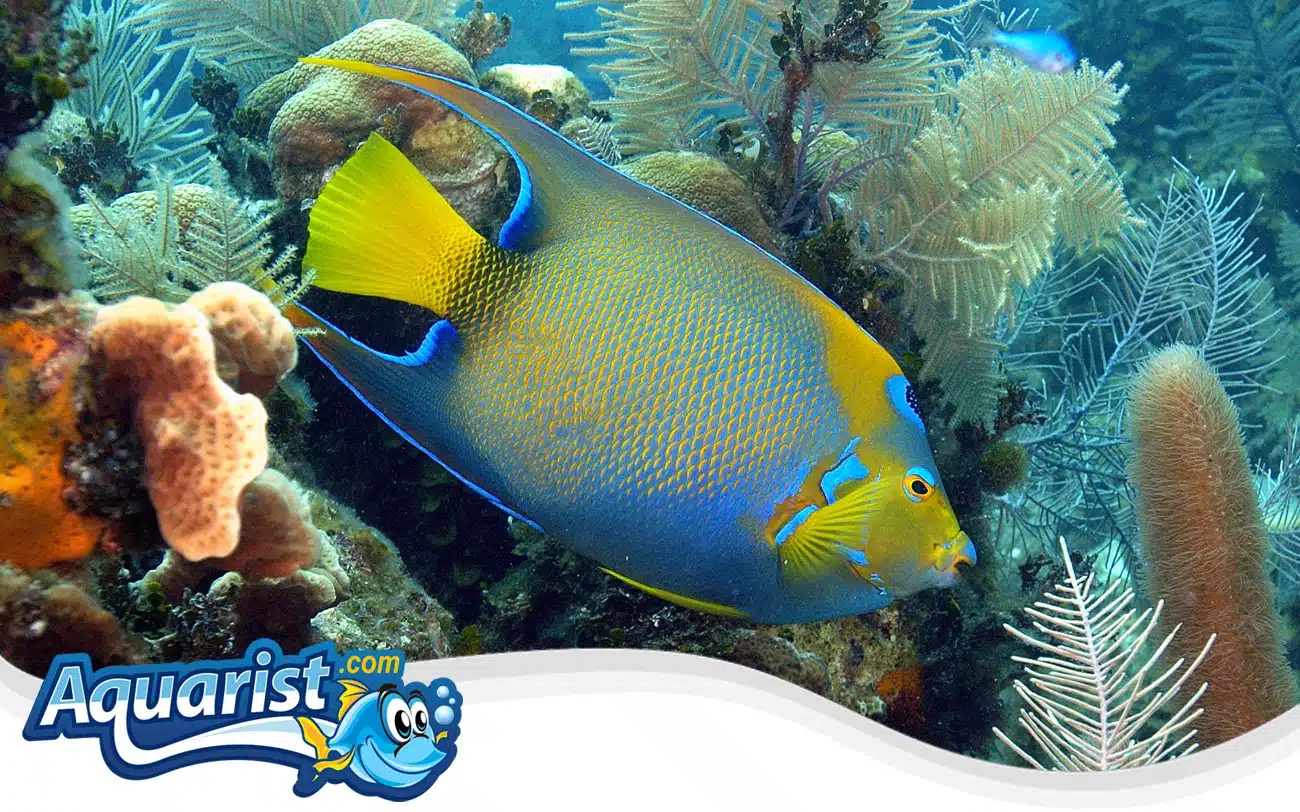
- Known for its stunning blue and yellow coloration, with an iridescent sheen that makes it one of the most striking marine fish.
- Features a distinctive "crown" or blue-ringed marking above its head, which gives the species its royal name.
- Juveniles display a darker blue body with electric blue bars, transitioning into bright yellow as they mature.
- A bold and active species that requires a spacious and well-structured environment to thrive.
Feeding
- Omnivorous, feeding on a varied diet that includes sponges, algae, tunicates, and invertebrates.
- Accepts high-quality pellets, flakes, and frozen foods such as mysis shrimp and chopped seafood.
- A diet rich in marine sponges and algae is necessary to maintain its vibrant coloration and immune health.
- Should be fed multiple times per day to ensure proper nutrition and prevent aggressive foraging behavior.
- Providing live rock encourages natural grazing and enhances dietary enrichment.
Habitat
- Typically found in coral reefs and rocky formations at depths of 10 to 80 feet.
- Requires an aquarium with ample swimming space and hiding spots created with live rock formations.
- Prefers moderate to strong water movement, mimicking its natural reef environment.
- Best suited for tanks of at least 180 gallons due to its adult size of up to 18 inches.
- Not considered fully reef-safe, as it may nip at corals, sponges, and small invertebrates.
Fish Care
- Optimal water temperature: 74-82°F (23-28°C).
- Ideal pH range: 8.1-8.4, with a specific gravity of 1.023-1.025.
- Requires stable water parameters with consistent filtration and protein skimming.
- Regular water changes are essential to maintain a clean and well-balanced environment.
- Can be territorial and should be provided with plenty of space to reduce stress.
Compatibility
- Semi-aggressive, best housed with similarly sized and robust tank mates.
- Compatible with tangs, groupers, larger wrasses, and other hardy marine species.
- Not suitable for tanks with small, timid fish that may become targets of aggression.
- Can be territorial toward other angelfish unless introduced at a young age in a large system.
- Not recommended for full reef tanks, as it may graze on corals, sponges, and sessile invertebrates.
Aquarium Behavior
- Curious and intelligent, often seen exploring the entire aquarium.
- May exhibit territorial behavior, especially around preferred rock structures and hiding areas.
- Recognizes its keeper and can become interactive over time.
- Displays dominance within the tank, particularly in smaller enclosures.
- Thrives in a well-maintained aquarium with stable water quality and a varied diet.