
Overview
- Native to the Caribbean Sea and Western Atlantic, found near rocky reefs and coral formations.
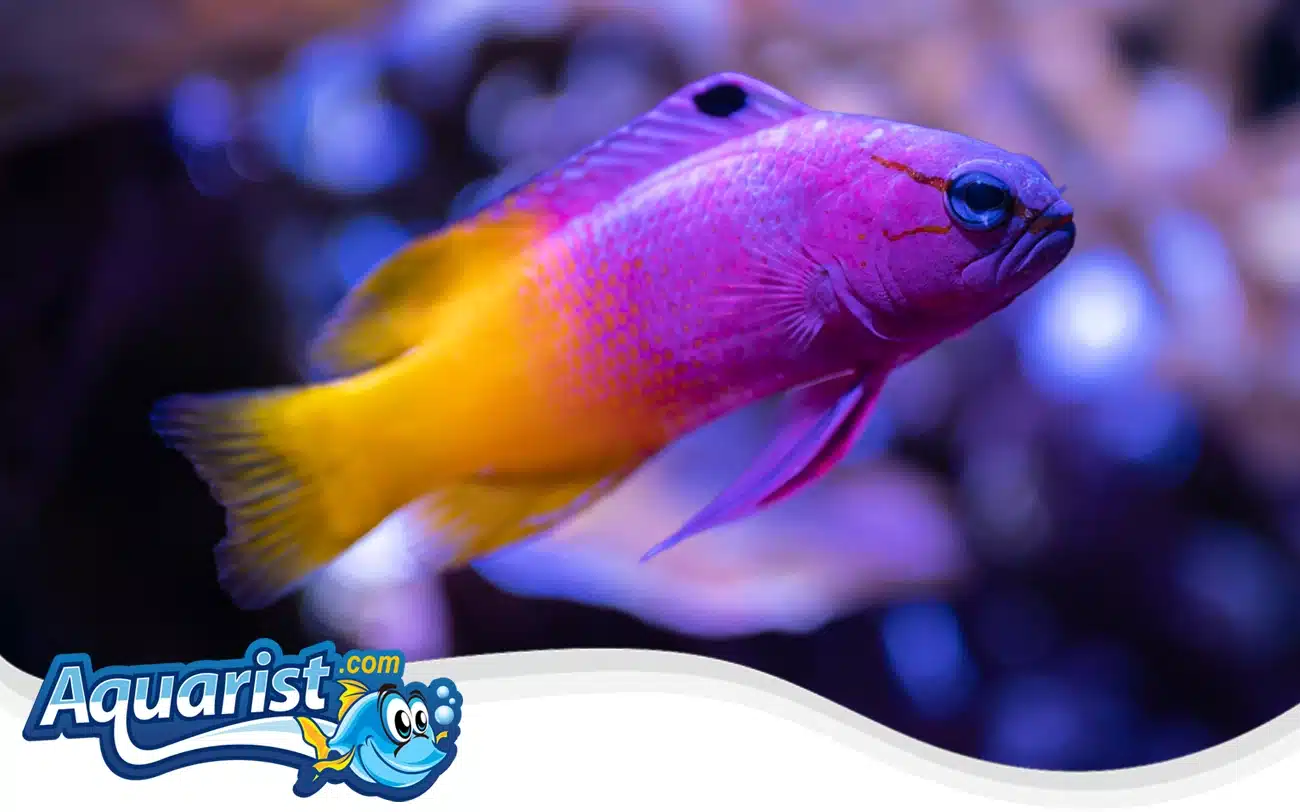
- Easily recognized by its striking purple anterior that transitions into a bright yellow posterior.
- A popular choice for reef aquariums due to its peaceful nature and vibrant coloration.
- Prefers to dwell in rock crevices, often hovering near its chosen hiding spots.
- Generally shy but will defend its territory if provoked.
Feeding
- Carnivorous, primarily feeding on small crustaceans, zooplankton, and copepods.
- Readily accepts high-quality frozen foods such as mysis shrimp and brine shrimp.
- Can be trained to eat marine pellets and flakes, though a varied diet is recommended.
- Small, frequent feedings throughout the day help maintain health and coloration.
- Occasionally scavenges among live rock for microfauna.
Habitat
- Typically found at depths of 3-60 meters in reef caves and rocky overhangs.
- Requires an aquarium setup with ample rock structures to establish territory.
- Prefers dimly lit areas but will venture into open water when comfortable.
- Best suited for nano and reef aquariums with stable water conditions.
- A minimum tank size of 30 gallons is recommended to provide adequate space.
Fish Care
- Optimal water temperature: 74-80°F (23-27°C).
- Ideal pH range: 8.1-8.4, with a specific gravity of 1.023-1.026.
- Highly resilient but requires clean water conditions to thrive.
- Can be territorial if confined to a small space with other basslets.
- Regular water changes and a stress-free environment promote longevity.
Compatibility
- Peaceful but may become territorial toward conspecifics in small tanks.
- Compatible with clownfish, gobies, wrasses, and other small reef fish.
- Should not be housed with aggressive species or large predatory fish.
- Generally ignores corals and invertebrates, making it fully reef-safe.
- Can be housed in pairs if introduced at the same time.
Aquarium Behavior
- Spends much of its time hovering near rock formations.
- Curious but shy, often retreating to hiding spots when startled.
- May engage in short bursts of territorial behavior towards similar fish.
- Exhibits a unique head-down swimming posture when relaxed.
- Thrives in a well-maintained aquarium with minimal stressors.