
Overview
- Native to the Indo-Pacific, commonly found in reef slopes, lagoons, and outer reef environments.
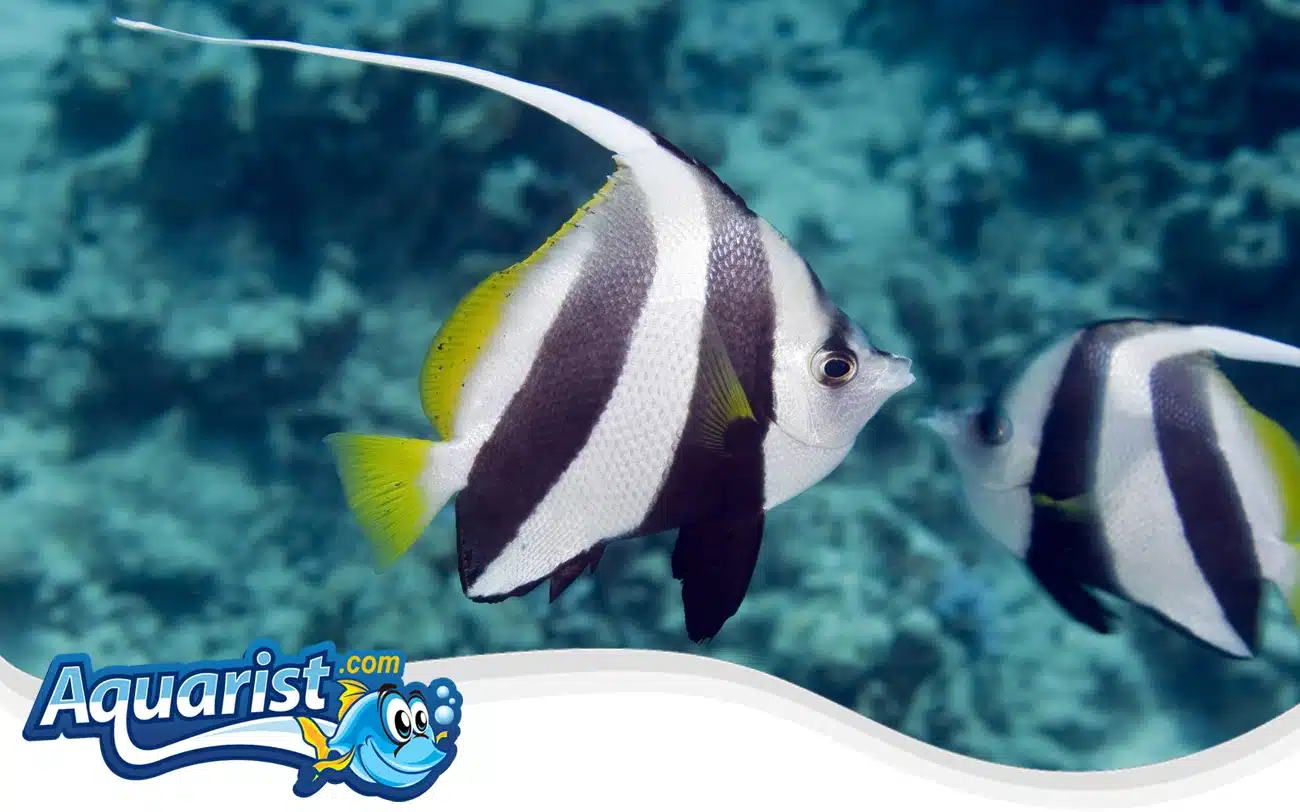
- Closely resembles the Moorish idol but is distinguishable by its deeper body shape and more rounded snout.
- Often seen in large schools, forming synchronized swimming patterns in the wild.
- Hardier than many butterflyfish, making it a popular choice for marine aquariums.
- Active, social, and non-aggressive, making it ideal for community tanks.
Feeding
- Omnivorous diet, primarily feeding on plankton, small invertebrates, and algae.
- Readily accepts a variety of aquarium foods, including high-quality flakes, pellets, and frozen mysis shrimp.
- Should be supplemented with vegetable-based foods, such as spirulina and marine algae.
- Multiple feedings per day are recommended to maintain energy levels and health.
- Will naturally graze on surfaces, picking at biofilm and detritus.
Habitat
- Commonly found in deep reefs, lagoons, and areas with moderate to strong water currents.
- Prefers an aquarium with open swimming space and live rock structures for shelter.
- Requires stable water parameters and a well-maintained filtration system.
- Best suited for large tanks (minimum 125 gallons) due to its active nature.
- Considered reef-safe, as it does not typically nip at corals or sessile invertebrates.
Fish Care
- Optimal water temperature: 74-80°F (23-27°C).
- Ideal pH range: 8.1-8.4, with a specific gravity of 1.023-1.026.
- Resilient but requires stable water conditions and regular tank maintenance.
- Adapts well to captivity but thrives in aquariums with strong water movement.
- Regular water changes and proper diet ensure long-term health and vitality.
Compatibility
- Peaceful and well-suited for community reef tanks.
- Best kept in groups to encourage natural schooling behavior.
- Compatible with tangs, gobies, wrasses, and clownfish.
- Unlike some butterflyfish, it rarely nips at corals, making it one of the more reef-safe choices.
- Should not be housed with highly aggressive species that may stress or harass it.
Aquarium Behavior
- Highly active swimmer, constantly moving through the water column.
- Thrives in a school but can also adapt as a solitary fish in larger aquariums.
- Forms strong bonds with tank mates and interacts with conspecifics.
- Frequently observed grazing on rock surfaces and investigating its surroundings.
- Thrives in a well-maintained, stable environment with ample swimming space.