
Overview
- Native to the Indo-Pacific, commonly inhabiting reef slopes, lagoons, and sandy rubble areas.
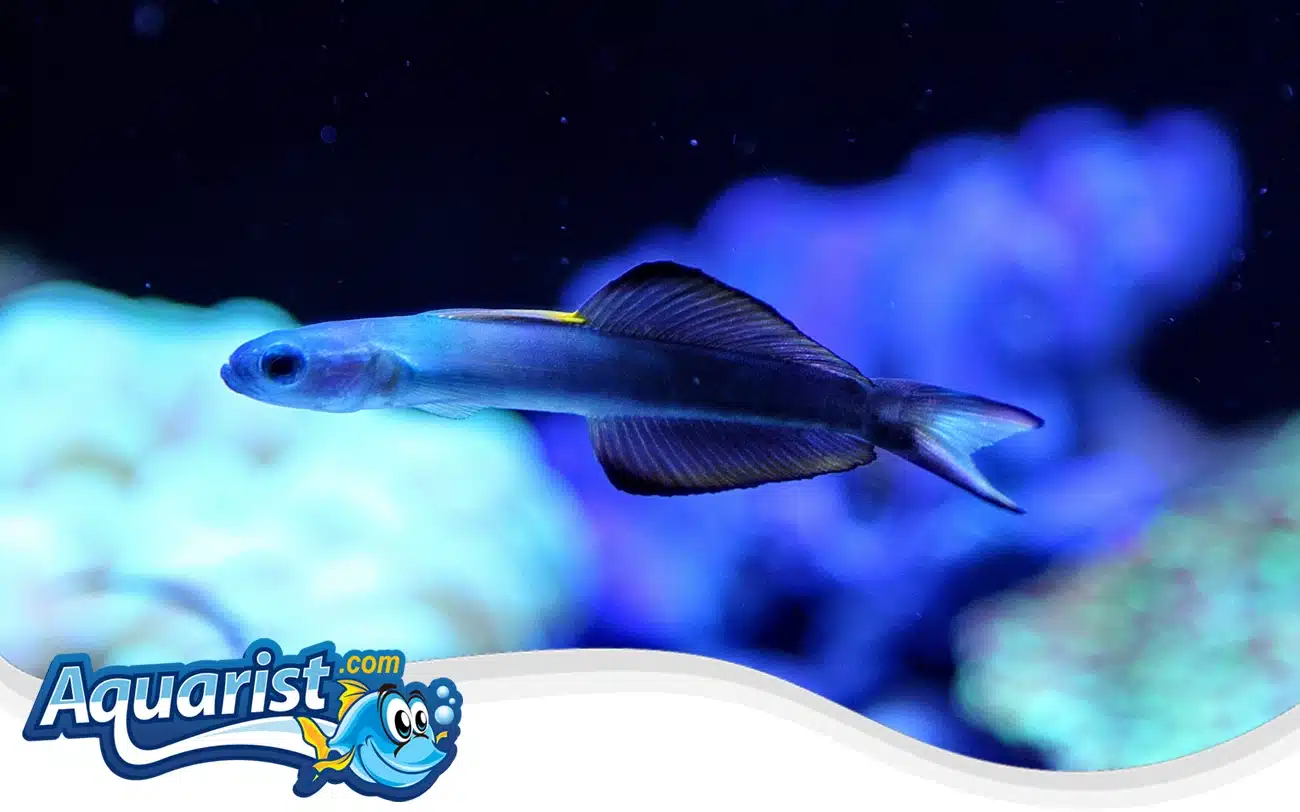
- Recognizable by its slender body, pale bluish-grey coloration, and distinct black fins.
- Peaceful and shy nature, often observed hovering in open water above reefs or near burrows.
- Popular for its unique appearance and calm demeanor, ideal for peaceful community aquariums.
Feeding
- Carnivorous; naturally feeds on zooplankton and small marine invertebrates.
- Accepts a variety of aquarium foods such as mysis shrimp, brine shrimp, finely chopped seafood, and high-quality marine flakes or pellets.
- Multiple small feedings per day recommended to maintain optimal health and coloration.
- A diverse diet ensures nutritional balance and long-term health.
Habitat
- Suitable for medium-sized aquariums (minimum 30 gallons) with plenty of open swimming areas and hiding spaces.
- A mature, stable aquarium environment with consistent water quality is essential.
- Provide sandy substrates, rock structures, and caves to replicate their natural habitat and behavior.
- Moderate filtration and gentle water circulation preferred to maintain ideal water conditions.
Fish Care
- Optimal water temperature: 72-78°F (22-26°C).
- Recommended pH: 8.1-8.4; specific gravity: 1.020-1.025.
- Sensitive to sudden water parameter changes; regular water testing and maintenance are vital.
- Watch for common marine diseases and parasites; prompt treatment improves outcomes significantly.
Compatibility
- Peaceful species, best housed with other non-aggressive and similarly sized fish.
- Reef-safe; compatible with corals, ornamental shrimp, and other invertebrates.
- Recommended tank mates include gobies, small wrasses, clownfish, firefish, and other peaceful marine species.
- Generally kept singly or in pairs, groups may require larger aquariums to reduce territorial conflicts.
Aquarium Behavior
- Calm and peaceful swimmer, typically hovering above substrate or near hiding places.
- Shy nature, may quickly retreat into hiding spots when startled.
- Providing ample hiding spaces reduces stress and encourages natural behavior.
- Benefits from a quiet environment and peaceful tank mates to thrive.