

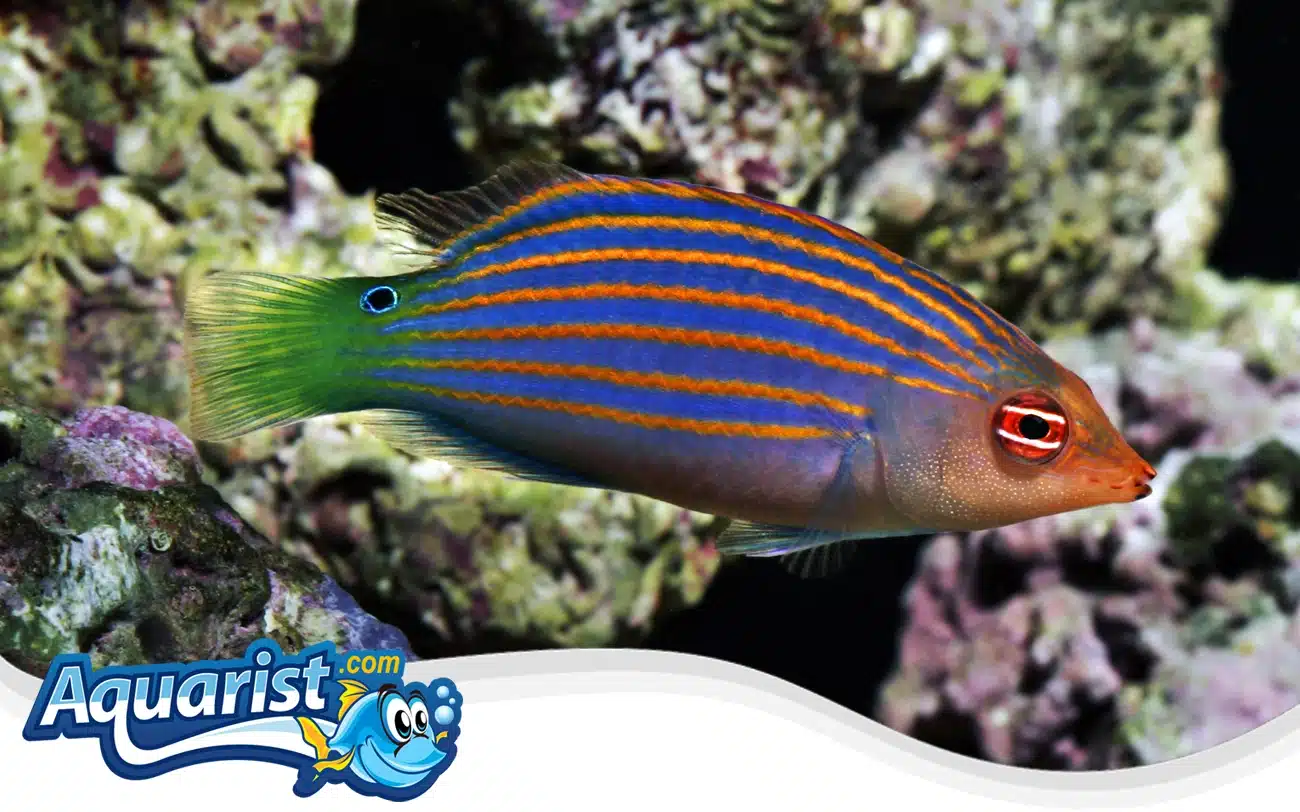
Overview
- Native to the Indo-Pacific, commonly found in coral reefs and rocky lagoons.
- Distinctive appearance with vibrant purple-blue body marked by six horizontal orange-red lines.
- Popular in aquariums for its active behavior and pest control, known to feed on small nuisance invertebrates.
- Generally hardy, suitable for intermediate marine aquarium keepers.
Feeding
- Carnivorous; naturally feeds on small invertebrates, crustaceans, and parasites.
- Readily accepts a varied diet including mysis shrimp, brine shrimp, finely chopped seafood, and high-quality marine flake or pellet foods.
- Multiple small feedings daily are ideal to maintain health and vibrant coloration.
- Diet variety crucial for nutritional balance.
Habitat
- Suitable for moderately sized aquariums (minimum 30 gallons) with ample swimming space and extensive live rock for hiding and exploration.
- Stable, mature aquarium conditions essential for long-term health.
- Provide numerous hiding spots and structures to mimic their natural habitat and reduce stress.
- Moderate water flow and good filtration required for optimal water conditions.
Fish Care
- Optimal water temperature: 72-78°F (22-26°C).
- Recommended pH: 8.1-8.4; specific gravity: 1.020-1.025.
- Relatively hardy, but sensitive to sudden changes; regular water testing and maintenance necessary.
- Monitor for common marine diseases and parasites, prompt intervention is important.
Compatibility
- Semi-aggressive; suitable with similarly sized or larger, robust fish species.
- Generally reef-safe but may prey on small ornamental shrimp and invertebrates.
- Recommended tank mates include tangs, clownfish, dwarf angelfish, and other semi-aggressive marine fish.
- Typically solitary and territorial; best kept singly unless housed in very large aquariums.
Aquarium Behavior
- Active swimmer, continuously exploring live rock and aquarium surroundings.
- Displays territorial behavior, especially in smaller aquariums; provide ample hiding spaces to minimize aggression.
- May help control small pests such as flatworms and bristleworms.
- Interactive and inquisitive, often engaging with caretakers during feeding times.