
Overview
- Found in the Indo-Pacific region.
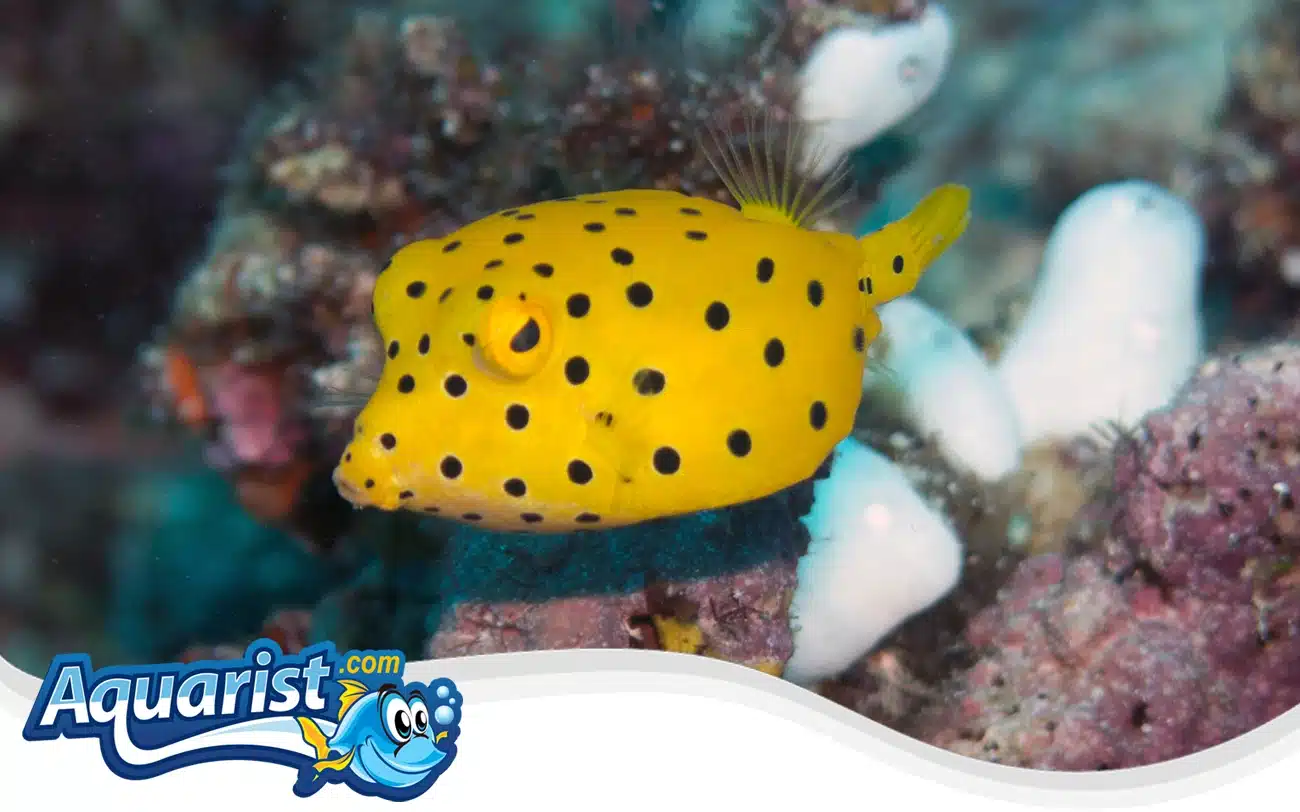
- Known for their box-like shape and distinctive coloration, which is often bright yellow with black spots in juveniles, turning to a more subdued color in adults.
- They have a rigid, bony carapace that covers their body.
- Smooth trunkfish are slow-moving and have a unique swimming style.
Feeding
- They are omnivores.
- Their diet includes algae, small invertebrates, and zooplankton.
- Trunkfish use their small mouths to graze on algae and pick at small organisms.
- They may also consume sponges and tunicates.
Habitat
- Smooth trunkfish inhabit coral reefs and rocky areas.
- They prefer areas with plenty of hiding places and surfaces to graze on.
- These fish are commonly found in shallow waters.
- They utilize crevices, caves, and other shelters for protection.
Fish Care
- Maintaining stable water conditions is important for their health.
- Providing a varied diet supports their nutritional needs.
- Regular water quality checks are essential for preventing illness.
- A well-established tank with ample swimming space and hiding places is beneficial.
Compatibility
- Smooth trunkfish are generally peaceful but can be territorial, especially towards other trunkfish or similar species.
- They are best kept with other non-aggressive fish that can coexist peacefully.
- Care should be taken when introducing them to a community tank.
- Observing their interactions with other tank inhabitants is advisable.
Aquarium Behavior
- Smooth trunkfish are slow-moving and have a unique swimming style, often using their pectoral fins for propulsion.
- Juveniles are particularly colorful and active.
- They may release a toxin (ostracitoxin) into the water when stressed, which can be harmful to other tank inhabitants.
- Providing a calm environment and minimizing stress is crucial for their well-being.