
Overview
- Native to the Indo-Pacific region, commonly found in coral reefs and lagoons.
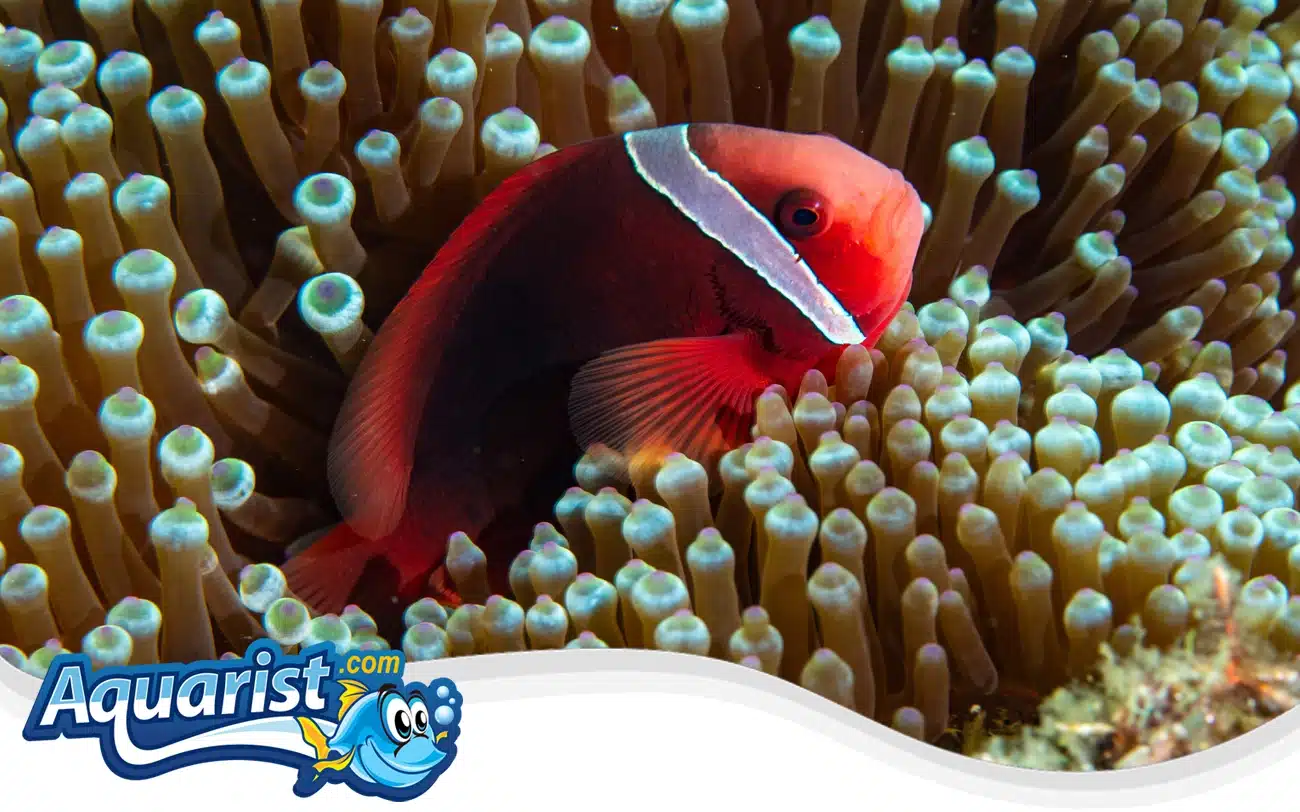
- Recognized for its deep orange to red body with a single white stripe behind the eye.
- A hardy and territorial species known for its symbiotic relationship with sea anemones.
- Popular among marine aquarists due to its bold coloration and adaptability to captivity.
Feeding
- Omnivorous diet, consuming plankton, algae, and small invertebrates.
- Readily accepts high-quality marine pellets, flakes, and frozen foods such as mysis shrimp and brine shrimp.
- Supplementing with enriched foods enhances coloration and overall health.
- Multiple small feedings per day ensure proper nutrition and energy levels.
Habitat
- Commonly found in warm, shallow reef environments with plenty of coral cover.
- Prefers stable water conditions with moderate water movement.
- Thrives in aquariums with live rock formations and anemones, though anemones are not required.
- Well-suited for community reef tanks but may become territorial in smaller spaces.
Fish Care
- Optimal water temperature: 74-82°F (23-28°C).
- Ideal pH level: 8.1-8.4, with a specific gravity of 1.020-1.025.
- Hardy and disease-resistant, making it suitable for beginner aquarists.
- Regular water changes and proper filtration help maintain long-term health.
- Providing hiding spots and an anemone (if desired) ensures a stress-free environment.
Compatibility
- Can be aggressive, especially towards other clownfish species.
- Compatible with a variety of tank mates, including tangs, wrasses, and angelfish.
- Should not be housed with highly aggressive species or larger predatory fish.
- Best kept singly or as a mated pair to avoid aggression.
Aquarium Behavior
- Active swimmer, often seen exploring its environment or hosting an anemone.
- Can display defensive behavior when protecting its territory.
- Forms strong pair bonds and exhibits fascinating social behaviors.
- Providing an environment with hiding spots and open swimming areas supports natural behaviors.
Breeding
Want to breed Tomato Clownfish? See our Breeding Clownfish guide, covering pair setup, spawning, egg care and raising the larvae to juveniles.
Read the guideFrequently Asked Questions
What other names does the Tomato Clownfish have?
Wikipedia lists blackback anemonefish, bridled anemonefish, fire clown and red tomato clown.
What does a Tomato Clownfish look like?
Wikipedia describes a bright orange-red fish with a single white head bar behind the eyes, edged in black. Females are mostly blackish on the sides.
How can you tell males from females?
Wikipedia says males are considerably smaller and red overall, while females are darker. LiveAquaria adds that the female is the largest of a pair.
Do juveniles look different?
LiveAquaria says juveniles have several white bands and black pectoral fins that fade as the fish matures.
How big does a Tomato Clownfish get?
Our page lists about 5 in (13 cm). LiveAquaria says it usually tops out around 3.5 in (9 cm) in an aquarium.
Which anemone does the Tomato Clownfish use?
FishBase lists the bubble-tip anemone (Entacmaea quadricolor). LiveAquaria says it may use a coral as a host if no anemone is available.
What size tank does it need?
Our page recommends at least 30 gallons (114 L).
Can it live with other clownfish?
LiveAquaria says captive-bred clownfish can be kept with other captive-bred clownfish if they are added at the same time.
How does it breed in an aquarium?
LiveAquaria says pairs lay eggs on a flat surface and defend them, the eggs hatch in 6 to 11 days, and the fry need a separate tank with rotifers then baby brine shrimp.
What does a Tomato Clownfish eat?
LiveAquaria calls it an aggressive eater that takes most meaty foods and herbivore preparations.