
Overview
- Native to the Indo-Pacific, frequently found in sheltered lagoon reefs and coastal waters.
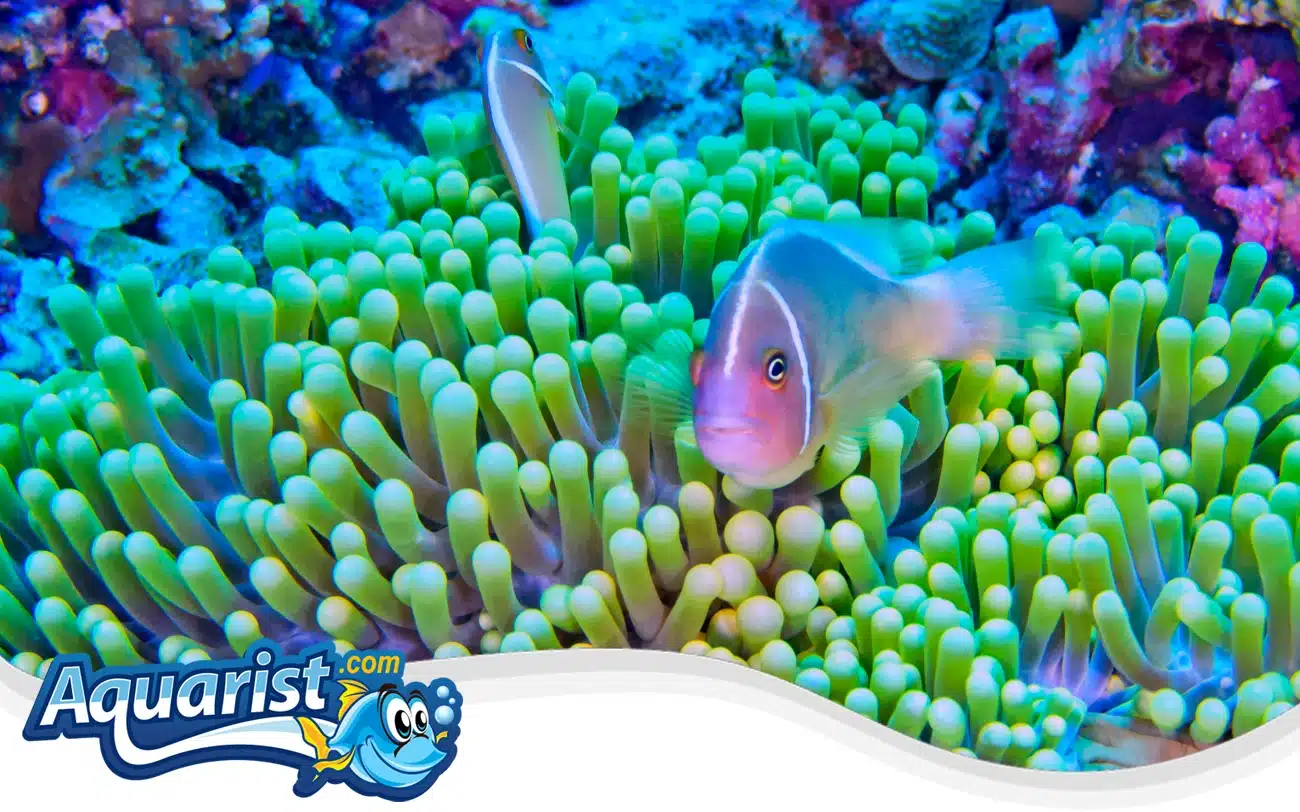
- Easily recognized by its soft pinkish-orange hue and a distinctive white stripe along its dorsal ridge.
- A peaceful and relatively shy species that thrives in association with sea anemones.
- Highly regarded among aquarists for its unique appearance and gentle temperament.
Feeding
- Omnivorous, primarily feeding on planktonic organisms, small crustaceans, and algae.
- Accepts a varied diet of marine flakes, pellets, and frozen foods such as mysis and brine shrimp.
- Providing vitamin-enriched meals enhances immune function and coloration.
- Feeding smaller portions multiple times per day ensures optimal digestion and health.
Habitat
- Inhabits warm, tropical reefs with abundant coral formations and sea anemones.
- Requires stable water parameters and moderate flow for ideal living conditions.
- Well-suited for reef aquariums with live rock structures and host anemones like Heteractis crispa.
- Adaptable to various tank conditions but benefits from a naturalistic setup.
Fish Care
- Recommended water temperature: 74-82°F (23-28°C).
- Ideal pH: 8.1-8.4, with salinity maintained between 1.020-1.025.
- Generally hardy but thrives best in a well-maintained and mature aquarium.
- Regular water changes and efficient filtration contribute to long-term well-being.
- Providing suitable hiding spaces and an anemone (if available) helps reduce stress.
Compatibility
- Typically peaceful but may exhibit defensive behaviors if hosting an anemone.
- Compatible with various reef-safe species, including wrasses, tangs, and gobies.
- Should not be housed with overly aggressive or predatory fish.
- Best kept in pairs or small groups to encourage natural social interactions.
Aquarium Behavior
- Active yet cautious, often staying close to its chosen anemone or rock formation.
- Develops strong pair bonds and engages in cooperative behaviors.
- May display hosting behaviors with soft corals or artificial structures if an anemone is unavailable.
- A well-balanced environment with hiding spots and swimming space promotes natural activity.
Breeding
Want to breed Pink Skunk Clownfish? See our Breeding Clownfish guide, covering pair setup, spawning, egg care and raising the larvae to juveniles.
Read the guideFrequently Asked Questions
What is a Pink Skunk Clownfish?
Amphiprion perideraion is a peach-orange clownfish with a white stripe along its back and a thin white bar behind the eyes.
How big does a Pink Skunk Clownfish get?
It grows to about 4 in (10 cm).
What size tank does a Pink Skunk Clownfish need?
At least 30 gallons (114 L) with rockwork for shelter.
Does a Pink Skunk Clownfish need an anemone?
No, but it most often hosts the Magnificent Sea Anemone (Heteractis magnifica) in the wild.
Is the Pink Skunk Clownfish peaceful?
Yes. It is rated peaceful and is gentler than many clownfish.
What does a Pink Skunk Clownfish eat?
It is an omnivore. Feed mysis, brine shrimp, marine pellets and flakes, plus some algae-based food.
Is the Pink Skunk Clownfish reef safe?
Yes, it is fully reef safe.
Can Pink Skunk Clownfish breed in captivity?
Yes, but they are harder to spawn and rear than Ocellaris or Percula clownfish.
Is the Pink Skunk Clownfish good for beginners?
Yes. It is rated beginner-level. Captive-bred fish are the hardiest.
Where does the Pink Skunk Clownfish come from?
It lives across the Indo-Pacific, from the Gulf of Thailand to Samoa and Tonga, in lagoon and outer reefs.