
Overview
- Native to the Indo-Pacific, frequently found in coral reefs, lagoons, and rocky reef formations.
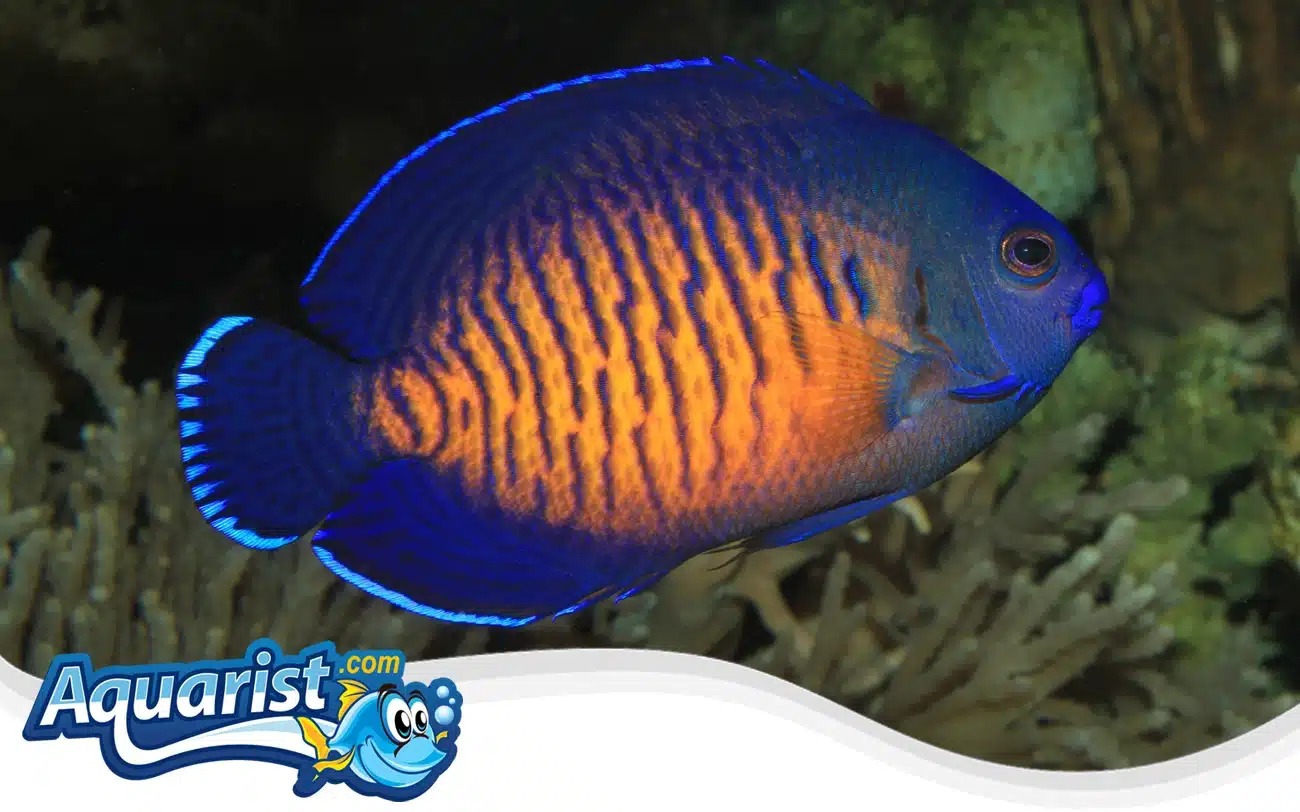
- Easily recognized by its deep blue and orange coloration, often accented with subtle purple hues.
- A hardy and adaptable species that thrives in a well-structured aquarium with live rock for grazing and hiding.
- Can be territorial, particularly toward other dwarf angelfish, necessitating careful tankmate selection.
- Best suited for an established marine aquarium with plenty of swimming space and natural cover.
Feeding
- Omnivorous, primarily feeding on algae, sponges, and small invertebrates in the wild.
- Accepts high-quality marine pellets, frozen foods, and algae-based diets in captivity.
- Offering sponge-based foods supports long-term health and enhances vibrant coloration.
- Multiple small feedings per day ensure proper nutrition and energy levels.
- A varied diet helps maintain a strong immune system and prevents dietary deficiencies.
Habitat
- Prefers reef environments with ample hiding places and rock formations for security.
- Thrives in stable water conditions with moderate to strong water flow.
- Aquarium setups should incorporate live rock structures for grazing and shelter.
- Requires a well-maintained marine tank to reduce stress and encourage natural behaviors.
- Providing shaded areas and multiple caves helps the fish feel more secure.
Fish Care
- Optimal water temperature: 74-80°F (23-27°C) to maintain overall health.
- Preferred pH range: 8.1-8.4, with a salinity level of 1.020-1.025.
- Requires strong filtration and regular water changes to uphold water quality.
- Introducing to an established tank with live rock helps facilitate a smooth transition.
- Providing a structured environment with caves and crevices supports natural foraging and territorial behaviors.
Compatibility
- Generally peaceful but may show aggression toward other dwarf angelfish.
- Compatible with tangs, wrasses, and other semi-aggressive reef fish.
- Not entirely reef-safe, as it may nip at soft corals and small invertebrates.
- Should not be housed with overly aggressive fish that may cause stress or outcompete it for food.
- Providing ample swimming space and defined territories helps reduce aggression.
Aquarium Behavior
- An active swimmer that frequently explores its environment.
- Often seen darting in and out of rock formations while grazing on algae.
- Can display territorial behavior, particularly in smaller aquariums.
- Providing live rock formations and a well-structured tank setup supports natural behaviors.
- Over time, it may become more comfortable with its caretaker and display interactive behaviors, especially during feeding.
Frequently Asked Questions
Is the coral beauty angelfish reef safe?
Only with caution. Coral beauties often leave corals alone, but some individuals nip stony and soft corals or clam mantles, so watch new fish closely.
How big does a coral beauty angelfish get?
It grows to about 4 in (11 cm).
What size tank does a coral beauty need?
A 70-gallon (265 L) or larger tank with plenty of live rock for grazing and hiding is recommended.
Are coral beauty angelfish aggressive?
They are semi-aggressive. They usually get along with most community fish but may squabble with other dwarf angelfish.
What does a coral beauty angelfish eat?
It's an omnivore. Offer spirulina and marine algae foods, angelfish preparations, mysis shrimp and other quality frozen foods, and let it graze on live rock.
Are coral beauty angelfish hardy?
They are one of the hardier dwarf angelfish, but they suit intermediate keepers because they need a mature tank with stable water.
Can you keep two coral beauties together?
It's risky. Two dwarf angels of the same species often fight unless the tank is large and they are a male and female pair.
Where do coral beauty angelfish come from?
They are found across the Indo-Pacific, from East Africa to the central Pacific, including the Great Barrier Reef.