
Overview
- Found in the Indo-Pacific region.
- Known for their ability to change color and their prehensile tail.
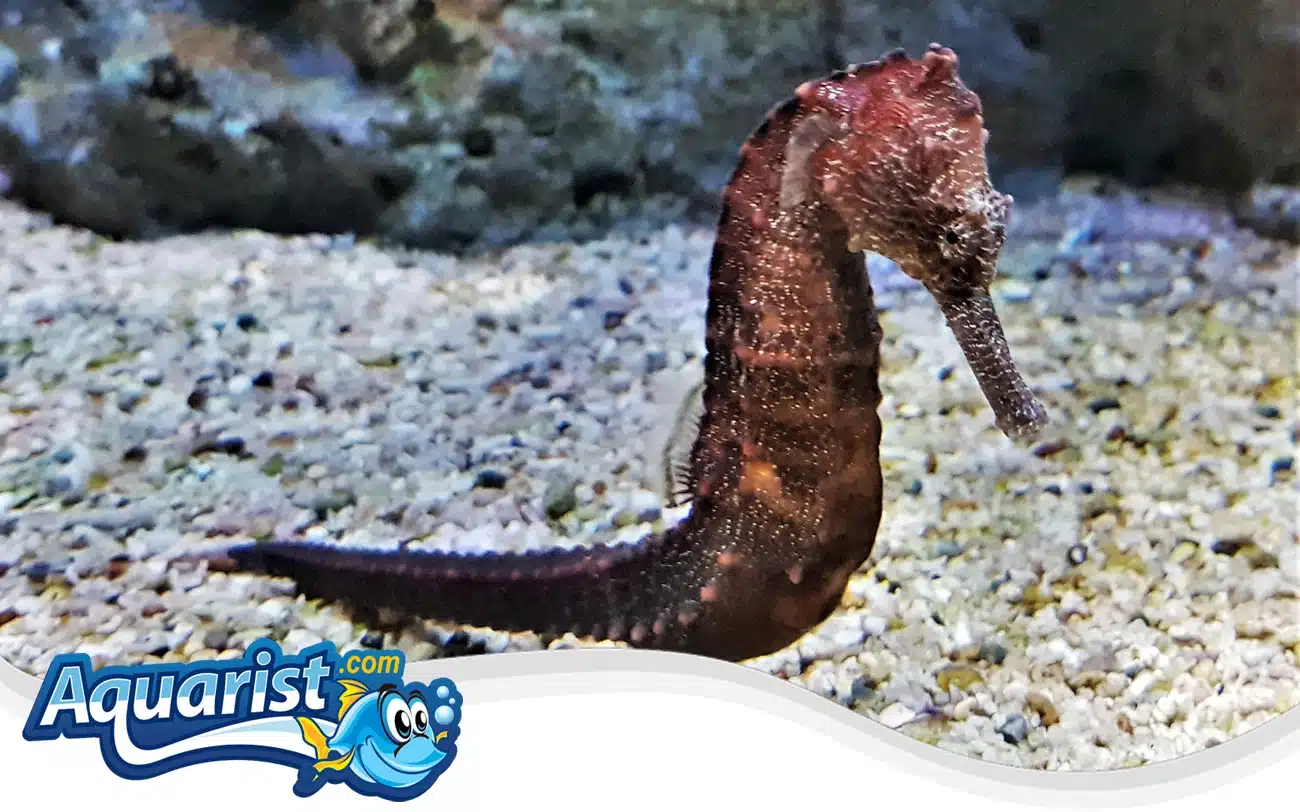
- They have a distinctive equine profile with a curved body and a long snout.
- Yellow seahorses are slow-moving and have a unique upright swimming posture.
Feeding
- They are carnivores that feed on small crustaceans and other tiny invertebrates.
- Seahorses use their long snouts to suck up prey.
- They are continuous feeders, grazing throughout the day.
- Live or frozen small invertebrates are typically part of their diet.
Habitat
- Yellow seahorses inhabit sheltered areas such as seagrass beds, mangroves, and coral reefs.
- They prefer areas with plenty of vegetation or structures to which they can cling using their tails.
- These seahorses are found in tropical and subtropical waters.
- They require environments that offer both shelter and a steady supply of food.
Seahorse Care
- Maintaining stable water parameters is crucial for their health.
- Providing a varied and nutritious diet is essential.
- Regular water quality testing helps prevent stress and disease.
- A calm environment is important, as they are easily stressed.
Compatibility
- Seahorses are delicate and should be housed with peaceful, slow-moving tank mates.
- They are not aggressive but can be outcompeted for food by faster fish.
- Avoid housing them with fish that might nip at their fins or tails.
- A species-specific tank is often recommended to provide the ideal environment.
Aquarium Behavior
- Yellow seahorses are gentle and deliberate in their movements.
- They spend much of their time attached to objects with their prehensile tails.
- They exhibit unique courtship behaviors.
- Observing their feeding habits and interactions is a key part of their care.
Frequently Asked Questions
What does a Yellow Seahorse look like?
Its color ranges from yellow to black, and some fish have spots or darker bands and bars. It is also known as the Kuda or Spotted Seahorse.
How big does a Yellow Seahorse get?
Plan for up to about 12 in (30 cm). FishBase records a similar maximum of about 11.8 in (30 cm).
What size tank does a Yellow Seahorse need?
At least 30 gallons (114 L) for a single pair. LiveAquaria suggests adding 10 gallons (38 L) for each extra pair.
What temperature does a Yellow Seahorse need?
Keep it cool. LiveAquaria notes seahorses are less likely to get Vibrio bacterial infections if the water stays at or below 74°F (23°C).
What does a Yellow Seahorse eat?
It is a carnivore. Captive-bred fish eat frozen mysis as a staple, plus amphipods and small crustaceans from live rock. Enriched adult brine shrimp can be added but should not be most of the diet. Feed at least two small meals a day.
How should I set up a tank for a Yellow Seahorse?
Use gentle flow, such as a spray bar, without dead spots. Give it branching rock, algae or decorations to hitch onto with its tail, and remove leftover food and detritus every day.
Is the Yellow Seahorse reef safe?
With caution. Anemones and stinging corals can hurt it, and large corals like brain corals could even eat it. Crabs and clams may pinch it, and it may eat small ornamental shrimp.
What tankmates suit a Yellow Seahorse?
LiveAquaria recommends small, shy fish such as small gobies, pipefish, dragonets and firefish. Avoid aggressive, territorial or fast fish that would beat it to food.
Where does the Yellow Seahorse live in the wild?
FishBase lists it across the Indo-Pacific, from southern Africa and the Red Sea to Hawaii, north to Japan and south to Australia. It lives in seagrass and algae beds in estuaries and on reefs, and it sometimes clings to drifting Sargassum far from shore.
Is the Yellow Seahorse good for beginners?
No, it is an advanced fish. It needs a species-only tank, careful feeding and spotless water. It is listed as Vulnerable, so choose captive-bred fish.