
Overview
- Native to the Indo-Pacific, often found in coral reefs and shallow lagoons.
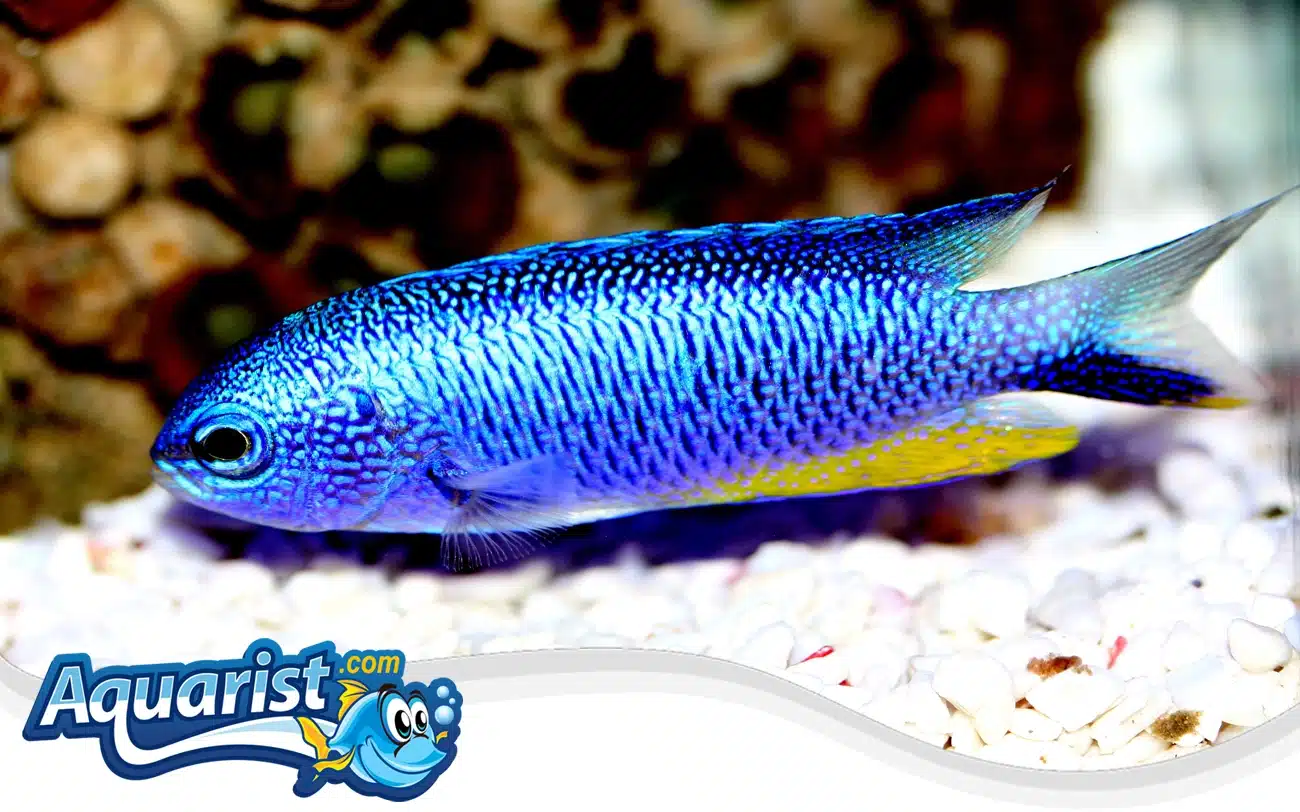
- Distinctively bright metallic blue body with vibrant yellow anal and tail fins.
- Known for its active, playful behavior and striking appearance.
- Hardy and suitable for beginner and intermediate marine aquarists.
Feeding
- Omnivorous diet; naturally feeds on algae, zooplankton, and small marine invertebrates.
- Easily accepts marine flakes, pellets, mysis shrimp, brine shrimp, and spirulina-based foods.
- Feeding small amounts multiple times daily promotes optimal health and vibrant coloration.
- A diverse diet is important for balanced nutrition and overall vitality.
Habitat
- Ideal for moderately sized aquariums (minimum 30 gallons [114 L]) with ample swimming space and structured live rock.
- Stable and mature aquarium conditions essential for long-term success.
- Provide plenty of hiding spots, coral structures, and live rock formations to mimic natural habitats.
- Moderate water flow and effective filtration are key to maintaining water quality.
Fish Care
- Preferred water temperature: 74-80°F (23-27°C).
- Recommended pH: 8.1–8.4; specific gravity: 1.025–1.026 (about 33–35 ppt).
- Hardy species but sensitive to rapid changes; regular water testing and consistent aquarium maintenance necessary.
- Monitor for common marine diseases and parasites; prompt intervention ensures best outcomes.
Compatibility
- Semi-aggressive; best kept with similar-sized or slightly larger, robust tank mates.
- Generally reef-safe; compatible with corals, but may exhibit territorial aggression toward passive or smaller fish.
- Recommended tank mates include clownfish, dwarf angelfish, tangs, and hardy wrasses.
- Territorial nature requires careful introduction and adequate space to minimize conflicts.
Aquarium Behavior
- Very active swimmer, frequently exploring and interacting with aquarium surroundings.
- Displays territorial behaviors, particularly in smaller or overcrowded aquariums.
- Often engages interactively with caretakers, particularly during feeding.
- Clearly defined territories and ample hiding spaces help reduce aggression and stress.
Frequently Asked Questions
What does an Allen's Damselfish look like?
It is a slender, neon blue fish with yellow blending in along the lower body and anal fin. It is also called the Andaman Damselfish.
Is the Allen's Damselfish the same as the Neon Damselfish?
No. Pomacentrus coelestis looks similar and is the fish usually sold as the Neon Damselfish.
How big does an Allen's Damselfish get?
It reaches up to about 2.4 in (6 cm).
What size tank does an Allen's Damselfish need?
At least 30 gallons (114 L). Give it hiding places in the rockwork.
What does an Allen's Damselfish eat?
Offer a variety of meaty foods, herbivore preparations and flake food.
Is the Allen's Damselfish reef safe?
Yes. It is a reef-safe damselfish that fits well in a community reef tank.
Is the Allen's Damselfish aggressive?
It is semi-aggressive, so provide hiding spots and avoid very timid tankmates.
How do Allen's Damselfish breed?
They pair up to spawn, laying sticky eggs on a hard surface, and the male guards and fans the eggs.
What kind of reef habitat does the Allen's Damselfish prefer?
It lives in small groups over rubble at reef edges, about 10 to 50 ft (3 to 15 m) deep, so a tank with rubble and rockwork suits it well.