
Overview
- Native to the Pacific Ocean, particularly around Hawaii, where it inhabits shallow coral reefs and rocky areas.
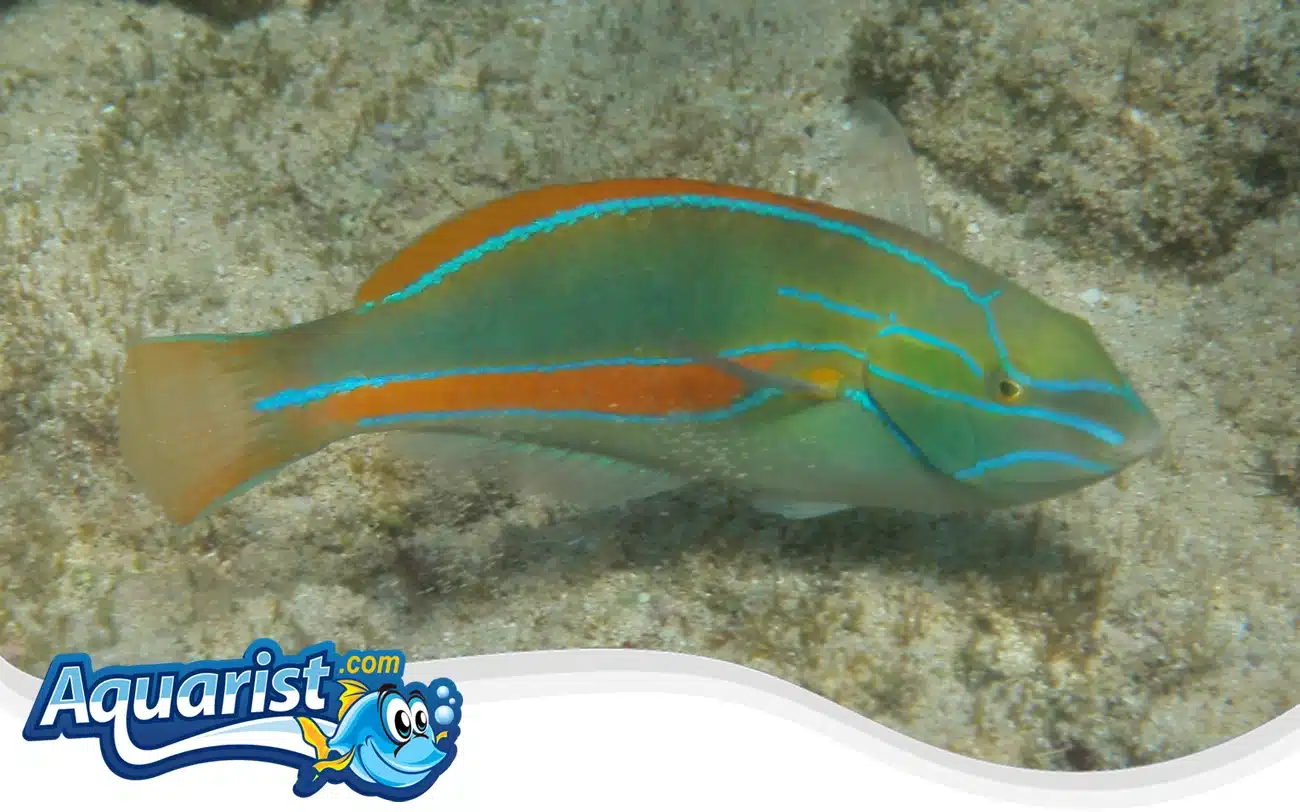
- Recognized for its elongated body, vibrant blue-green coloration, and a distinct belt-like band along its midsection.
- A highly active swimmer that is constantly foraging and exploring its surroundings.
- Exhibits sexual dimorphism, with males displaying brighter colors and more prominent markings than females.
- Best suited for aquariums with a sandy substrate, live rock formations, and stable water conditions.
Feeding
- Carnivorous, primarily feeding on small invertebrates, crustaceans, and zooplankton in the wild.
- Thrives on a diet of frozen mysis shrimp, brine shrimp, copepods, and high-quality marine pellets.
- Readily accepts prepared foods but benefits from live or frozen offerings to encourage natural foraging behaviors.
- Should be fed multiple times per day to maintain energy levels and overall health.
- A varied diet enhances coloration and supports a strong immune system.
Habitat
- Prefers reef-associated environments with open sandy areas and scattered rock structures.
- Frequently seen darting between rocks and sand while searching for small prey.
- Aquarium setups should include a soft sandy substrate to accommodate its burrowing behavior.
- Requires stable water parameters and high-quality filtration to maintain optimal conditions.
- Providing an open swimming area allows for natural movement and activity.
Fish Care
- Optimal water temperature: 74-80°F (23-27°C) to support metabolic function.
- Preferred pH range: 8.1–8.4, with a salinity level of 1.025–1.026 (about 33–35 ppt).
- Requires frequent water changes and strong filtration to maintain clean water.
- Reef-safe but may consume small ornamental shrimp and tiny invertebrates.
- Providing a well-balanced diet and plenty of swimming space helps reduce stress.
Compatibility
- Generally peaceful but may show territorial behavior towards other wrasses.
- Compatible with clownfish, tangs, angelfish, and other reef-safe species.
- Should not be housed with aggressive predators that may intimidate or outcompete it for food.
- Best suited for a reef aquarium with adequate hiding places and swimming space.
- Providing rock structures and sandy areas ensures a stress-free environment.
Aquarium Behavior
- An active and inquisitive species that constantly explores its surroundings.
- Frequently observed swimming close to the substrate while searching for food.
- More confident in a well-established aquarium with stable environmental conditions.
- Providing a structured tank layout with rock crevices and sand burrowing areas encourages natural behaviors.
- Over time, it may become accustomed to its caretaker and actively engage during feeding times.
Frequently Asked Questions
What other names does the Belted Wrasse have?
It is called ʻōmaka in Hawaiian, and may also be called hīnālea or alea, Hawaiian words for wrasse.
How big does a Belted Wrasse get?
About 6 in (15 cm).
What size tank does a Belted Wrasse need?
Our page recommends at least 50 gallons (189 L).
Is the Belted Wrasse reef safe?
With caution. It feeds on clams, worms, snails and small crustaceans, so small invertebrates may be at risk.
What does a Belted Wrasse eat?
Its wild diet includes bivalves, polychaete and peanut worms, snails, small crustaceans and foraminiferans.
How does a Belted Wrasse feed?
It feeds by taking quick bites of the bottom and pushing the sand out through its gills.
Does the Belted Wrasse need a sand bed?
It lives over sand and algae-covered rocks, so sand and rock suit its natural feeding.
Is the Belted Wrasse peaceful?
Yes, our page rates it peaceful.
How deep does the Belted Wrasse live?
It is common in shallow water to a maximum of about 72 ft (22 m).
Where does the Belted Wrasse come from?
It is found only around the Hawaiian Islands and Johnston Atoll.