
Overview
- Native to the Indo-Pacific, commonly found inhabiting shallow coral reefs, rocky slopes, and coastal lagoons.
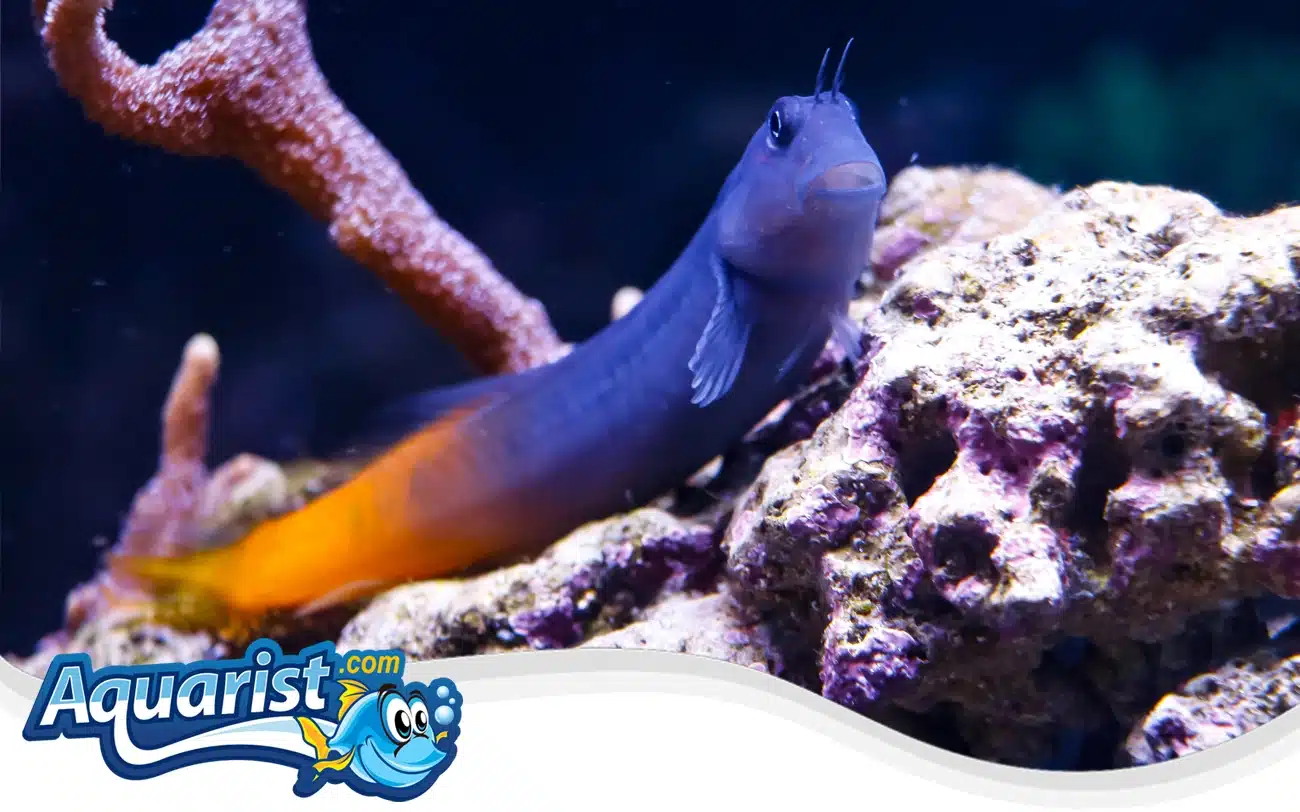
- Easily recognized by its distinct two-tone coloration, typically featuring a vibrant blue-black front half and a bright orange-yellow rear half.
- A playful and inquisitive fish known for its engaging personality and unique swimming style.
- Frequently seen perched on rocks or coral, observing its surroundings closely.
- Thrives in aquariums with abundant live rock, ample hiding spots, and consistent water quality.
Feeding
- Omnivorous, grazing heavily on algae and micro-organisms growing naturally on live rock and coral.
- Diet should consist of marine algae, dried seaweed, spirulina-based flakes, and herbivore pellets, plus small meaty foods such as mysis shrimp.
- Occasionally accepts small amounts of frozen or live foods such as mysis shrimp and brine shrimp.
- Best fed small amounts multiple times daily to match its natural grazing habits.
- A well-balanced diet rich in algae promotes vibrant coloration, overall health, and longevity.
Habitat
- Typically found among coral reefs, rocky areas, and lagoon habitats with substantial algae growth.
- Frequently observed perched atop rock formations or within small crevices, using these spots as vantage points.
- Aquarium setups should include live rock structures to facilitate natural grazing and hiding behavior.
- Requires stable water parameters, moderate flow, and high-quality filtration to maintain optimal conditions.
- Providing numerous hiding places reduces stress and encourages natural behaviors.
Fish Care
- Optimal water temperature: 72-78°F (22-26°C) to ensure healthy metabolic and immune function.
- Preferred pH range: 8.1–8.4, maintaining salinity levels at a stable 1.025–1.026 (about 33–35 ppt).
- Regular water changes, careful water monitoring, and efficient filtration systems are critical for optimal health.
- Considered reef-safe, posing minimal risk to corals and most invertebrates.
- Maintaining algae availability and consistent conditions helps minimize stress and enhance long-term health.
Compatibility
- Generally peaceful and best housed with other non-aggressive, similarly sized marine species.
- Compatible with clownfish, gobies, small wrasses, cardinalfish, and other peaceful reef-safe fish.
- Avoid housing with aggressive or highly territorial species that could cause stress or competition.
- Suitable for community reef aquariums, where its active personality and beneficial algae-grazing contribute positively.
- Providing ample hiding and grazing areas ensures harmonious cohabitation with other aquarium inhabitants.
Aquarium Behavior
- Active and curious, regularly seen perching on rocks or coral structures, closely observing its environment.
- Exhibits territorial behavior occasionally, particularly when defending favorite perching or hiding spots.
- Quickly adapts to aquarium conditions, becoming increasingly confident and visible with stability.
- Providing structured rockwork with natural algae growth encourages typical grazing and exploratory behavior.
- Over time, it typically recognizes and interacts enthusiastically with its caretaker, particularly during feeding times.
Frequently Asked Questions
Why is it called the Bicolor Blenny?
The front half of its body is blue to dark brown and the back half is orange. It is also called the Two-colored Blenny.
How big does a Bicolor Blenny get?
It reaches about 4 in (10 cm).
What size tank does a Bicolor Blenny need?
At least 30 gallons (114 L), with lots of rock for perching and holes to hide in.
Where does the Bicolor Blenny come from?
It is an Indo-Pacific species, found from the Maldives to the Phoenix Islands, including the Great Barrier Reef and Indonesia.
What is its natural habitat?
It lives on clear lagoon and outer reefs with mixed corals and algae-covered rock, often sheltering in empty worm tubes.
Does the Bicolor Blenny eat algae?
Yes. It grazes algae from rocks, which is why it is often added as part of a cleanup crew.
What should I feed a Bicolor Blenny?
It is an omnivore. Let it graze live rock and offer herbivore foods, nori and some meaty foods like mysis.
Is the Bicolor Blenny reef safe?
Yes, in most cases. If it is underfed, it may pick at clam mantles or large-polyp stony corals, so keep it well fed.
Is the Bicolor Blenny aggressive?
It is peaceful with most fish, but it may chase other blennies or small gobies and dartfish in a small tank.
Do Bicolor Blennies change color?
Yes. Breeding males go through color changes, including a blue phase.