
Overview
- Commonly found in the Indo-Pacific region, inhabiting coral reefs, lagoons, and rocky coastlines.
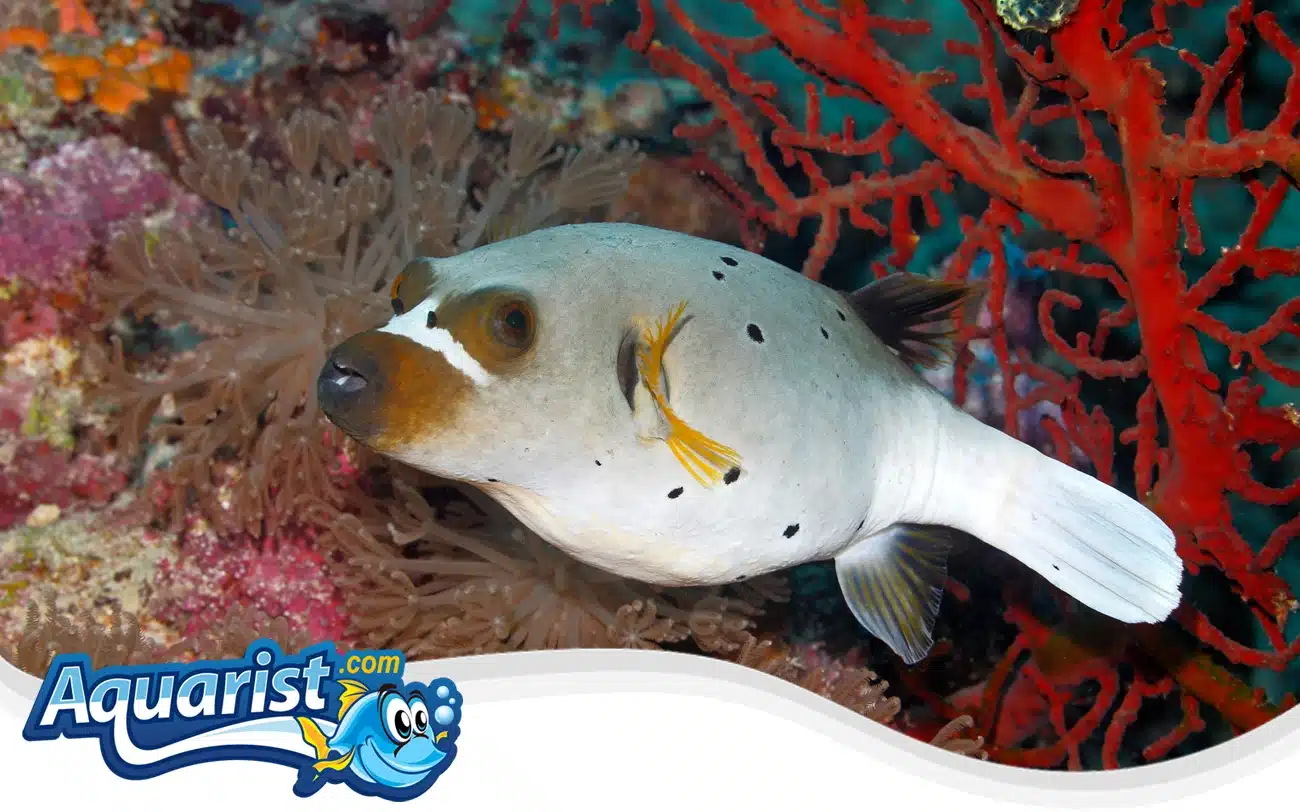
- Recognized by its rounded body, yellowish-brown coloration, and scattered black spots covering its skin.
- A slow-moving but highly intelligent species known for its ability to inflate when threatened.
- Popular in the marine aquarium trade due to its unique appearance and engaging personality.
- Requires a well-maintained aquarium with open swimming space and hiding areas.
Feeding
- Omnivorous, feeding on a mix of small crustaceans, mollusks, algae, and coral polyps in the wild.
- Accepts frozen shrimp, squid, clams, and high-quality marine pellets in captivity.
- Hard-shelled foods such as snails and crabs are essential to prevent overgrown teeth.
- Requires multiple small feedings per day to maintain optimal health and prevent malnutrition.
- A well-balanced diet helps preserve their vibrant coloration and supports longevity.
Habitat
- Typically found in coral reef environments, sheltered bays, and rocky underwater structures.
- Prefers stable water conditions with moderate water flow to mimic its natural habitat.
- Aquariums should include live rock structures, caves, and sandy substrate for natural foraging.
- Thrives in well-established marine tanks that provide plenty of room for exploration.
- Providing a structured environment with hiding spaces reduces stress and encourages natural behaviors.
Fish Care
- Optimal water temperature: 74-80°F (23-27°C) to support a strong immune system.
- Preferred pH range: 8.1–8.4, with a salinity level of 1.025–1.026 (about 33–35 ppt).
- Requires high-performance filtration to handle waste production efficiently.
- Regular water changes and monitoring are necessary to maintain stable water parameters.
- Providing a calm, stress-free environment helps prevent disease and encourages healthy growth.
Compatibility
- Semi-aggressive, best housed with similarly sized, robust fish that can hold their own.
- Compatible with larger species such as tangs, angelfish, and certain wrasses.
- Not reef-safe, as it has a tendency to nip at corals and consume small invertebrates.
- Should not be housed with small, slow-moving fish that may become targets of aggression.
- Providing a well-structured tank with hiding areas minimizes territorial disputes.
Aquarium Behavior
- A naturally curious species that actively explores its surroundings.
- Uses its powerful beak-like teeth to crush shells and scrape algae from rocks.
- Capable of inflating when feeling threatened, a defense mechanism that should not be provoked.
- Providing a diverse environment with caves and open spaces encourages natural foraging behaviors.
- Over time, develops strong recognition of caretakers and becomes highly interactive.
Frequently Asked Questions
Why is it called the Dogface Puffer?
Arothron nigropunctatus has a short, blunt snout and large eyes that many people think make it look like a puppy.
What colors does a Black-Spotted Pufferfish come in?
It can be gray, half yellow or fully yellow, always with scattered black spots. In aquariums it rarely changes phase.
How big does a Black-Spotted Pufferfish get?
It grows to about 13 in (33 cm).
What size tank does a Black-Spotted Pufferfish need?
At least 100 gallons (379 L) in a fish-only setup with strong filtration.
Is the Black-Spotted Pufferfish reef safe?
No. In the wild it eats Acropora tips, crustaceans, mollusks and sponges, so it belongs in a fish-only tank.
What does a Black-Spotted Pufferfish eat?
Feed shell-on shrimp, clams, krill and squid, which keep its beak trimmed.
Is the Black-Spotted Pufferfish friendly?
It is famous for its personality and often learns to take food from its keeper.
Is the Black-Spotted Pufferfish aggressive?
It is semi-aggressive and may nip slow fish.
Where does the Black-Spotted Pufferfish live?
It ranges from East Africa to Micronesia and Samoa, on reefs rich in invertebrates. Adults are often seen in pairs.
Is the Black-Spotted Pufferfish good for beginners?
It is rated intermediate and is one of the most popular puffers.