
Overview
- Native to the Western Pacific, primarily found in deeper coral reefs and rocky reef environments.
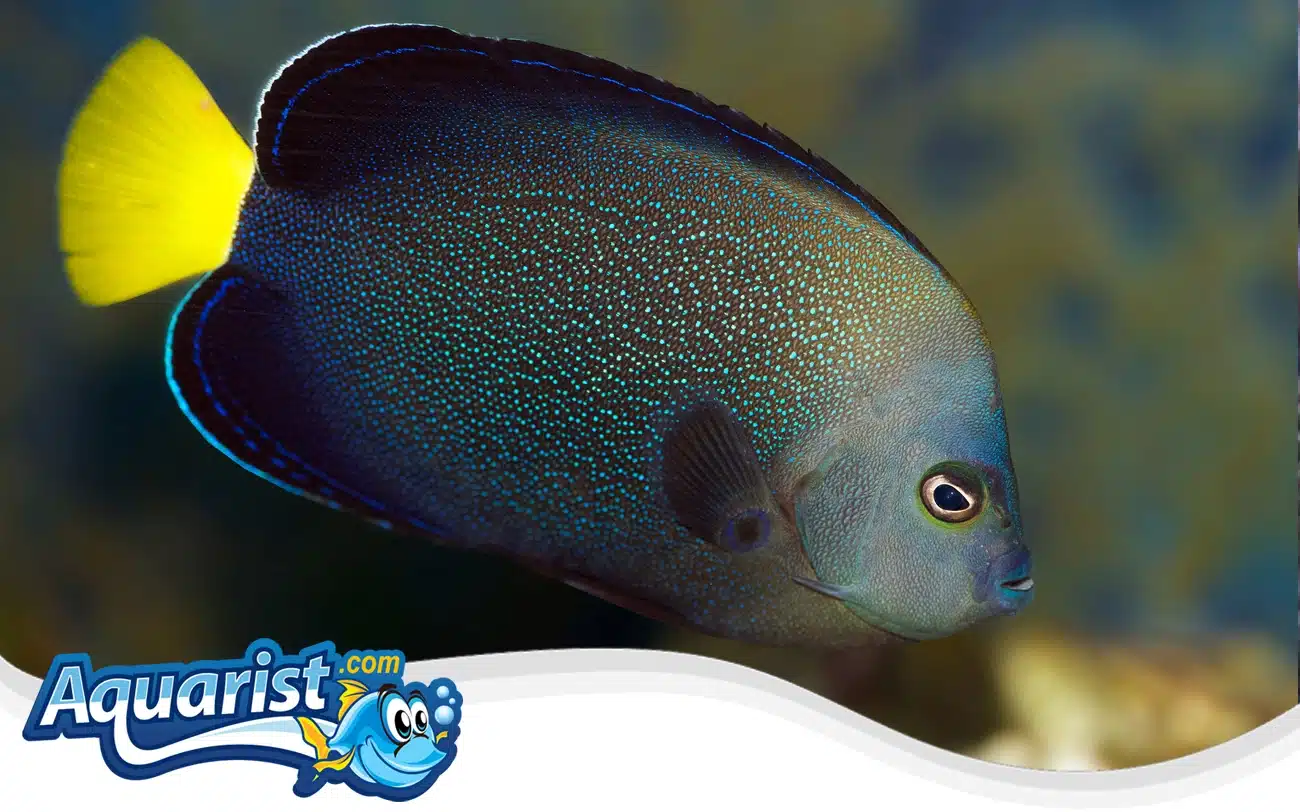
- Recognized for its dark blue to black body adorned with numerous small iridescent blue spots.
- A relatively rare and stunning species sought after by advanced aquarists.
- Often found swimming near ledges and caves, preferring shaded reef areas.
- Best suited for a well-maintained marine aquarium with stable water parameters and ample hiding spaces.
Feeding
- Omnivorous, feeding on sponges, tunicates, and algae in the wild.
- Requires a varied diet including sponge-based angelfish preparations, frozen mysis shrimp, and high-quality marine pellets.
- Can be slow to adapt to prepared foods but generally becomes a good feeder with time.
- Offering multiple small meals per day helps promote healthy digestion and growth.
- A nutrient-rich diet supports immune health and enhances the fish’s vibrant coloration.
Habitat
- Prefers deep reef environments with rocky overhangs and crevices for shelter.
- Commonly found in dimly lit reef structures where it can retreat when feeling threatened.
- Aquarium setups should include live rock to support grazing and provide hiding places.
- Requires high-quality filtration to maintain pristine water conditions.
- Providing both shaded and open swimming areas allows for a more naturalistic habitat.
Fish Care
- Optimal water temperature: 74-82°F (23-28°C) to support its overall well-being.
- Preferred pH range: 8.1–8.4, with a salinity level of 1.025–1.026 (about 33–35 ppt).
- Requires stable water conditions with frequent maintenance and water changes.
- Not reef-safe, as it tends to nip at corals, clams, and sessile invertebrates.
- Providing live rock enhances grazing opportunities and reduces stress.
Compatibility
- Generally peaceful but may exhibit territorial behavior toward other angelfish.
- Compatible with tangs, larger wrasses, and other semi-aggressive marine species.
- Not ideal for reef aquariums due to its tendency to nip at coral polyps.
- Should be housed with similarly sized fish to prevent competition for food.
- Providing ample space and structured rock formations minimizes territorial disputes.
Aquarium Behavior
- An active yet cautious species that prefers exploring its surroundings from secure hiding spots.
- Frequently observed grazing on rock surfaces and picking at algae growth.
- May take time to acclimate but becomes more confident with proper care.
- Providing a complex rock structure encourages natural behaviors and promotes a sense of security.
- Over time, it may recognize its caretaker and become more interactive during feeding sessions.
Frequently Asked Questions
What does a Blue-spotted Angelfish look like?
It is blue to yellow-brown and covered in small blue spots, with a bright yellow tail. It is also called the Blue-spangled Angelfish.
Where is the Blue-spotted Angelfish found?
It is endemic to the Philippine Archipelago and is rarely exported.
How big does a Blue-spotted Angelfish get?
It reaches about 8 in (20 cm).
What size tank does a Blue-spotted Angelfish need?
At least 125 gallons (473 L), well established, with lots of live rock for grazing and hiding.
Is the Blue-spotted Angelfish reef safe?
It is reef safe with caution. It may nip soft and stony corals and clam mantles.
What does a Blue-spotted Angelfish eat?
In the wild it eats sponges and tunicates. Feed spirulina, marine algae, angelfish preparations and mysis at least three times a day.
Why is the Blue-spotted Angelfish rated advanced?
Its sponge-based natural diet and rarity make it harder to feed and acclimate than common angelfish.
Is the Blue-spotted Angelfish aggressive?
It is semi-aggressive but generally not overly pushy. Keep it with non-aggressive tankmates.
Is the Blue-spotted Angelfish related to the Scribbled Angelfish?
Yes. It belongs to the genus Chaetodontoplus, which includes the Scribbled and Vermiculated Angelfish.
How do I help a Blue-spotted Angelfish settle in?
Add it to a mature tank with plenty of rock to graze, offer frequent small meals and keep tankmates calm.