
Overview
- Native to the Western Atlantic, commonly found in coral reefs, rocky outcrops, and deep reef slopes.
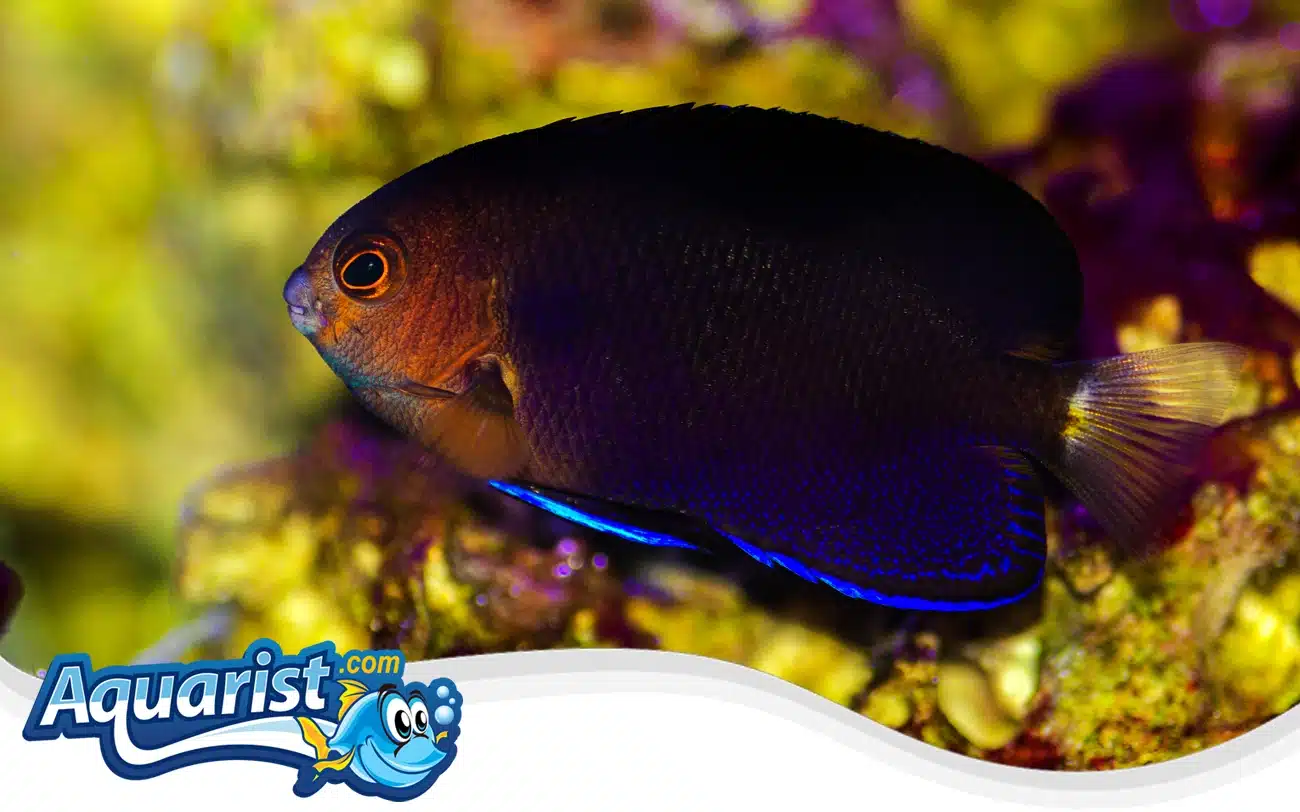
- Recognized for its deep blue body, bright yellow-orange face, and compact size.
- A small but highly active species with a bold and inquisitive nature.
- Can be territorial, especially towards other dwarf angelfish in confined spaces.
- Requires a well-structured aquarium with plenty of rockwork and hiding spots.
Feeding
- Omnivorous, feeding on algae, small crustaceans, and sponges in the wild.
- Accepts a variety of foods, including high-quality marine pellets, frozen foods, and algae-based diets.
- Providing sponge-based food enhances long-term health and coloration.
- Multiple feedings per day help support its high energy levels.
- A well-balanced diet ensures strong immunity and vibrant colors.
Habitat
- Commonly found in reef environments with rock crevices and caves for shelter.
- Prefers stable water conditions with moderate to strong water movement.
- Aquarium setups should include live rock for natural grazing and security.
- Thrives in well-maintained marine tanks with a variety of natural elements.
- Providing multiple hiding spots helps minimize aggression and territorial disputes.
Fish Care
- Optimal water temperature: 74-80°F (23-27°C) for maintaining a healthy immune system.
- Preferred pH range: 8.1–8.4, with a salinity level of 1.025–1.026 (about 33–35 ppt).
- Requires efficient filtration and regular water changes to maintain high water quality.
- Providing an enriched habitat with caves and live rock encourages natural behavior.
- Careful monitoring ensures it remains stress-free and healthy in captivity.
Compatibility
- Semi-aggressive, particularly towards other dwarf angelfish and similarly shaped species.
- Compatible with tangs, wrasses, and other semi-aggressive fish.
- Not entirely reef-safe, as it may nip at coral and small invertebrates.
- Should not be housed with overly aggressive fish that may stress or outcompete it.
- Providing ample space and a structured environment helps reduce territorial behaviors.
Aquarium Behavior
- An energetic and curious species that constantly explores its surroundings.
- Often seen darting in and out of rock formations while grazing on algae.
- Can become territorial, particularly in smaller aquariums.
- Providing live rock formations and varied decor supports its natural behavior.
- Over time, it may become comfortable with its caretaker and display interactive behaviors.
Frequently Asked Questions
Why is the Cherub Angelfish called a pygmy angelfish?
At about 3 in (8 cm), Centropyge argi is one of the smallest angelfish in the world. It is also sold as the Cherubfish or Atlantic Pygmy Angelfish.
What does a Cherub Angelfish look like?
It is a deep sapphire blue with a yellow-orange face and chest. The blue fins often have a thin pale edge.
What size tank does a Cherub Angelfish need?
Provide at least 30 gallons (114 L) with lots of holes and caves. It rarely strays far from cover and bolts into the rock when startled.
Can a Cherub Angelfish live in a reef tank?
It is reef safe with caution. It grazes microalgae off the rock, but some individuals nip at large-polyp stony corals, soft corals or clam mantles.
What does a Cherub Angelfish eat?
Wild adults feed mainly on algae. Offer spirulina, nori and angelfish preparations, with frozen mysis and brine shrimp a few times a week.
Can Cherub Angelfish be kept in pairs?
Yes, with care. In the wild they live as monogamous pairs that share a home range. Buy a large and a small fish together, since dwarf angels can change from female to male.
Is the Cherub Angelfish aggressive?
It is semi-aggressive and surprisingly bold for its size. Keep it away from other dwarf angelfish in small tanks.
Where does the Cherub Angelfish live?
It lives in the western Atlantic, including the Caribbean, the Gulf of Mexico and Bermuda, usually in rubble zones on deeper reefs.
Is the Cherub Angelfish hardy?
Yes. Once settled it is one of the hardier dwarf angels, though it is rated intermediate because it needs a mature tank with algae to graze.
Is the Cherub Angelfish good for a nano tank?
It needs at least 30 gallons (114 L), so it is too big for a true nano, but it is one of the best angelfish choices for a smaller reef.