
Overview
- Native to the Indo-Pacific, commonly found in lagoons, reef flats, and coastal waters with rocky substrates.
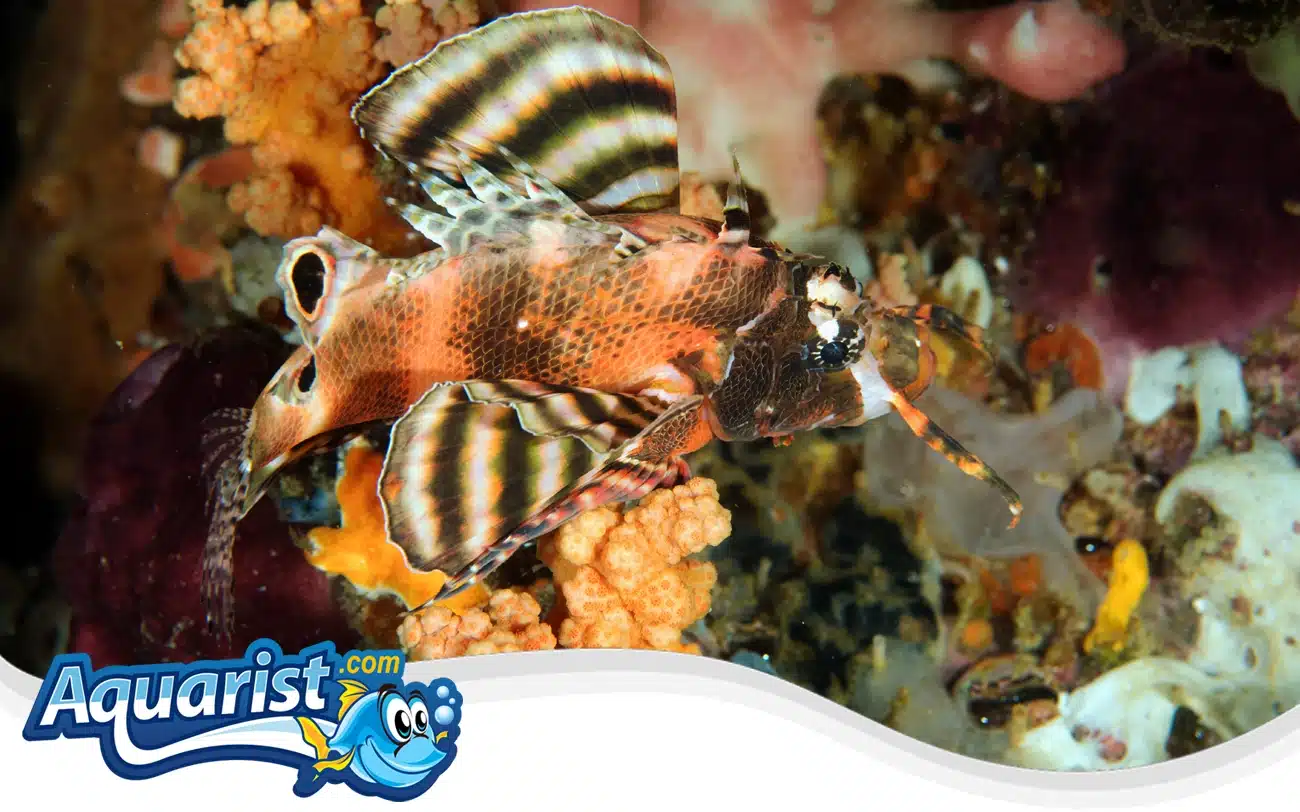
- Recognized for its unique appearance, featuring elongated fin filaments resembling whiskers, giving it the name "Fu Manchu."
- A relatively small lionfish species but highly predatory, feeding on small fish and crustaceans.
- Best suited for aquariums with plenty of live rock formations, caves, and subdued lighting.
- Requires stable water conditions and a well-established tank to thrive.
Feeding
- Carnivorous, preying on small fish, shrimp, and other crustaceans in the wild.
- Requires a diet of live or frozen mysis shrimp, silversides, and enriched brine shrimp.
- May take time to accept prepared foods but can be trained to eat frozen options over time.
- Should be fed every other day to maintain health and prevent overfeeding.
- A high-protein diet ensures proper growth and helps maintain its vibrant coloration.
Habitat
- Prefers reef environments with moderate water flow and plenty of hiding places.
- Frequently found resting in caves and crevices during the day, becoming more active at dusk.
- Aquarium setups should include live rock for shelter and natural hunting areas.
- Requires excellent water quality and low-stress conditions to thrive.
- Providing subdued lighting or shaded areas helps mimic its natural environment.
Fish Care
- Optimal water temperature: 74-80°F (23-27°C) to maintain overall health.
- Preferred pH range: 8.1–8.4, with a salinity level of 1.025–1.026 (about 33–35 ppt).
- Requires regular water changes and stable conditions to prevent stress-related illnesses.
- Not reef-safe, as it may consume small fish and ornamental shrimp.
- Providing a low-traffic environment with minimal tank disturbances supports its well-being.
Compatibility
- Semi-aggressive and best housed with larger, non-aggressive fish that it cannot consume.
- Compatible with angelfish, tangs, and larger wrasses, but not with small reef fish or invertebrates.
- Should not be housed with other lionfish species unless in a large tank to avoid competition.
- Best suited for a predator-focused setup with carefully chosen tankmates.
- Providing hiding spots and a structured environment reduces stress and territorial disputes.
Aquarium Behavior
- A nocturnal predator that remains hidden during the day and becomes more active in the evening.
- Frequently observed using its pectoral fins to corner prey before striking.
- More confident in a well-structured tank with plenty of hiding spots.
- Providing caves and shaded areas encourages its natural hunting behavior.
- Over time, it may recognize its caretaker and actively interact during feeding sessions.
Frequently Asked Questions
What other names does the Fu Manchu Lionfish have?
Other common names include Twinspot Lionfish and Ocellated Lionfish.
Why is it called Fu Manchu?
It differs from other lionfish by the two feeler-like appendages on its chin, which look like a long mustache.
How big does it get?
It reaches up to about 5 in (13 cm).
What size tank does it need?
Our page recommends at least 55 gallons (208 L).
Is it venomous?
Yes. It is venomous, and a sting from its dorsal spines feels like a strong bee sting.
Is it active at night?
Yes. It is secretive, usually seen at night, and spends the day hidden in caves and sponges.
What does it eat in the wild?
It feeds on small fish and crustaceans.
How do I get a new one to eat?
Offer live saltwater feeder shrimp at first, then meaty foods such as crustacean flesh.
Is it safe with shrimp and corals?
Our page rates it reef safe with caution. It eats live shrimp, including ornamental shrimp, and small fish.
What is its natural habitat?
It is an uncommon fish of clear, coral-rich water down to about 130 ft (40 m) or more.