
Overview
- Native to the Red Sea and the western Indian Ocean, primarily inhabiting coral reefs and rocky coastal areas.
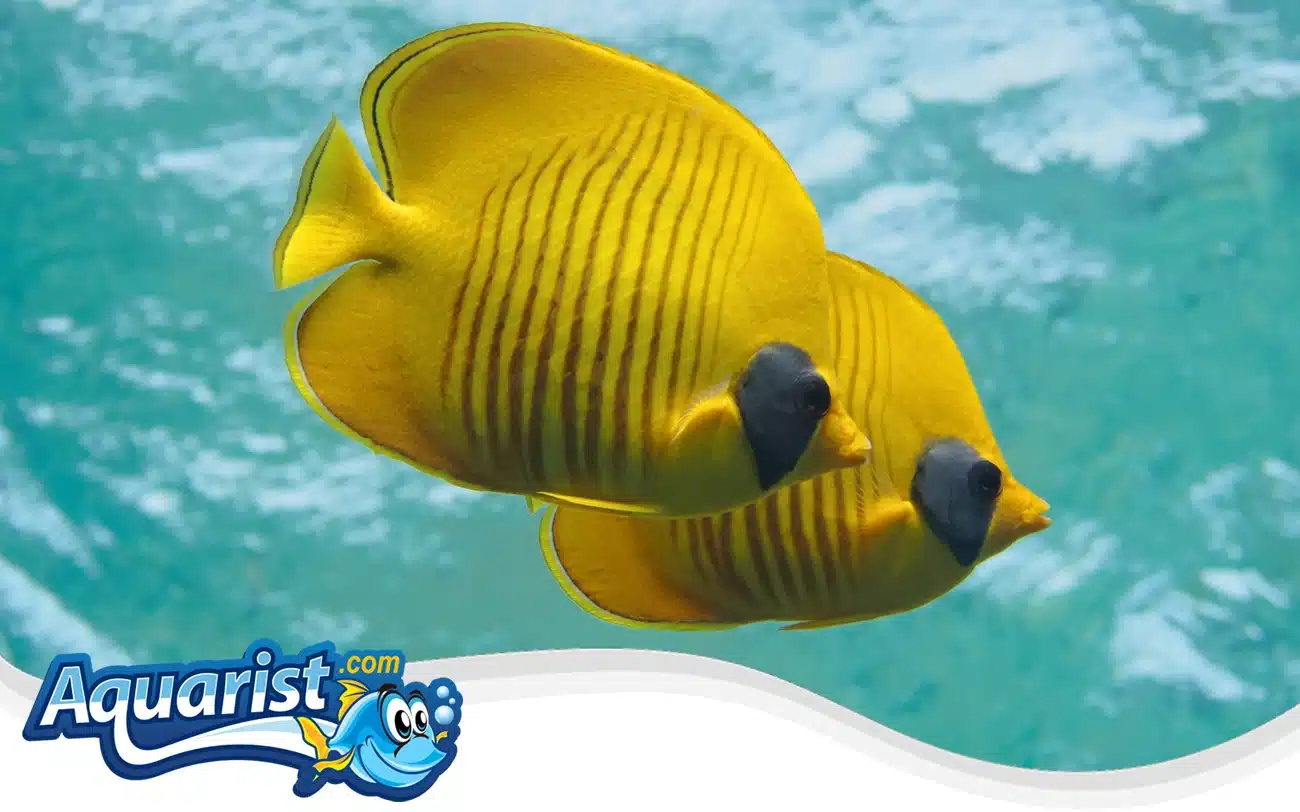
- Recognized for its vibrant golden-yellow body adorned with thin blue vertical lines.
- A hardy and visually striking butterflyfish that adapts well to captivity with proper care.
- Often seen in pairs, as it forms strong social bonds with its mate in the wild.
- Best suited for a well-maintained marine aquarium with stable water parameters and live rock structures.
Feeding
- Omnivorous, feeding on coral polyps, small invertebrates, and algae in the wild.
- Thrives on a diet consisting of sponge-based foods, frozen mysis shrimp, and marine algae in captivity.
- Readily adapts to prepared foods but benefits from a variety of fresh and frozen meals.
- Multiple small feedings per day help ensure sustained energy levels and good digestion.
- A well-balanced diet maintains strong immune health and vibrant coloration.
Habitat
- Prefers coral reef environments with ample shelter and moderate water movement.
- Commonly found near reef edges and areas rich in coral growth where food sources are abundant.
- Aquarium setups should include live rock to support natural foraging behavior.
- Requires high-quality water conditions with efficient filtration to prevent stress-related issues.
- Providing shaded areas and open swimming spaces ensures a comfortable and naturalistic environment.
Fish Care
- Optimal water temperature: 74-80°F (23-27°C) to promote overall well-being.
- Preferred pH range: 8.1–8.4, with a salinity level of 1.025–1.026 (about 33–35 ppt).
- Requires regular water changes and proper filtration to maintain optimal water quality.
- Not considered reef-safe, as it has a tendency to graze on corals and small sessile invertebrates.
- Providing live rock formations enhances grazing opportunities and supports its natural feeding instincts.
Compatibility
- Generally peaceful but can be territorial toward other butterflyfish.
- Compatible with tangs, angelfish, and other semi-aggressive marine species.
- Not ideal for reef aquariums due to its tendency to consume coral polyps.
- Should be housed with similarly sized fish to prevent intimidation or competition for food.
- Providing a spacious environment and well-defined territories minimizes aggression.
Aquarium Behavior
- An active swimmer that enjoys patrolling the aquarium and exploring rock formations.
- Often seen grazing on rock surfaces and interacting with other tank inhabitants.
- May take time to fully acclimate but becomes more comfortable with consistent care.
- Providing live rock helps simulate its natural environment and supports its feeding behaviors.
- Over time, it may recognize its caretaker and display curiosity, particularly during feeding times.
Frequently Asked Questions
What does a Golden Butterflyfish look like?
It is bright golden yellow with thin orange vertical lines and a blue-gray mask around each eye. It is also called the Bluecheek or Masked Butterflyfish.
How big does a Golden Butterflyfish get?
Plan for up to about 12 in (30 cm), which makes it one of the largest butterflyfish kept.
What size tank does a Golden Butterflyfish need?
At least 125 gallons (473 L) with plenty of open space.
Is the Golden Butterflyfish reef safe?
It is reef safe with caution. It may pick at soft and stony corals and other invertebrates.
What does a Golden Butterflyfish eat?
It is an omnivore. Offer mysis, brine shrimp, chopped clam, squid and marine algae several times a day.
Why is the Golden Butterflyfish rated advanced?
It is collected only in the Red Sea, is expensive, and needs a large, very stable tank and careful acclimation.
Why does the Golden Butterflyfish hover under ledges?
In the wild it often hovers motionless for long periods beneath plate Acropora corals. A ledge or overhang in the tank lets it behave naturally.
Do Golden Butterflyfish live in groups?
They are often seen in pairs or small groups, and a pair can be kept in a large tank.
Is the Golden Butterflyfish peaceful?
Yes. It is rated peaceful.
Where does the Golden Butterflyfish come from?
It lives only in the Red Sea and the Gulf of Aden, where it is common on coral-rich reefs.