
Overview
- Native to the Hawaiian Islands, commonly found in coral reefs, rocky ledges, and coastal lagoons.
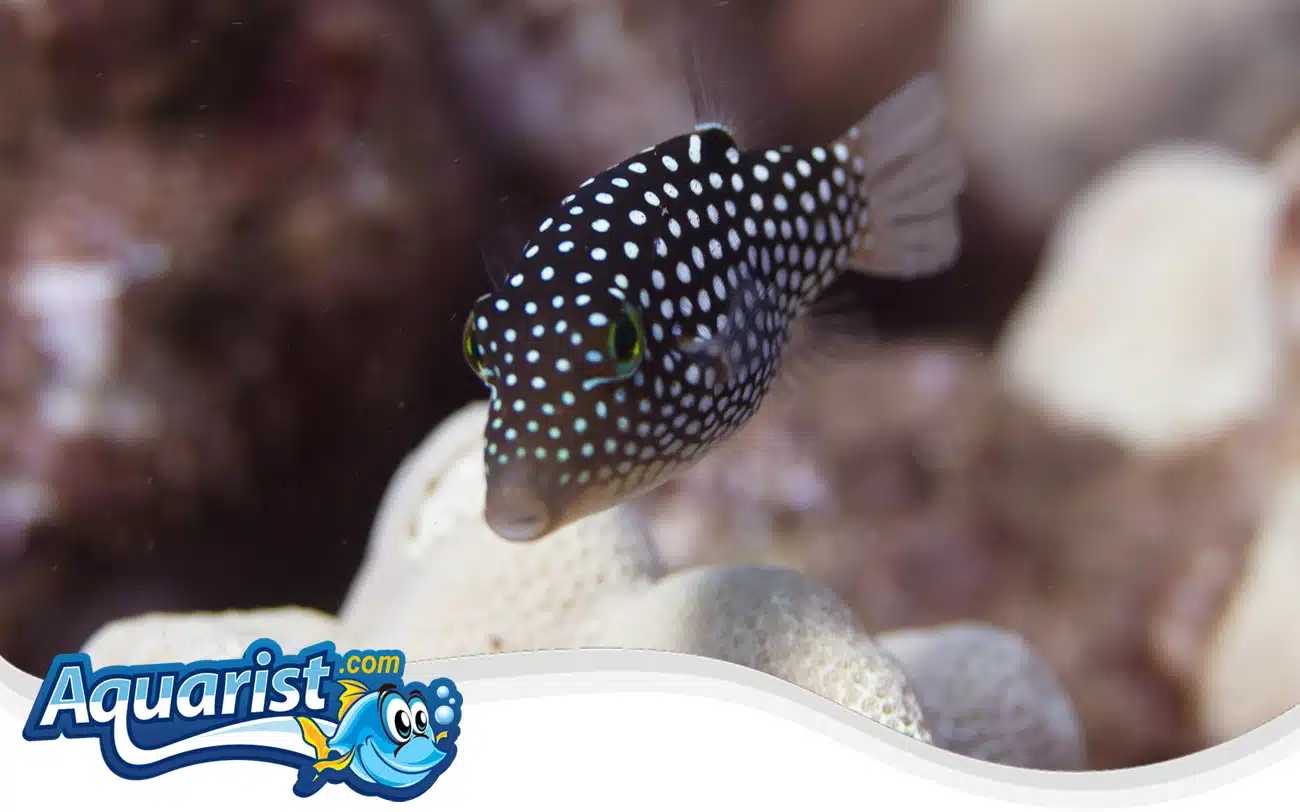
- Recognized for its compact body, brownish-tan coloration, and bright blue streaks along its face and body.
- A small but bold species known for its curious and playful personality.
- Capable of inflating its body as a defense mechanism when threatened.
- Requires a well-structured aquarium with plenty of hiding spots and open swimming areas.
Feeding
- Omnivorous, feeding on algae, small crustaceans, and invertebrates in the wild.
- Accepts frozen shrimp, mysis shrimp, marine pellets, and finely chopped seafood.
- Requires hard-shelled foods such as snails or clams to naturally grind down its continuously growing teeth.
- Multiple small feedings per day ensure optimal health and prevent malnutrition.
- A varied diet supports strong coloration and overall vitality.
Habitat
- Typically found in shallow reefs, rocky outcrops, and sandy lagoon environments.
- Prefers stable water conditions with moderate water movement.
- Aquarium setups should include live rock structures, caves, and sandy substrate for natural foraging.
- Thrives in well-maintained marine tanks with a balanced environment.
- Providing hiding spaces and natural decor reduces stress and encourages natural behaviors.
Fish Care
- Optimal water temperature: 74-80°F (23-27°C) to support a healthy immune system.
- Preferred pH range: 8.1-8.4, with a salinity level of 1.020-1.025.
- Requires efficient filtration and regular water changes to maintain water quality.
- Should be kept in a calm environment to minimize stress.
- Providing an enriched habitat and a varied diet supports longevity and overall well-being.
Compatibility
- Generally peaceful but may nip at slow-moving fish with long fins.
- Compatible with tangs, wrasses, and other semi-aggressive fish.
- Not reef-safe, as it may prey on small invertebrates such as shrimp and crabs.
- Should not be housed with overly aggressive fish that may cause stress or outcompete it for food.
- Providing enough space and a structured environment helps minimize territorial behavior.
Aquarium Behavior
- A curious and active species that enjoys exploring its surroundings.
- Often seen picking at rock surfaces and searching for small prey.
- Capable of inflating its body when startled, though this behavior should not be intentionally provoked.
- Providing rock formations and varied tank decor promotes natural foraging behavior.
- Over time, it can become highly interactive with caretakers and recognize feeding routines.
Frequently Asked Questions
Where is the Hawaiian Whitespotted Toby from?
FishBase and Wikipedia say it is endemic to the Hawaiian Islands, which means it is found nowhere else.
What kind of fish is it?
Wikipedia says it is a member of the pufferfish family. It belongs to Canthigaster, the sharpnose puffers or tobies.
How big does it get?
Our page lists about 4 in (10 cm). FishBase and Wikipedia give a maximum of about 3.5 in (9 cm).
What size tank does it need?
Our page recommends at least 50 gallons (189 L).
What is its natural habitat?
FishBase says it is common on lagoon and seaward reefs, over coral, rock, rubble and sand, from about 3 to 290 ft (1 to 89 m).
What does it eat in the wild?
FishBase lists a very broad diet, including sponges, algae, tunicates, worms, sea urchins, brittle stars, crabs, shrimp, zoanthids and small fish.
Is it safe with corals and invertebrates?
Our page rates it reef safe with caution. Since FishBase lists zoanthids, crabs, shrimp and urchins in its wild diet, watch it closely around them.
Is it often available?
Wikipedia says it only occasionally makes its way into the aquarium trade.
How does it breed?
FishBase says it is oviparous, which means it lays eggs.
Is the Hawaiian Whitespotted Toby an omnivore?
Yes. Our page lists it as an omnivore, which fits the FishBase record of algae and detritus alongside animal prey.