
Overview
- Native to the eastern Pacific Ocean, especially common along the coast from the Gulf of California to Peru.
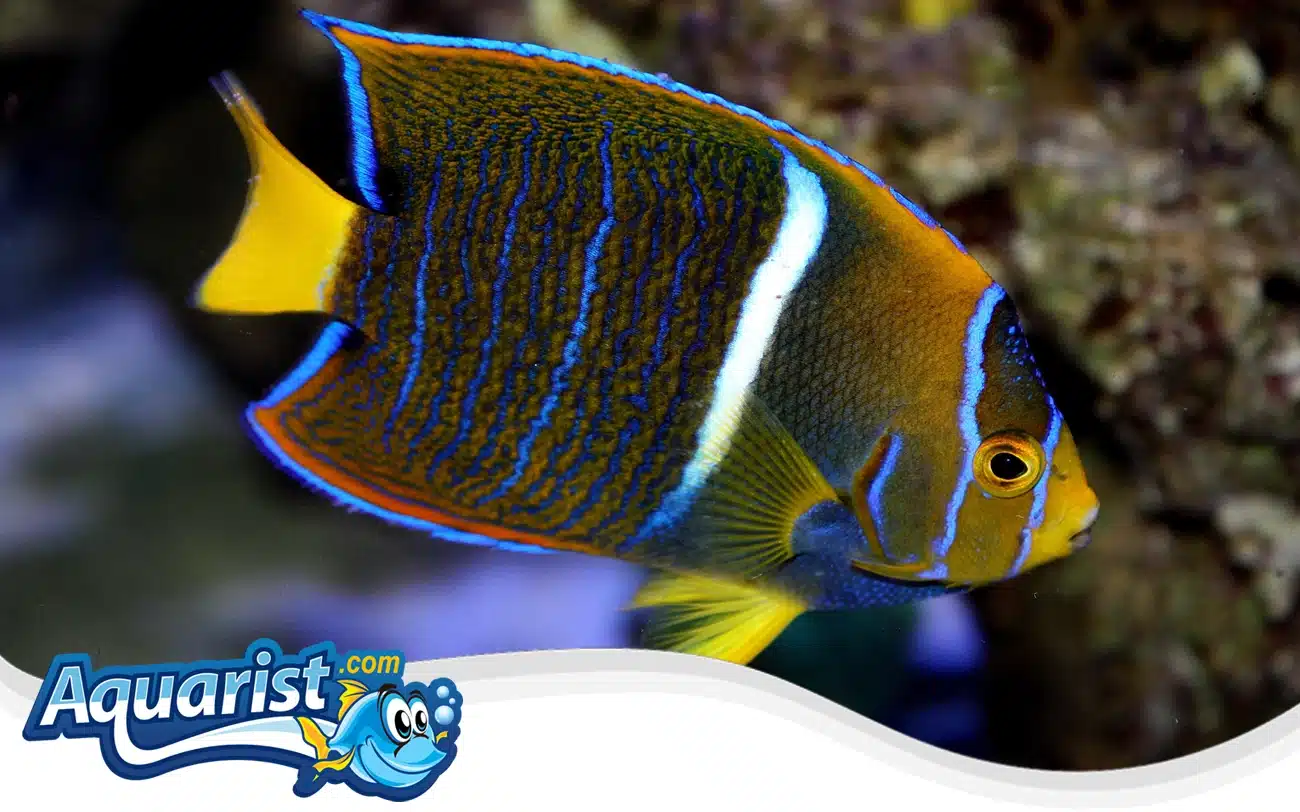
- Distinguished by vibrant blue, yellow, and white coloration, with a striking vertical white band behind the gills.
- A visually appealing species, highly prized among marine aquarium hobbyists.
- Often inhabits coral reefs and rocky shorelines in the wild.
Feeding
- Primarily omnivorous; diet includes sponges, algae, coral polyps, and small invertebrates.
- In aquariums, readily accepts flakes, pellets, and frozen marine foods like shrimp and mussels.
- Supplement diet with algae-based food to promote vibrant coloration and overall health.
- Regular feeding schedule of two to three times daily is recommended.
Habitat
- Typically found around rocky reefs and coral formations in depths ranging from shallow waters to approximately 30 meters.
- Thrives best in aquarium environments that mimic its natural habitat with ample rockwork and hiding places.
- Prefers stable water parameters with moderate currents.
- Benefits from spacious tanks to accommodate active swimming behaviors.
Fish Care
- Optimal water temperature: 72-78°F (22-26°C).
- Ideal pH level: 8.1-8.4, with a specific gravity of 1.020-1.025.
- Requires efficient filtration systems and regular maintenance to maintain high water quality.
- Sensitive to poor water conditions and stress; proper acclimation is essential.
Compatibility
- Semi-aggressive; suitable for community aquariums with similarly sized or larger, robust species.
- Can display territorial behavior, especially toward other angelfish or similarly shaped species.
- Best kept individually or with caution in larger setups to avoid conflicts.
Aquarium Behavior
- Active and bold swimmer, often observed exploring its territory or patrolling the tank.
- Can exhibit territoriality, especially when new fish are introduced or during feeding.
- Providing sufficient space and hiding spots helps minimize aggression and stress.
Frequently Asked Questions
What does a King Angelfish look like?
Adults are mostly dark blue with a single white bar below the dorsal fin, a yellow-edged dorsal fin and a yellow tail. Juveniles are orange with one white and several blue stripes. It is also sold as the Passer Angelfish.
How big does a King Angelfish get?
About 14 in (36 cm). FishBase records a similar maximum of about 14 in (35.6 cm).
What size tank does a King Angelfish need?
At least 150 gallons (568 L), and bigger is better as it grows. LiveAquaria recommends 250 gallons (946 L) or more for an adult.
Can you tell male and female King Angelfish apart?
Yes. LiveAquaria notes the belly fins are yellow on females and white on males.
What does a King Angelfish eat?
It is an omnivore. In the wild it grazes on sponges, other invertebrates and algae and also takes plankton. Feed Spirulina, marine algae, meaty foods and angelfish foods that include sponge, at least three times a day.
Is the King Angelfish reef safe?
Only with caution. It grazes live rock and will nip stony and soft corals and clam mantles, so LiveAquaria does not consider it a good reef fish.
Is the King Angelfish aggressive?
Yes, it can be. It is hardy but becomes aggressive, so keep it with sturdy semi-aggressive fish rather than small, timid ones.
Do King Angelfish live in pairs?
FishBase notes wild adults are monogamous and stay in pairs within a home range. Females are the more territorial of the two.
Where does the King Angelfish live in the wild?
It is found in the Eastern Pacific, from the Gulf of California to Peru, including the Galapagos Islands. It lives on reefs from about 13 to 98 ft (4 to 30 m) deep.
Is the King Angelfish good for beginners?
It is an intermediate fish. It is hardy, but its size, temper and taste for corals mean it needs a large, carefully stocked tank.