
Overview
- Native to the Indian Ocean, particularly around the Maldives and Sri Lanka.
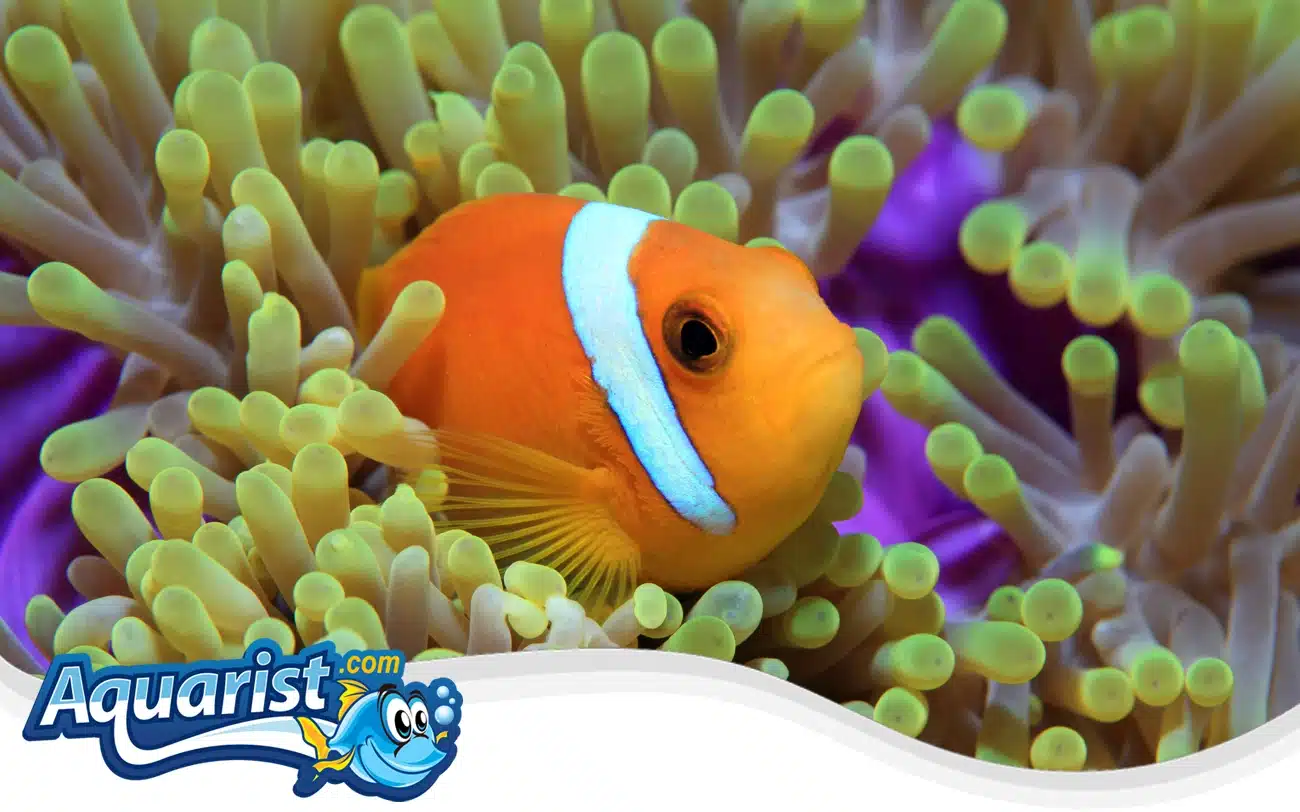
- Recognized for its bright orange body with a single white stripe behind the eye and black pectoral fins.
- A hardy yet somewhat shy species known for its symbiotic relationship with sea anemones.
- Popular among marine aquarists for its striking coloration and interesting behaviors.
Feeding
- Omnivorous diet, consuming plankton, algae, and small invertebrates.
- Readily accepts high-quality marine pellets, flakes, and frozen foods such as mysis shrimp and brine shrimp.
- Supplementing with enriched foods enhances coloration and overall health.
- Multiple small feedings per day ensure proper nutrition and energy levels.
Habitat
- Commonly found in warm, shallow reef environments with plenty of coral cover.
- Prefers stable water conditions with moderate water movement.
- Thrives in aquariums with live rock formations and anemones, particularly Heteractis magnifica.
- Well-suited for community reef tanks but may be territorial in smaller setups.
Fish Care
- Optimal water temperature: 74-82°F (23-28°C).
- Ideal pH level: 8.1-8.4, with a specific gravity of 1.020-1.025.
- Hardy but may be more prone to stress if housed without an anemone.
- Regular water changes and proper filtration help maintain long-term health.
- Providing hiding spots and an anemone (if available) ensures a stress-free environment.
Compatibility
- Generally peaceful but can be territorial, especially in smaller tanks.
- Compatible with a variety of tank mates, including tangs, wrasses, and smaller angelfish.
- Should not be housed with highly aggressive species or larger predatory fish.
- Best kept singly or as a bonded pair to minimize aggression.
Aquarium Behavior
- Active swimmer, often seen exploring its environment or hosting an anemone.
- Can be shy when first introduced but becomes more confident over time.
- Forms strong pair bonds and exhibits fascinating social behaviors.
- Providing an environment with hiding spots and open swimming areas supports natural behaviors.
Breeding
Want to breed Maldives Clownfish? See our Breeding Clownfish guide, covering pair setup, spawning, egg care and raising the larvae to juveniles.
Read the guideFrequently Asked Questions
What is the Maldives Clownfish?
Amphiprion nigripes, also called the Blackfoot Clownfish, is an orange clownfish with a single white headband and black pelvic and anal fins.
Where is the Maldives Clownfish found?
It lives only in the Indian Ocean around the Maldives region, usually along the reef edge.
How big does the Maldives Clownfish get?
It stays small, at about 3 in (8 cm).
What size tank does a Maldives Clownfish need?
At least 30 gallons (114 L) with rockwork, or a suitable anemone if you plan to keep one.
What anemone does the Maldives Clownfish host?
In the wild it lives almost exclusively in the Magnificent Sea Anemone, Heteractis magnifica. It does not need an anemone in an aquarium.
Is the Maldives Clownfish peaceful?
Yes. It is rated peaceful and is one of the gentler clownfish.
What does a Maldives Clownfish eat?
It is an omnivore. Feed mysis, brine shrimp, marine pellets and flake foods, plus some algae.
Is the Maldives Clownfish reef safe?
Yes. It is fully reef safe.
Can you keep a pair of Maldives Clownfish?
Yes. Like other clownfish it starts as a male and the larger fish becomes female, so two young fish will usually form a pair.
Is the Maldives Clownfish good for beginners?
Yes. It is rated beginner-level and is hardy once settled.