
Overview
- Native to the Indo-Pacific and the Eastern Pacific, typically living over open sand in lagoons and on seaward reefs.
- Noted for its vivid, iridescent coloration, with a stunning blend of green, blue, and red hues.
- An active and visually captivating species known for its unique swimming style and vibrant display.
- Exhibits a shy temperament initially, often burying itself in the sand when startled or during nighttime.
- Best suited for aquariums featuring ample swimming areas, sandy substrates, and stable, pristine water conditions.
Feeding
- Carnivorous, naturally feeding on small crustaceans, marine worms, mollusks, and other invertebrates in the wild.
- Thrives on a diet consisting of frozen mysis shrimp, brine shrimp, enriched plankton, and quality marine pellets.
- May require time to adapt to prepared foods; initially benefits greatly from live or frozen feedings.
- Should be fed small amounts multiple times daily to support its active lifestyle and maintain energy levels.
- A varied diet contributes to the maintenance of vibrant coloration and overall health.
Habitat
- Commonly found over open sand near lagoon and seaward reefs across the Indo-Pacific and Eastern Pacific, with adults rarely seen shallower than 66 ft (20 m).
- Frequently observed burying itself in the sand for protection or rest.
- Aquarium setups must have a deep sandy substrate to accommodate its natural burrowing behavior.
- Stable water conditions, good water circulation, and high-quality filtration systems are essential.
- Providing open swimming space along with sandy areas encourages natural behavior and comfort.
Fish Care
- Optimal water temperature: 74-80°F (23-27°C) to maintain ideal metabolic and immune functions.
- Preferred pH range: 8.1–8.4, with a salinity level of 1.025–1.026 (about 33–35 ppt).
- Regular water changes and effective filtration are essential to maintaining high water quality and preventing stress-related diseases.
- Reef safe with caution: it leaves corals alone but will eat ornamental shrimp, crabs, snails, and other hard-shelled invertebrates.
- Ensuring proper substrate depth and frequent feeding maintains optimal health and reduces stress.
Compatibility
- Typically peaceful, making it suitable for community tanks with other non-aggressive marine species.
- Compatible with larger, peaceful tankmates such as tangs, clownfish, anthias, and peaceful wrasses.
- Should not be kept with highly aggressive or predatory fish that could intimidate or stress the wrasse.
- Works well in mixed-species aquariums, particularly with fish that inhabit different swimming levels or niches.
- Providing adequate hiding spaces and visual barriers helps maintain harmony in the aquarium.
Aquarium Behavior
- Known for its unique swimming patterns, often gracefully gliding above the substrate.
- Frequently engages in burying behavior, especially when feeling threatened or during periods of rest.
- Initial shyness typically diminishes over time as the fish becomes accustomed to aquarium life.
- Providing structured rockwork, sandy substrate, and hiding spots allows for a natural and stress-free environment.
- Over time, the Peacock Wrasse often recognizes its caretaker and exhibits eagerness during feeding times, actively approaching for food.
Frequently Asked Questions
What other names does the Peacock Wrasse have?
It is also called the blue razorfish, and Xyrichtys pavo is an older name for Iniistius pavo.
What does a Peacock Wrasse look like?
Adults have a dark bar below the eye, a small dark spot below the front of the dorsal fin and a white patch behind the pectoral fin.
How big does a Peacock Wrasse get?
About 11 in (28 cm), which is large for an aquarium wrasse, so plan the tank around its full adult size.
What size tank does a Peacock Wrasse need?
At least 200 gallons (757 L), with a deep sand bed of at least 6 in (15 cm) so it can bury itself.
Does a Peacock Wrasse need a sand bed?
Yes. It dives into the sand to sleep at night or hide when alarmed.
What bottom does the Peacock Wrasse live over?
It lives over fine to loose, coarse sand in lagoons and seaward reefs.
Do Peacock Wrasse live in groups?
They are usually solitary.
What does a Peacock Wrasse eat?
It feeds on hard-shelled invertebrates, including mollusks and crustaceans.
How do juvenile Peacock Wrasse protect themselves?
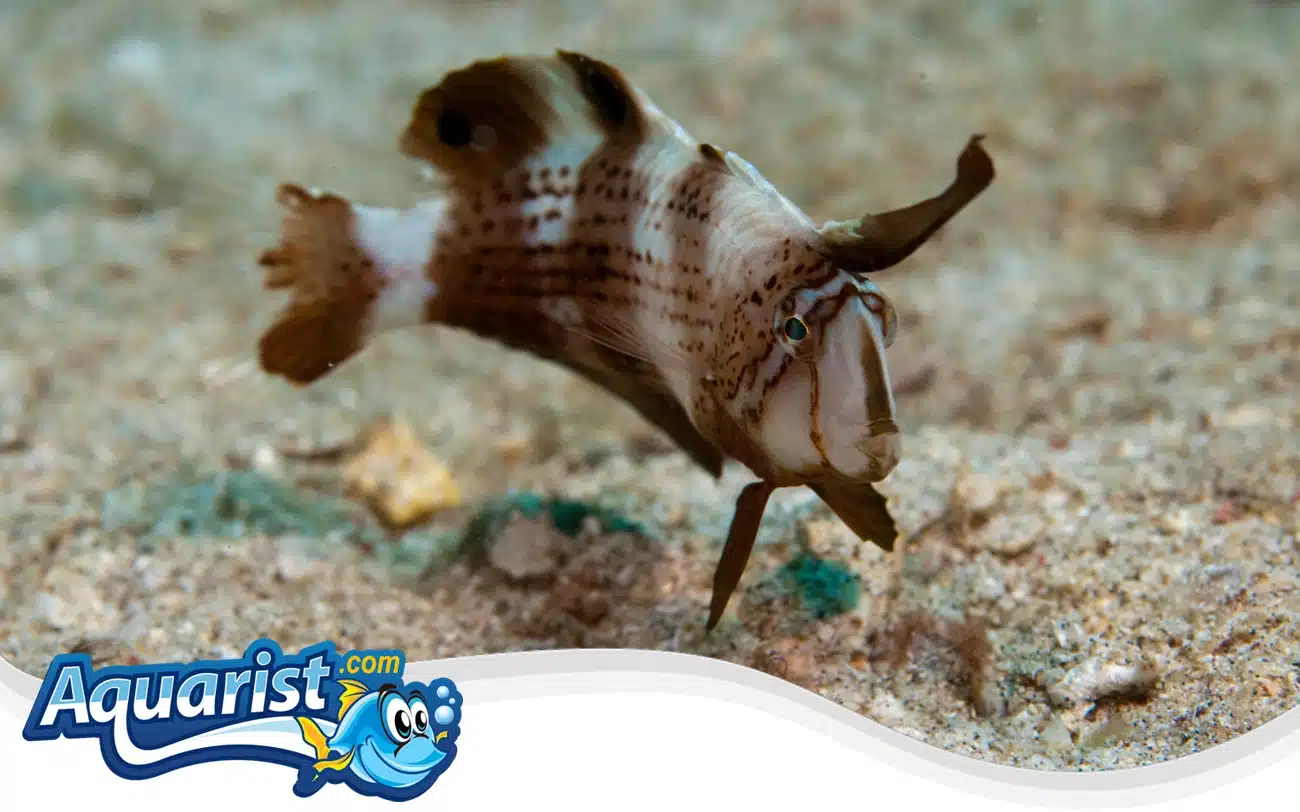
Juveniles mimic drifting dead leaves by holding the long front of the dorsal fin forward over the head.
Are juvenile Peacock Wrasse different in color?
Yes. Juveniles have a black anal fin and two large white-edged eyespots.