
Overview
- Native to the Western Atlantic, including the Caribbean Sea and the Gulf of Mexico, commonly found in coral reefs and seagrass beds.
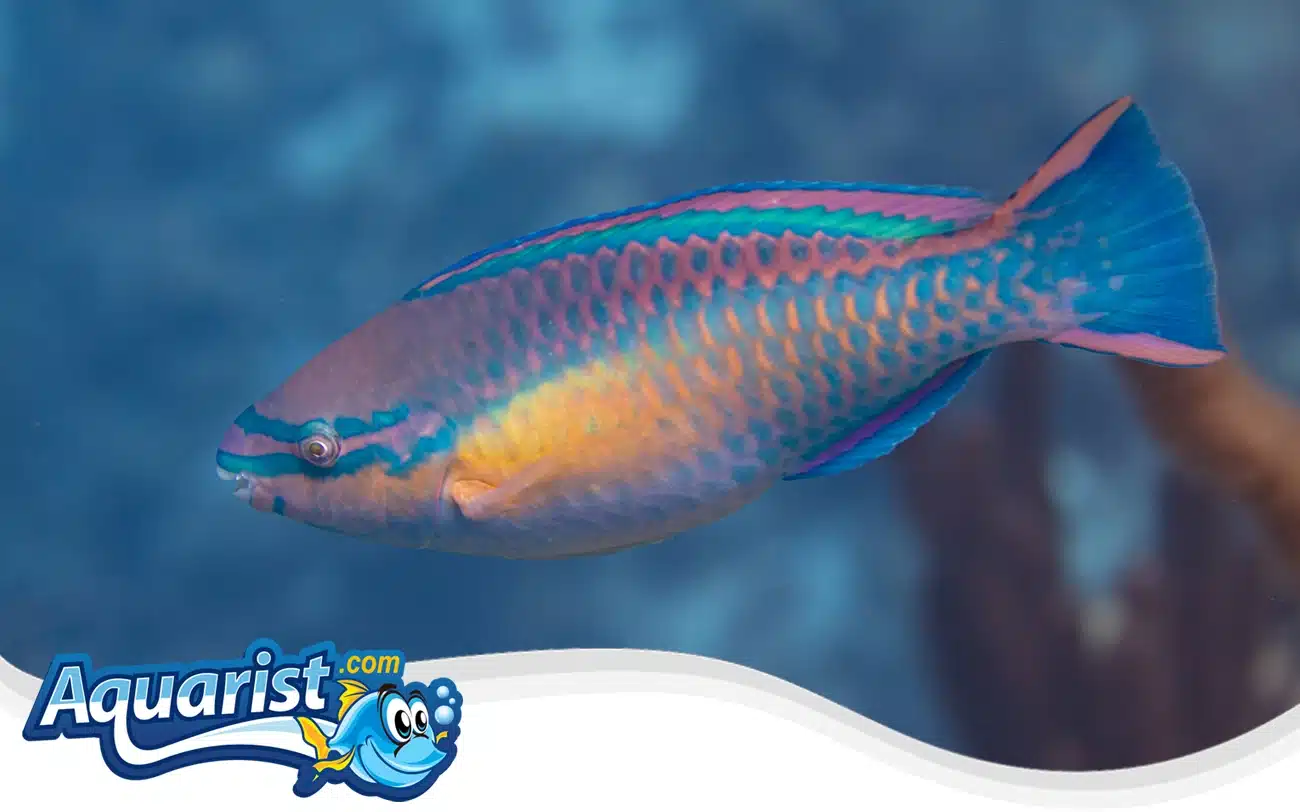
- Recognized for its vibrant coloration, transitioning from a brownish juvenile phase to a striking blue and green adult form.
- A herbivorous species that plays a crucial role in reef health by grazing on algae-covered surfaces.
- Known for its beak-like mouth, which it uses to scrape algae and coral, contributing to reef maintenance.
- Best suited for large aquariums with ample live rock, sandy substrate, and stable water conditions.
Feeding
- Herbivorous, primarily feeding on filamentous algae and small bits of coral in the wild.
- Thrives on a diet of marine algae, spirulina, seaweed, and high-quality herbivore pellets.
- Will scrape algae from live rock and tank surfaces using its specialized teeth.
- Should be fed multiple times daily to maintain energy levels and support natural grazing behavior.
- A diet rich in plant matter ensures proper digestion and enhances coloration.
Habitat
- Prefers shallow reef environments with rocky surfaces, seagrass beds, and sandy bottoms.
- Frequently seen swimming over coral formations, scraping algae from rocks and reef structures.
- Aquarium setups should include live rock for natural grazing and plenty of open swimming areas.
- Requires stable water parameters and high-quality filtration to maintain optimal health.
- Providing a sandy substrate allows for natural foraging behavior.
Fish Care
- Optimal water temperature: 74-80°F (23-27°C) to support metabolism and immune function.
- Preferred pH range: 8.1-8.4, with a salinity level of 1.020-1.025.
- Requires consistent water changes and high-quality filtration to maintain water clarity.
- Reef-safe but may inadvertently disturb coral formations while foraging.
- Providing a well-balanced diet with algae-based foods ensures proper health and activity.
Compatibility
- Generally peaceful but may exhibit territorial behavior towards other herbivorous fish.
- Compatible with tangs, angelfish, and other reef-safe species.
- Should not be housed with overly aggressive fish that may outcompete it for food.
- Best kept in a tank with plenty of space to reduce territorial disputes.
- Providing multiple grazing surfaces helps distribute feeding activity evenly.
Aquarium Behavior
- A highly active swimmer that constantly grazes on available algae surfaces.
- Frequently observed scraping algae from rocks and coral structures.
- More confident in a well-established aquarium with plenty of food sources.
- Providing structured rockwork encourages natural feeding and exploration behaviors.
- Over time, it may become accustomed to its caretaker and recognize feeding times.
Frequently Asked Questions
What does a Princess Parrotfish look like?
Marine Fish EZ describes a bright green body with pink to yellow horizontal stripes. FreshMarine notes its fused teeth form a parrot-like beak.
How big does a Princess Parrotfish get?
About 14 in (35 cm). FishBase records a maximum of about 13.8 in (35 cm).
What size tank does a Princess Parrotfish need?
At least 300 gallons (1,136 L). Top Shelf Aquatics calls it an active open-water cruiser that needs ample swimming room and strong flow.
Is the Princess Parrotfish reef safe?
No, it is for fish-only tanks. The Happy Reef says it eats live corals and can damage reef structures.
Is the Princess Parrotfish hard to keep?
Yes, it is for advanced keepers. Marine Fish EZ rates it expert only and says parrotfish are very difficult to house.
What does a Princess Parrotfish eat?
Top Shelf Aquatics says to make nori, macroalgae, Spirulina flakes and herbivore pellets the bulk of the diet, with small treats of mysis or clam.
How often should I feed a Princess Parrotfish?
Small portions several times a day. Top Shelf Aquatics says it grazes continuously, and a seaweed clip encourages natural foraging.
Is the Princess Parrotfish peaceful?
Yes with other species. Top Shelf Aquatics says it can be assertive with its own kind and is best kept singly.
Does a Princess Parrotfish sleep in a cocoon?
Yes. FishBase notes it sleeps inside a mucus cocoon.
Where does the Princess Parrotfish live in the wild?
FishBase lists it in the Western Atlantic from Bermuda, southern Florida and the Bahamas to Brazil, and throughout the Caribbean. Juveniles are often found in seagrass.