
Overview
- Native to the Western Atlantic Ocean, commonly found in coral reefs, rocky bottoms, and seagrass beds.
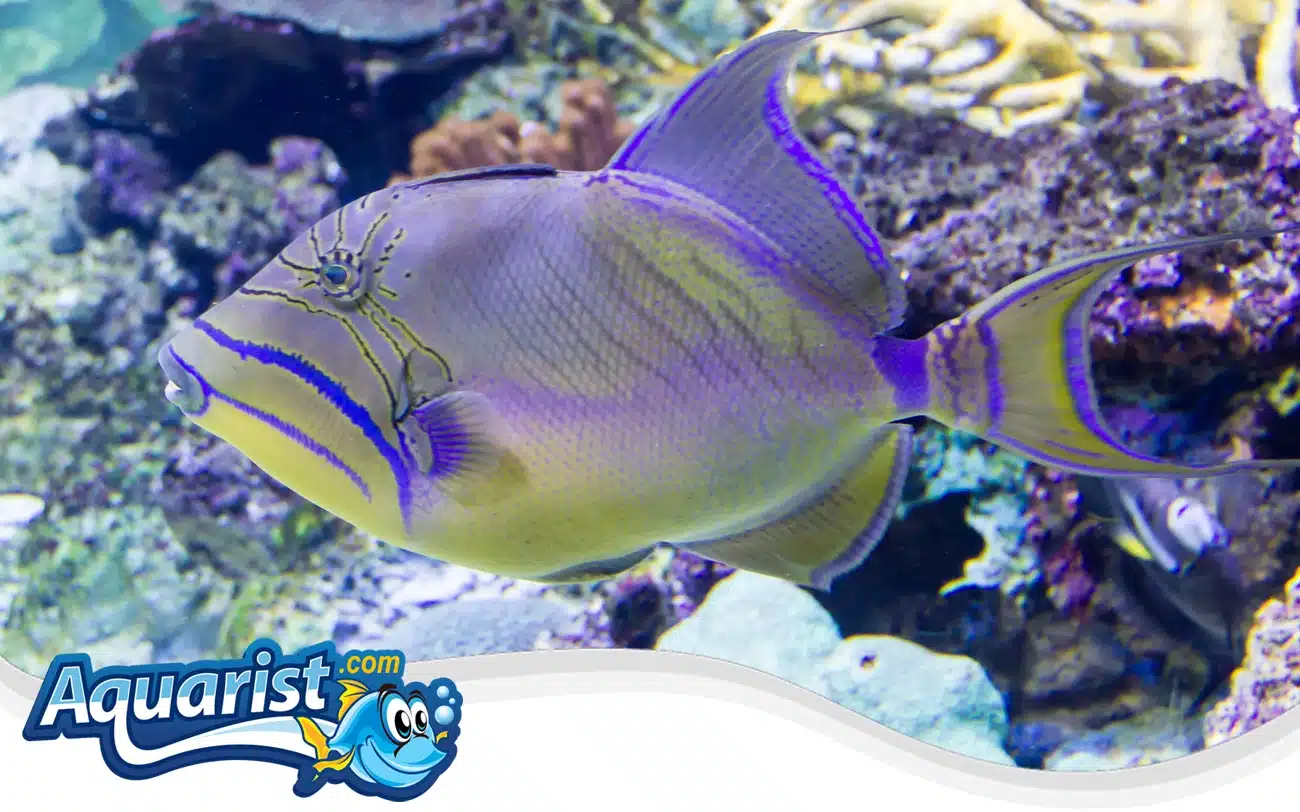
- Easily recognized by its striking coloration, featuring shades of blue, green, and yellow with distinct patterns.
- Possesses strong jaws and sharp teeth, used for cracking open shells and defending itself from predators.
- Highly intelligent and territorial, often displaying unique behaviors such as rearranging tank decor.
- Requires a large, well-maintained aquarium with ample swimming space and secure rock formations.
Feeding
- Carnivorous, feeding on sea urchins, crustaceans, mollusks, and small fish in the wild.
- Readily accepts frozen shrimp, squid, clams, and high-quality marine pellets in captivity.
- Hard-shelled foods such as snails and crabs are essential for maintaining strong teeth.
- Requires frequent feedings to sustain its energy levels and aggressive foraging nature.
- A well-balanced diet enhances natural coloration and ensures long-term health.
Habitat
- Typically inhabits coral reef environments, rocky outcrops, and sandy areas at moderate depths.
- Prefers stable water conditions with strong water movement, mimicking ocean currents.
- Aquariums should include secure rock structures, caves, and open swimming areas to accommodate their active nature.
- Thrives in well-established marine tanks that provide both hiding spots and open areas for exploration.
- Providing a structured environment with varied terrain encourages natural behaviors and reduces stress.
Fish Care
- Optimal water temperature: 74-82°F (23-28°C) to support metabolic functions and immune response.
- Preferred pH range: 8.1–8.4, with a salinity level of 1.025–1.026 (about 33–35 ppt).
- Requires powerful filtration and strong water circulation to maintain water quality.
- Regular water changes and monitoring are necessary to ensure a healthy environment.
- Providing enrichment, such as interactive feeding methods, helps stimulate natural instincts.
Compatibility
- Aggressive and territorial, requiring careful selection of tank mates.
- Compatible with other large, aggressive species such as groupers, large wrasses, and lionfish.
- Not suitable for reef tanks, as it may prey on invertebrates and disturb coral structures.
- Should not be housed with small or timid fish, as it may exhibit bullying behavior.
- A spacious tank with clear territorial boundaries can help minimize aggression.
Aquarium Behavior
- A highly intelligent and curious fish that actively explores its surroundings.
- Uses its strong jaws to manipulate objects, break shells, and even dig in the substrate.
- May exhibit aggressive territorial behavior, particularly if it perceives a threat.
- Providing a well-structured environment with caves and hiding spots helps manage aggression.
- Over time, it can recognize its caretaker and may display interactive, engaging behavior.
Frequently Asked Questions
What does a Queen Triggerfish look like?
It has a mostly yellow and green triangular body with lines circling the eyes, blue to purple fins and a forked tail.
How big does it get?
It reaches about 24 in (61 cm).
What size tank does it need?
Our page recommends at least 300 gallons (1,136 L). Plan on 500 gallons (1,893 L) or more because it grows so large.
Is it reef safe?
No. It is fish only, and it will eat any crustacean in the tank.
How aggressive is it?
It is one of the more aggressive fish, and it should be added to the tank last.
How does it hunt sea urchins?
It blows water to flip the urchin over, then attacks where the spines are short.
What does it eat in the wild?
It feeds mainly on bottom-dwelling invertebrates.
What should you feed it?
Offer squid, krill, clams, small fish and hard-shelled shrimp to wear down its ever-growing teeth.
Is the Queen Triggerfish threatened?
Its wild populations are considered Near Threatened.
Where does it live?
Adults live over rocky or coral areas, often at 10 to 100 ft (3 to 30 m), and sometimes form schools.