
Overview
- Native to the Indo-Pacific, commonly found in coral reefs, rocky ledges, and reef drop-offs.
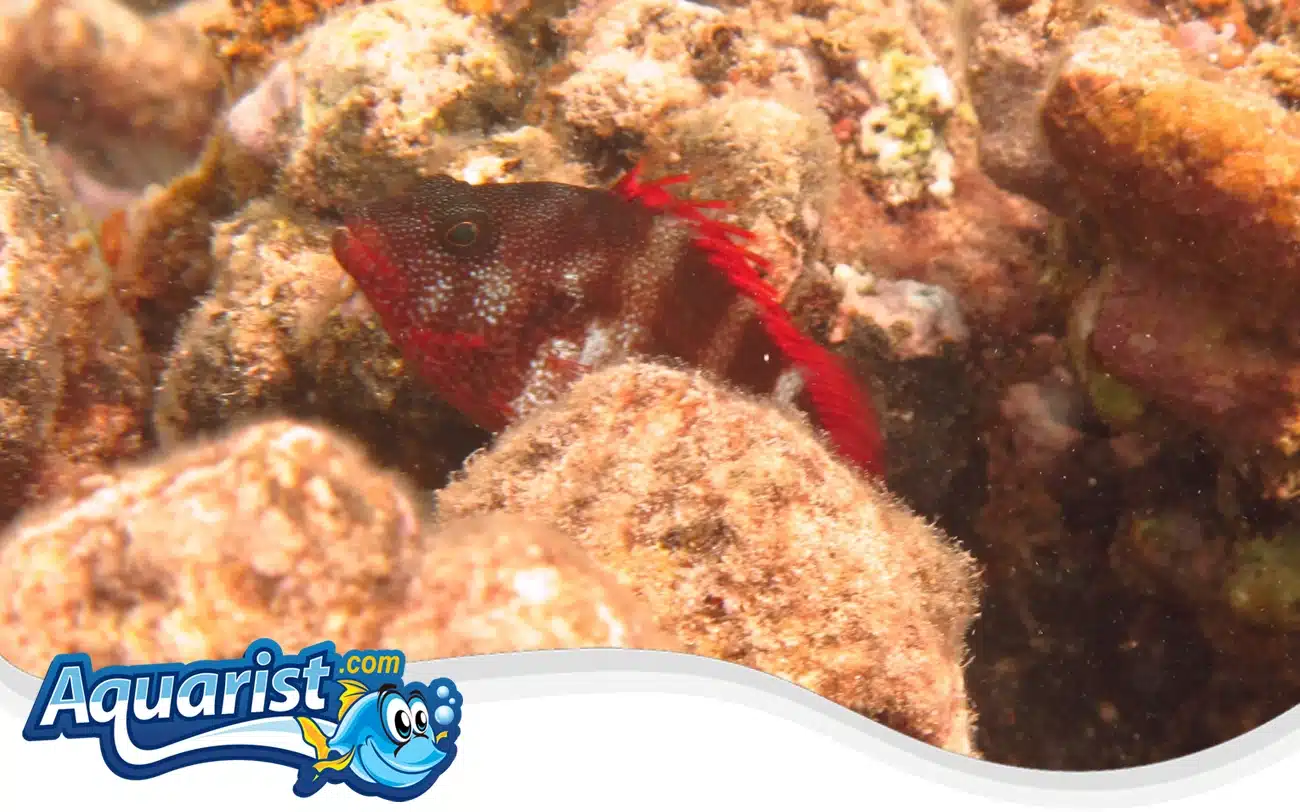
- Distinguished by its vibrant red and white body with vertical bars and an elongated dorsal fin.
- A hardy species known for its perching behavior, often resting on corals and rocks to observe its surroundings.
- Typically seen in solitary or small group settings, preferring locations with ample hiding spots.
- Best suited for aquariums with stable water parameters, live rock structures, and peaceful to semi-aggressive tankmates.
Feeding
- Carnivorous, primarily preying on small crustaceans, shrimp, and tiny fish in its natural environment.
- Thrives on a varied diet of frozen mysis shrimp, brine shrimp, and finely chopped seafood.
- Readily adapts to high-quality pellet and flake foods formulated for carnivorous marine species.
- Should be fed multiple small meals per day to sustain energy levels and promote digestion.
- A protein-rich diet supports its natural predatory instincts and maintains vibrant coloration.
Habitat
- Prefers coral reef environments with moderate water flow and an abundance of rocky hiding spots.
- Often seen perched on coral formations, using its strong pectoral fins to remain stable.
- Aquarium setups should include live rock to provide natural shelter and perching areas.
- Requires high-quality filtration and stable water conditions to prevent stress and disease.
- Providing shaded areas alongside open swimming space allows for a balanced habitat.
Fish Care
- Optimal water temperature: 74-80°F (23-27°C) to ensure a healthy environment.
- Preferred pH range: 8.1–8.4, with a salinity level of 1.025–1.026 (about 33–35 ppt).
- Requires regular water changes and consistent maintenance to thrive.
- Not considered fully reef-safe, as it may prey on small shrimp and other invertebrates.
- Providing an aquascape with various rock formations supports its perching behavior and territorial tendencies.
Compatibility
- Semi-aggressive and territorial, especially towards similar species.
- Compatible with larger, robust fish such as tangs, wrasses, and angelfish.
- Should not be housed with very small fish or slow-moving invertebrates, as they may be considered prey.
- Best kept in tanks with well-defined territories and ample rockwork to minimize aggression.
- Providing adequate space and hiding areas reduces stress and encourages natural interactions.
Aquarium Behavior
- An observant species that spends much of its time perching on elevated rock surfaces.
- Frequently seen scanning its surroundings before making quick movements to capture food.
- Becomes more confident and interactive over time, particularly during feeding sessions.
- Providing structured aquascaping with open swimming areas and perching spots enhances its behavior.
- Over time, it may recognize its caretaker and exhibit curiosity, especially during feeding times.
Frequently Asked Questions
What does the Redbarred Hawkfish look like?
It has a white body with broad red to orange-brown bars, a dark spot on the gill cover and a dark band across the tail.
How big does the Redbarred Hawkfish get?
It reaches about 5 in (13 cm).
What size tank does a Redbarred Hawkfish need?
At least 50 gallons (189 L), with plenty of rock to perch on and a lookout spot.
Where does the Redbarred Hawkfish come from?
It is an Indo-Pacific fish with a scattered range that includes Madagascar, Reunion, Mauritius, Japan and Hawaii.
What is its natural habitat?
It lives on outer reefs with moderate to rich coral, usually sitting at the bases of coral heads on hard bottoms.
What does the Redbarred Hawkfish eat in the wild?
It eats small fish, shrimp and crabs in about equal amounts, plus some worms and zooplankton.
What should I feed a Redbarred Hawkfish?
Offer a varied carnivore diet of mysis, chopped shrimp, krill and frozen meaty preparations.
Is the Redbarred Hawkfish reef safe?
With caution. It ignores corals, but ornamental shrimp, small crabs and small fish may be eaten.
Is the Redbarred Hawkfish aggressive?
It is semi-aggressive. Keep it with fish that are too large to swallow and that can hold their own.
Is the Redbarred Hawkfish good for beginners?
Yes. It is hardy and eats readily, so it suits beginners as long as tankmates are chosen with its appetite in mind.