
Overview
- Native to the Western Pacific, commonly found in coastal reefs and lagoons with rocky structures.
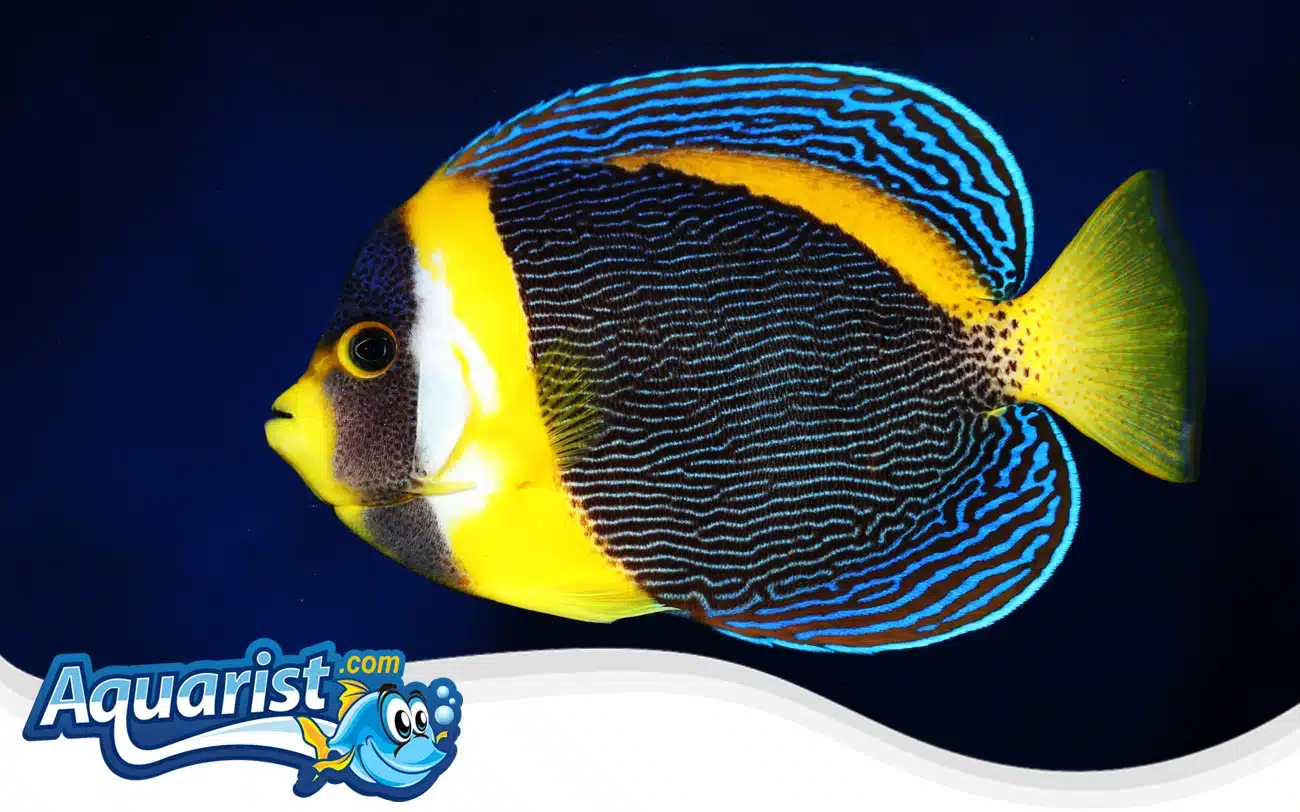
- Characterized by its intricate blue scribbled patterns on a golden-yellow body, making it a visually stunning species.
- A relatively large and hardy angelfish that can adapt well to captivity with proper care.
- Often seen in pairs or solitary in the wild, displaying territorial behavior in some cases.
- Best suited for a well-maintained marine aquarium with plenty of rock structures for hiding and grazing.
Feeding
- Omnivorous, feeding on sponges, tunicates, and algae in the wild.
- Thrives on a diet including sponge-based angelfish preparations, frozen mysis shrimp, and high-quality marine pellets.
- Adapts well to prepared foods but benefits from a mix of live and frozen options.
- Multiple small meals per day help sustain its energy levels and digestion.
- A nutrient-rich diet enhances its coloration and overall immune health.
Habitat
- Prefers coastal reef environments with rocky formations and moderate water movement.
- Often found near reef edges and sheltered lagoon areas where food is abundant.
- Aquarium setups should include live rock for natural grazing and shelter.
- Requires stable water conditions and high-quality filtration for optimal health.
- Providing both shaded and open swimming areas mimics its natural environment.
Fish Care
- Optimal water temperature: 74-82°F (23-28°C) to support overall well-being.
- Preferred pH range: 8.1–8.4, with a salinity level of 1.025–1.026 (about 33–35 ppt).
- Requires stable water conditions with frequent maintenance and water changes.
- Not considered reef-safe, as it may nip at corals, clams, and sessile invertebrates.
- Providing live rock enhances grazing opportunities and supports natural behavior.
Compatibility
- Generally peaceful but may display territorial behavior toward other angelfish.
- Compatible with tangs, larger wrasses, and other semi-aggressive marine species.
- Not ideal for reef aquariums due to its tendency to graze on coral polyps.
- Should be housed with similarly sized fish to prevent competition for food.
- Providing ample space and structured rock formations minimizes territorial disputes.
Aquarium Behavior
- An active swimmer that enjoys exploring its surroundings and interacting with tankmates.
- Frequently seen grazing on rock surfaces and picking at algae growth.
- May take time to acclimate but becomes more confident with proper care.
- Providing a complex rock structure encourages natural behaviors and promotes a sense of security.
- Over time, it may recognize its caretaker and become more interactive during feeding sessions.
Frequently Asked Questions
What other names does the Scribbled Angelfish have?
It is also called Duboulay's Angelfish.
Why is it called the Scribbled Angelfish?
The name comes from the many scrawl-like markings across its dark blue-black body and large dorsal and anal fins.
How big does it get?
It reaches up to about 11 in (28 cm).
What size tank does it need?
Plan on at least 180 gallons (681 L). It needs lots of hiding places and live rock to graze on.
Can you tell males from females?
Usually not by color, but males may show a small white patch on the gill cover.
What is its natural habitat?
It lives on coastal and inner reefs with rubble or flat bottoms broken up by rock, coral, sponge and sea whip outcrops, from about 16 to 66 ft (5 to 20 m).
What does it eat in the wild?
It feeds on sponges and tunicates.
What should I feed it in an aquarium?
Offer spirulina, marine algae, mysis or frozen shrimp and other meaty foods.
Is it safe with corals?
Our page rates it reef safe with caution. It tends to nip stony and soft corals and clam mantles.
Is it aggressive?
Our page lists it as semi-aggressive. It can be shy at first but may become more aggressive once settled, so avoid aggressive tankmates.