
Overview
- Native to the Indo-Pacific region, often found in sandy reef environments.
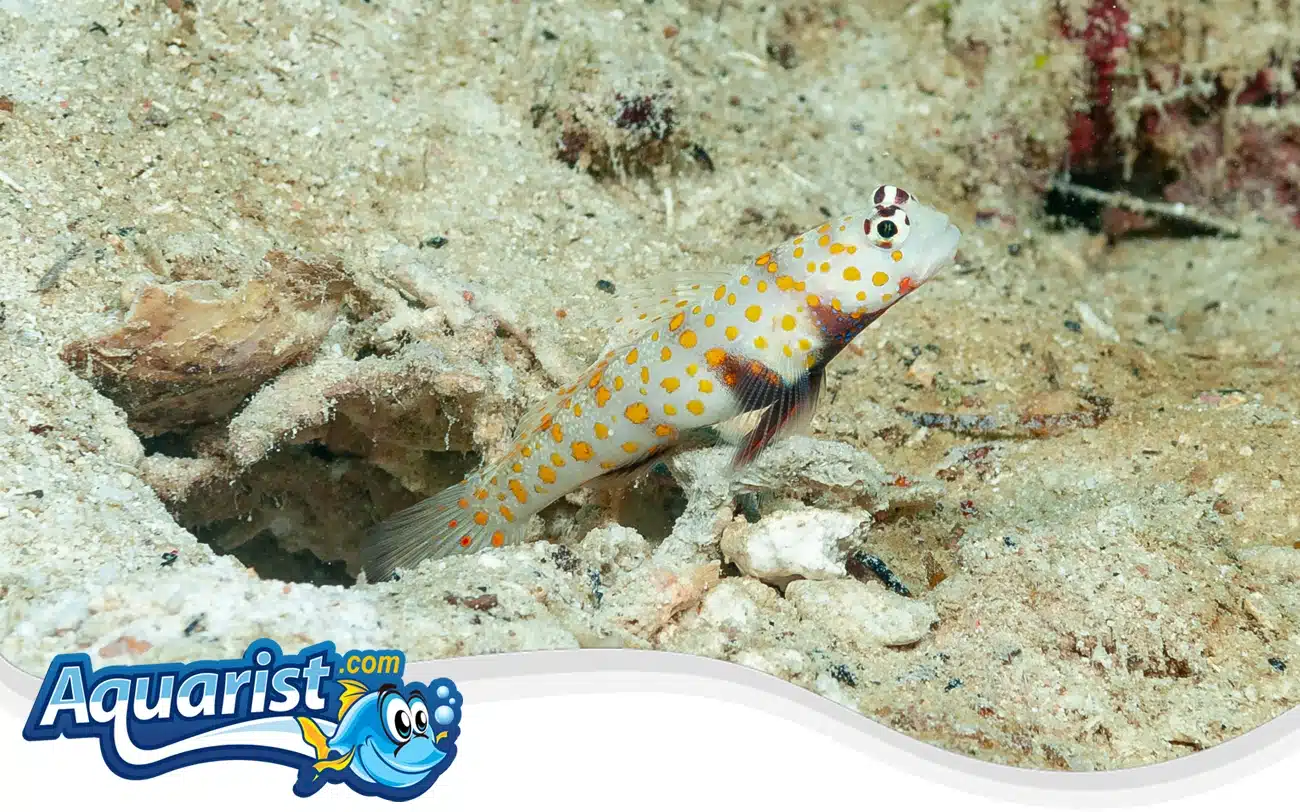
- Recognized for its speckled body pattern and symbiotic relationship with pistol shrimp.
- A peaceful and fascinating species known for its burrowing behavior.
- Popular among marine aquarists for its unique shrimp partnership and sand-aerating habits.
Feeding
- Carnivorous diet, primarily consuming small crustaceans and zooplankton.
- Readily accepts frozen and live foods such as mysis shrimp, brine shrimp, and copepods.
- Can be trained to eat high-quality marine pellets and flakes.
- Multiple small feedings per day help sustain their energy levels and health.
Habitat
- Commonly found in sandy-bottom reef environments with moderate water flow.
- Prefers stable water conditions and ample open space for burrowing.
- Requires an aquarium with fine sand substrate and rock structures for shelter.
- Thrives in environments that allow for a natural symbiotic relationship with pistol shrimp.
Fish Care
- Optimal water temperature: 74-80°F (23-27°C).
- Ideal pH level: 8.1–8.4, with a specific gravity of 1.025–1.026 (about 33–35 ppt).
- Requires a well-maintained tank with stable water conditions and adequate filtration.
- Can be shy when first introduced, but gradually becomes more confident.
- Providing a peaceful environment with minimal aggression ensures longevity.
Compatibility
- Peaceful and best suited for community reef aquariums.
- Compatible with other non-aggressive fish such as clownfish, wrasses, and gobies.
- Should not be housed with large or aggressive species that may intimidate them.
- Thrives in pairs or with a pistol shrimp to exhibit natural behavior.
Aquarium Behavior
- Spends most of its time near its burrow, keeping watch for potential threats.
- Actively sifts through the sand to find food and maintain its shelter.
- Can be timid but becomes more active once comfortable in its environment.
- Providing a well-structured tank with soft sand encourages natural digging behavior.
Frequently Asked Questions
What is a Spotted Shrimp Goby?
Amblyeleotris guttata, also called the Orange Spotted Goby or Spotted Prawn Goby, is a burrowing goby with orange spots outlined in brown on a white body.
Why does the Spotted Shrimp Goby live with a shrimp?
It forms a partnership with a nearly blind pistol shrimp. The shrimp digs the shared burrow, and the goby watches for danger and signals with its tail.
How big does the Spotted Shrimp Goby get?
It reaches about 4 in (10 cm).
What size tank does a Spotted Shrimp Goby need?
At least 20 gallons (76 L) with a sand bed deep enough for burrowing and plenty of hiding spots.
Is the Spotted Shrimp Goby reef safe?
Yes. It is safe with corals and other invertebrates.
What does a Spotted Shrimp Goby eat?
It is a carnivore. Offer mysis, brine shrimp and other small meaty foods near the burrow entrance.
Is the Spotted Shrimp Goby aggressive?
No, it is peaceful. It may defend its burrow from other gobies, but it rarely bothers other fish.
Does the Spotted Shrimp Goby clean the sand?
It digs and moves sand around the burrow, especially when kept with a pistol shrimp, which helps turn over the top layer of the sand bed.
Does the Spotted Shrimp Goby need a lid?
Yes. It can jump when startled, so a tight-fitting lid or mesh cover is a must.
Where is the Spotted Shrimp Goby found?
It lives across the Indo-Pacific on coarse sand in outer lagoons and on seaward reef slopes, down to about 82 ft (25 m).