
Overview
- Native to the Indo-Pacific region, commonly found in sandy and rubble reef environments.
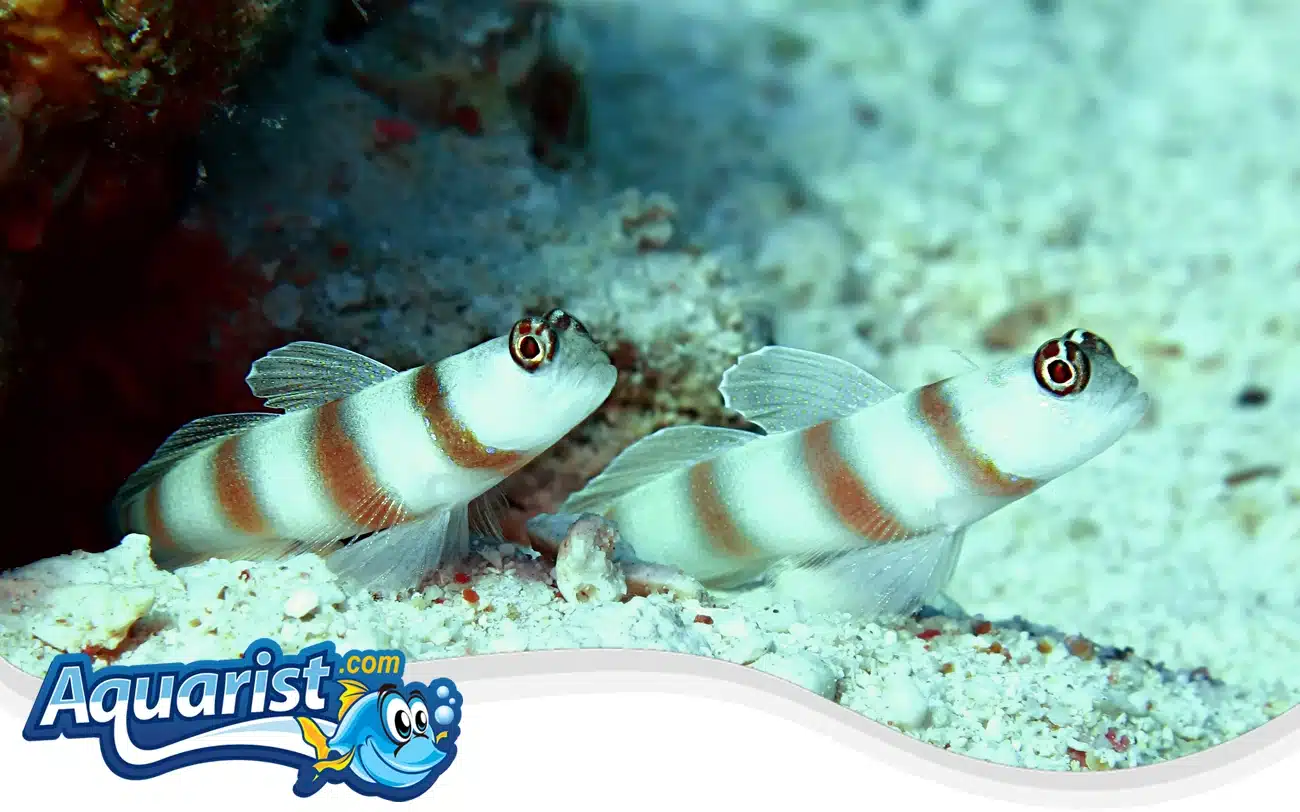
- Recognized for its pale body with dark horizontal markings and its symbiotic relationship with pistol shrimp.
- A peaceful and fascinating species known for its burrowing behavior.
- Popular among marine aquarists for its shrimp partnership and sand-sifting activities.
Feeding
- Carnivorous diet, primarily consuming small crustaceans and zooplankton.
- Readily accepts frozen and live foods such as mysis shrimp, brine shrimp, and copepods.
- Can be trained to eat high-quality marine pellets and flakes.
- Multiple small feedings per day help sustain their energy levels and health.
Habitat
- Commonly found in sandy-bottom reef environments with moderate water flow.
- Prefers stable water conditions and ample open space for burrowing.
- Requires an aquarium with fine sand substrate and rock structures for shelter.
- Thrives in environments that allow for a natural symbiotic relationship with pistol shrimp.
Fish Care
- Optimal water temperature: 74-80°F (23-27°C).
- Ideal pH level: 8.1–8.4, with a specific gravity of 1.025–1.026 (about 33–35 ppt).
- Requires a well-maintained tank with stable water conditions and adequate filtration.
- Can be shy when first introduced but gradually becomes more confident.
- Providing a peaceful environment with minimal aggression ensures longevity.
Compatibility
- Peaceful and best suited for community reef aquariums.
- Compatible with other non-aggressive fish such as clownfish, wrasses, and gobies.
- Should not be housed with large or aggressive species that may intimidate them.
- Thrives in pairs or with a pistol shrimp to exhibit natural behavior.
Aquarium Behavior
- Spends most of its time near its burrow, keeping watch for potential threats.
- Actively sifts through the sand to find food and maintain its shelter.
- Can be timid but becomes more active once comfortable in its environment.
- Providing a well-structured tank with soft sand encourages natural digging behavior.
Frequently Asked Questions
What other names does Steinitz's Shrimp Goby have?
Other common names include Steinitz Goby and Steinitz' Prawn Goby.
What does Steinitz's Shrimp Goby look like?
It has a white body with brown vertical bands and small blue spots that intensify with mood.
How big does Steinitz's Shrimp Goby get?
Our page lists about 4 in (10 cm).
What size tank does Steinitz's Shrimp Goby need?
Our page recommends at least 20 gallons (76 L), with a sandy bottom for burrows.
Does Steinitz's Shrimp Goby pair with a pistol shrimp?
It can. It may form a partnership with a pistol shrimp, and it lives with an alpheid shrimp in the wild.
Is Steinitz's Shrimp Goby hardy?
It is fairly hardy and highly disease resistant.
Can you keep Steinitz's Shrimp Gobies in groups?
Pairs or small groups do better, introduced at the same time.
What does Steinitz's Shrimp Goby eat?
Offer fresh or frozen seafood, brine shrimp and mysis shrimp, fed twice a day.
Can Steinitz's Shrimp Goby breed in an aquarium?
Yes. It has spawned successfully in aquariums.
Where does Steinitz's Shrimp Goby come from?
Its range covers the Red Sea to Samoa, north to the Ryukyus and south to the Great Barrier Reef, on sandy outer lagoons and seaward reefs.