
Overview
- Native to the Pacific Ocean, primarily found around deep coral reefs and rocky outcrops.
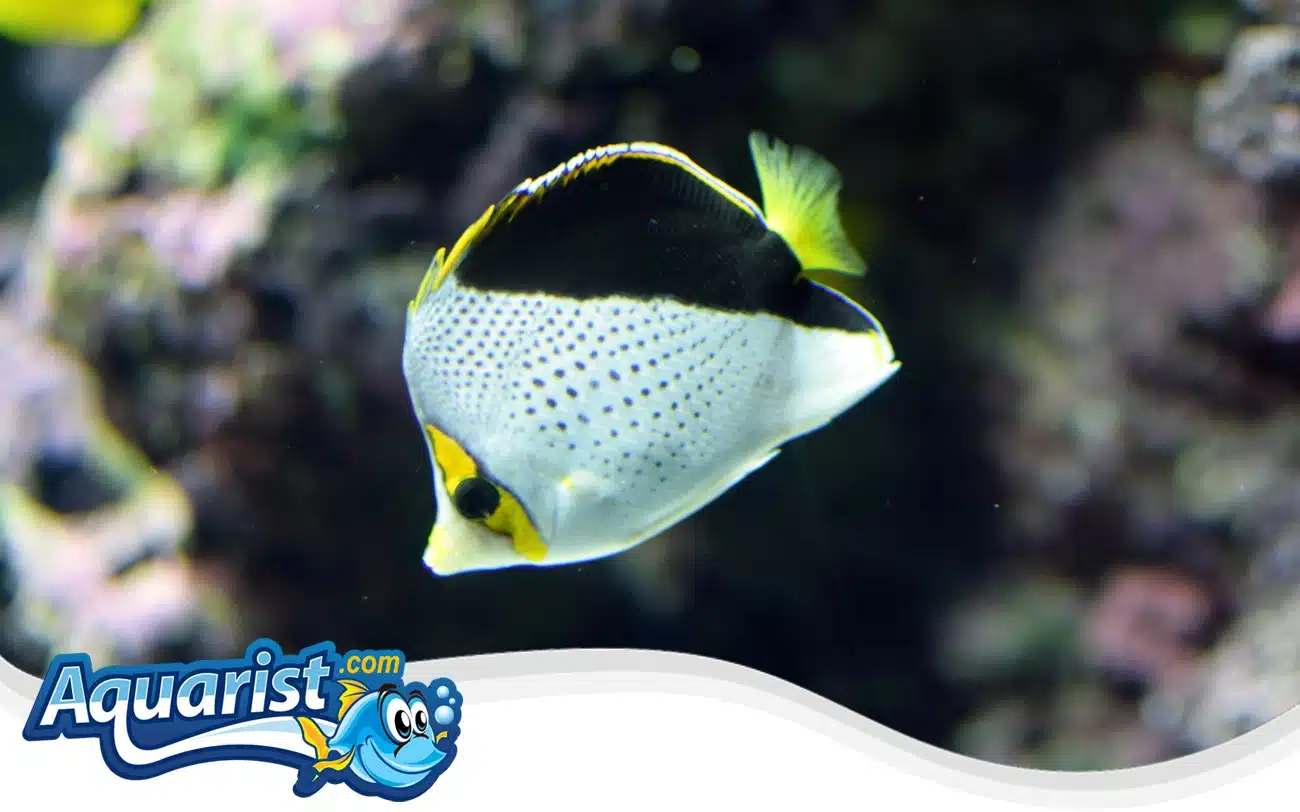
- Recognized for its striking black-and-white coloration, with a distinctive yellow dorsal fin.
- A deep-water species that requires a well-maintained and stable aquarium environment.
- Often observed in small groups or pairs in its natural habitat, indicating social tendencies.
- Best suited for experienced aquarists due to its specific dietary needs and sensitivity to water conditions.
Feeding
- Omnivorous, feeding on coral polyps, small crustaceans, and plankton in the wild.
- Requires a diet rich in sponge-based foods, frozen mysis shrimp, and high-quality marine pellets.
- May take time to adapt to prepared foods, so a slow transition with diverse food options is recommended.
- Frequent small meals throughout the day help sustain energy levels and promote digestion.
- A well-balanced diet supports immune health, longevity, and vibrant coloration.
Habitat
- Prefers deeper coral reef environments with moderate water currents.
- Often found near steep reef slopes and rocky ledges where food sources are abundant.
- Aquarium setups should include ample live rock for grazing and shelter.
- Requires pristine water conditions with high-quality filtration to remain healthy.
- Providing shaded areas and open swimming spaces helps mimic its natural environment.
Fish Care
- Optimal water temperature: 72-78°F (22-26°C) to match its deep-water origins.
- Preferred pH range: 8.1-8.4, with a salinity level of 1.020-1.025.
- Requires consistent water quality with regular water changes and filtration maintenance.
- Not fully reef-safe, as it may pick at corals and sessile invertebrates.
- Providing live rock enhances natural foraging behavior and reduces stress.
Compatibility
- Generally peaceful but may become territorial toward other butterflyfish.
- Compatible with tangs, angelfish, and other non-aggressive marine species.
- Not ideal for reef tanks due to its tendency to graze on coral polyps and small invertebrates.
- Should be housed with similarly sized tankmates to prevent competition for food.
- Providing a structured environment and ample space helps reduce stress and aggression.
Aquarium Behavior
- An inquisitive and active swimmer that enjoys exploring rock formations and open spaces.
- Frequently observed picking at rock surfaces and interacting with tankmates.
- May take time to adjust to captivity but will become more confident over time.
- Providing live rock supports natural foraging behavior and helps keep the fish engaged.
- Over time, it may recognize its caretaker and show curiosity, particularly during feeding sessions.
Frequently Asked Questions
What other names does Tinker's Butterflyfish have?
LiveAquaria lists the Tinkeri Butterflyfish and Hawaiian Butterflyfish.
What does it look like?
LiveAquaria says the front half is white with a black dot on each scale and the rear is black, with yellow and orange on the face, dorsal fin and tail.
How big does it get?
Our page lists about 6 in (15 cm), matching the 15 cm (5.9 in) maximum on FishBase.
What size tank does it need?
Our page recommends at least 120 gallons (454 L), which matches LiveAquaria. LiveAquaria also suggests moderate lighting.
Where does it live in the wild?
FishBase says it was once thought to be found only in Hawaii, and it has since been recorded at Johnston Island and the Marshall Islands.
What is its natural habitat?
LiveAquaria says it lives in deeper water on fore reef slopes, and FishBase says it is often near steep slopes, alone or in pairs.
What does it eat in the wild?
FishBase and LiveAquaria say it feeds on plankton and small bottom invertebrates.
What should I feed it in an aquarium?
LiveAquaria suggests various meaty foods, enriched mysis and brine shrimp, and some vegetable matter.
Is it safe with corals?
Our page rates it reef safe with caution. LiveAquaria warns it may pick at mushroom corals, anemones and stony corals.
Is Tinker's Butterflyfish common in the trade?
FishBase notes it is a high-priced aquarium export.