
Overview
- Found across the Indo-West Pacific, usually on outer reef slopes and in surge channels and nearby ledges, from about 3 to 40 ft (1 to 12 m).
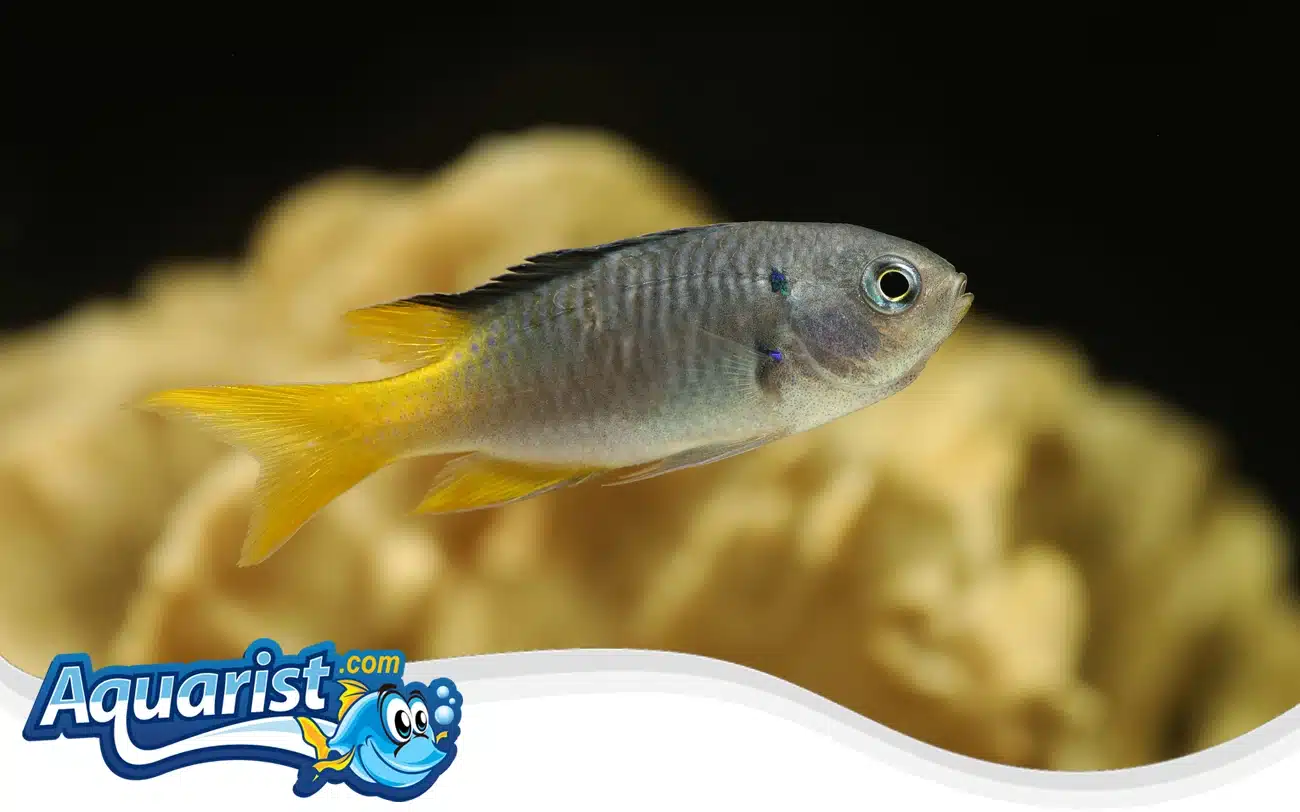
- Recognized by its slender blue-gray body, small blue spot at the base of the pectoral fin, and bright yellow lyre-shaped tail.
- An active swimmer, frequently darting between coral branches for shelter and exploration.
- Often found in small groups in the wild, establishing a natural hierarchy among its peers.
Feeding
- Feeds mainly on zooplankton picked from the water column in the wild.
- Thrives on a varied diet of frozen mysis and brine shrimp, marine pellets, and quality flakes.
- Frequent feedings throughout the day support its high energy levels and bright coloration.
- Small, meaty foods offered two or three times a day suit its plankton-picking habits.
Habitat
- Prefers reef environments with plenty of coral cover and rocky formations.
- Frequently seeks shelter among branching corals to retreat from larger fish.
- Moderate water movement is ideal, mimicking its natural reef habitat.
- Thrives in well-structured aquariums with stable water conditions.
Fish Care
- Optimal water temperature: 75-82°F (24-28°C).
- pH level: 8.1-8.4, with a specific gravity of 1.023-1.026.
- Consistent water quality and routine maintenance help support long-term health.
- Regular water changes and proper filtration minimize waste buildup and maintain clarity.
Compatibility
- Generally peaceful but may become territorial, especially when establishing a home base.
- Best suited for reef tanks with other active but non-aggressive species.
- Coexists well in small groups, particularly when introduced at the same time.
- Avoid housing with overly aggressive fish that may chase or harass it.
Aquarium Behavior
- Active swimmer, frequently moving between coral formations and open water.
- Displays curiosity, often exploring every part of the aquarium.
- Establishes a small territory but generally interacts well with other species.
- Adapts well to captivity, becoming more confident in a structured environment.
Frequently Asked Questions
What is the Yellowtail Demoiselle's scientific name?
It is Neopomacentrus azysron, also called the Yellowtail Damselfish or Yellow Lyretail Damselfish. It is sometimes sold as the Azure Damselfish, but that name belongs to Chrysiptera hemicyanea, a blue fish with a yellow belly.
How big does it get?
FishBase lists a maximum of about 3.9 in (9.8 cm) standard length, so plan for a fish of around 4 in (10 cm).
What size tank does it need?
Our page recommends at least 30 gallons (114 L), with plenty of rock and open water.
Where does it come from?
FishBase lists the Indo-West Pacific, from East Africa to the Indo-Malayan Archipelago and Vanuatu, north to Taiwan and south to northern Australia, New Guinea and the Solomon Islands.
What habitat does it prefer?
FishBase says it lives on outer reef slopes, often in deeper surge channels and on nearby ledges, from about 3 to 40 ft (1 to 12 m).
Does it live in groups?
FishBase notes it forms small groups in the wild, so a small group can work in a roomy tank.
Is it aggressive?
Our page lists it as semi-aggressive. Like most damselfish, it can grow territorial, so add it after more peaceful fish.
What should I feed it?
In the wild it picks zooplankton from the water. In the aquarium, feed small meaty foods such as frozen mysis and brine shrimp, plus quality pellets and flakes.
How does it breed?
FishBase says pairs form to breed. The eggs stick to a hard surface, and the male guards and fans them.
Is it active by day?
Yes. FishBase lists it as a diurnal species, so it will be out and about when the lights are on.